
New mineral discoveries from Qinglong, China (2025): carlhintzeite, schubnelite, and other rare finds

The Qinglong area in China’s Guizhou province has long been one of the most interesting sites for fluorite and a number of rare minerals. However, the recent discoveries from 2025 appear to be exceptional. In addition to new specimens of known species, several minerals have been identified at this location for the first time. Thanks to research by Pristine Minerals, various rare species have also been identified, and investigations are currently underway into what may even be two new minerals. In this article, Ed Richard provides an overview of these recent discoveries.
Ed Richard (Pristine Minerals), July 10, 2026
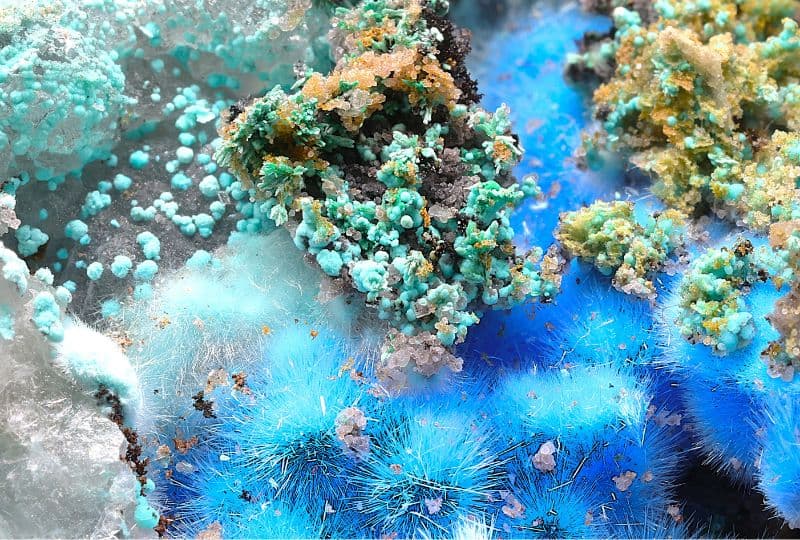
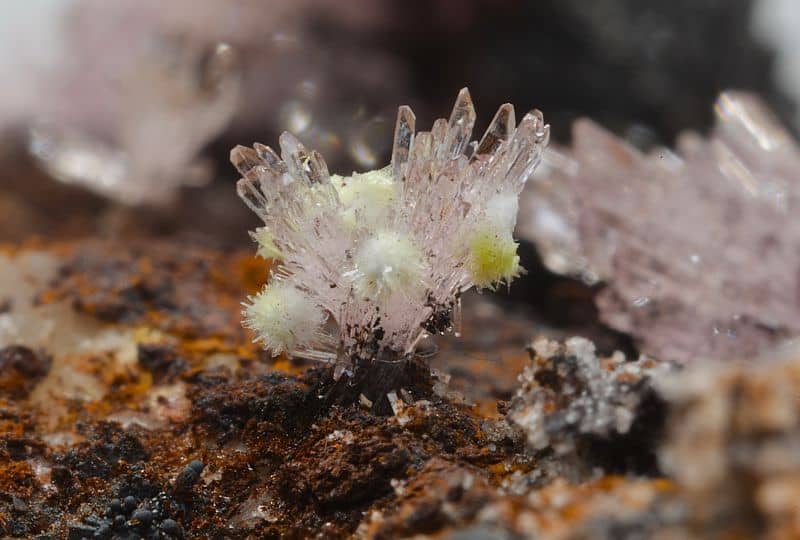
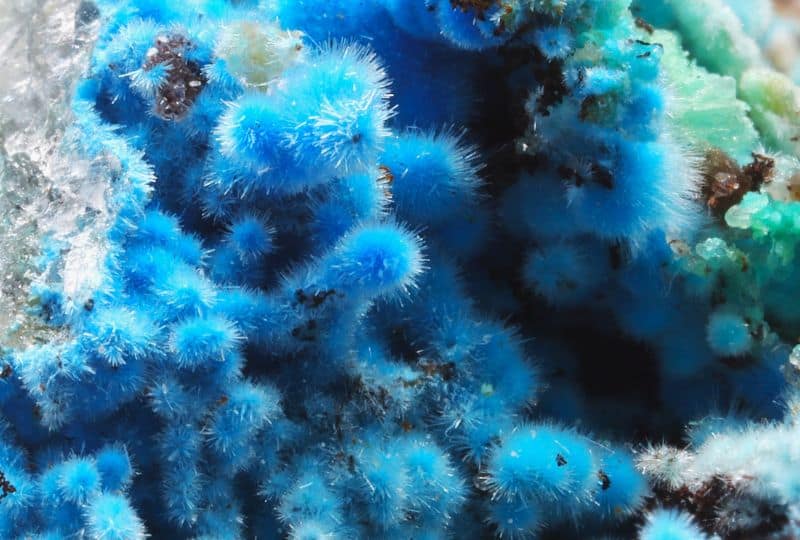
Carbonatecyanotrichite (left) and creedite with carlhintzeite (right) are examples of recent discoveries from Qinglong.
Qinglong at a Glance
Geological setting: The Dachang Sb ore field in Qinglong is a hydrothermal antimony (gold) deposit, where hot, mineral-rich solutions circulated through the rock along faults and fractures. During various phases of mineralization, in addition to stibnite, fluorite, barite, and a large number of rare secondary minerals formed in the weathering zone.
Qinglong is best known for:
- fluorite (including “QR code” fluorite)
- barite
- stibnite
- ottensite (type locality)
- carbonatecyanotrichite
Recent discoveries (2025):
- carlhintzeite
- mikehowardite
- schubnelite
- pachnolite
- thomsenolite
- scorodite
- jarosite
- possibly two more new minerals (research is ongoing)
At the bottom of this article is an alphabetical list of all the minerals discussed, including their chemical formulas and a link to the corresponding Mindat page.
Important: Due to the large number of individual mines and quarries within the Dachang Sb ore field, the exact origin of many specimens is often difficult to determine. Much of the material is therefore simply labeled “Qinglong” in the trade, even though it may actually originate from different mines or subregions with their own distinct mineralogy.
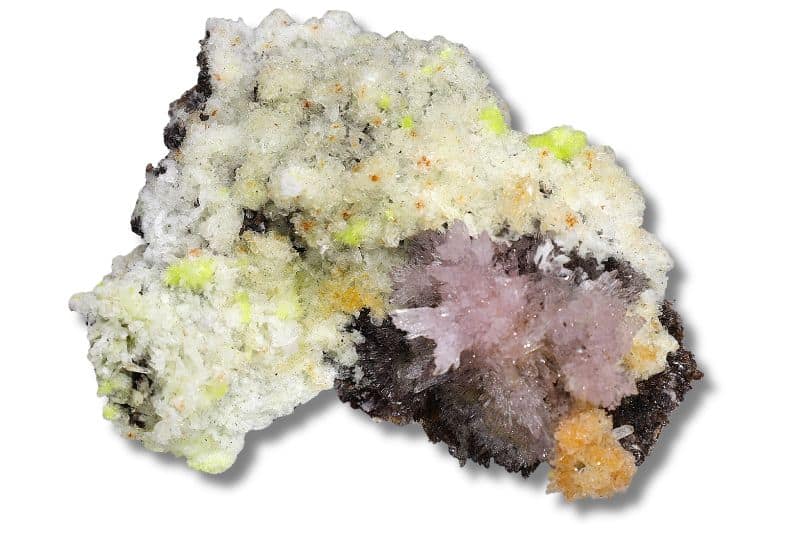
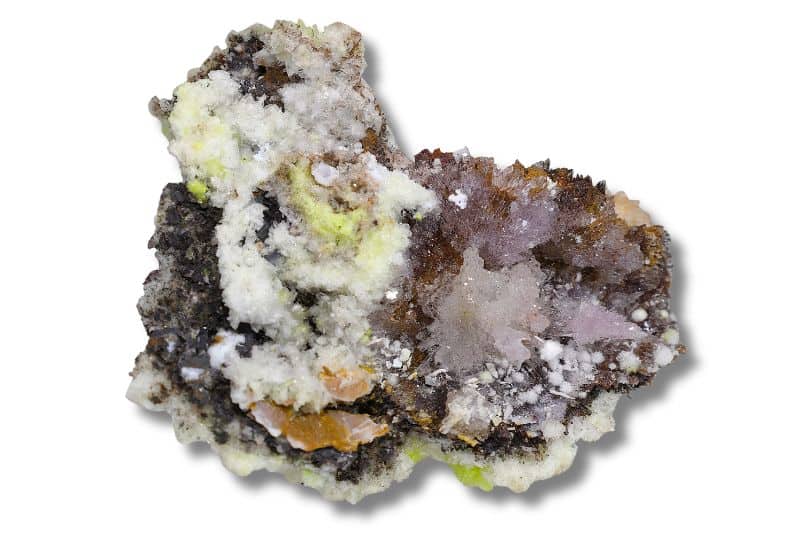
Complex specimen (two-sided) containing pachnolite / thomsenolite, creedite, and carlhintzeite on goethite.
The locality: the Dachang Sb ore field in Qinglong
The Dachang Sb ore field is located in Qinglong County, in Guizhou Province in southwestern China. The abbreviation Sb stands for the element antimony (from the Latin stibium), which has been mined here for decades. In addition to antimony, the ore deposit also contains significant gold mineralization (gold = aurum = Au), which is why it is often referred to in the literature as an “Sb-(Au) deposit” (Chen et al., 2018)1. The area is of great geological importance and ranks among China’s larger antimony deposits (Yan et al., 2022)2.
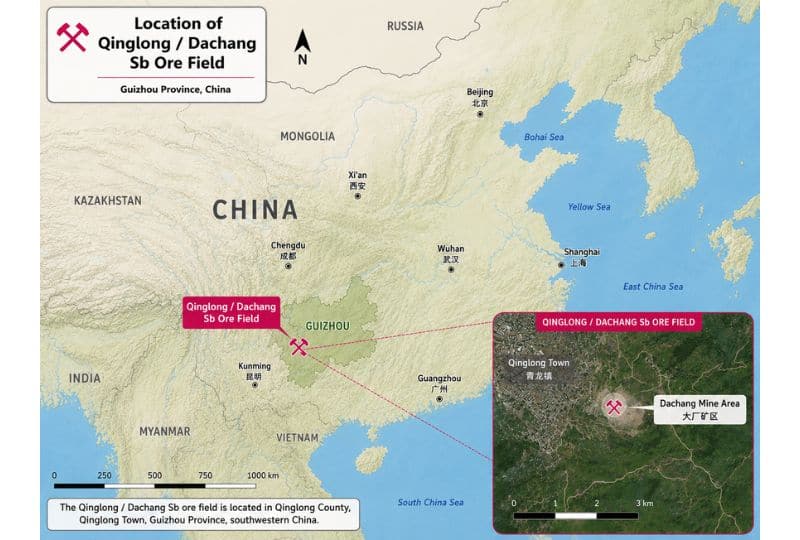
The Dachang Sb ore field has been yielding minerals of interest to collectors for decades. In recent years, however, artisanal mining appears to have increased significantly, resulting in a steady stream of new finds that are both diverse and of high quality. After receiving several particularly interesting finds from 2025, it seemed worthwhile to document these developments in greater detail.
In the world of minerals, the origin of specimens is often simply referred to as “Qinglong.” However, this designation is not very specific. Qinglong County covers an area of over 1,300 km² and includes several ore fields, mines, and artisanal mining sites. Most of the specimens discussed in this article come from the Dachang Sb ore field, which itself consists of various mining areas and ore bodies spread over several square kilometers, including Dachang, Houpo, Shuijingwan, Dishuiyan, Gulu, Xishe, Sanwangping, and Heishanjing. On Mindat , these are grouped under the location “Qinglong Mine” or “Dachang Mine.” In addition, significant fluorite and gold deposits are also found in the surrounding area (Mindat.org, n.d.)3.
The recent discoveries from 2025 once again highlight just how mineral-rich this area is. In addition to exceptional specimens of known species, several minerals have been described for the first time from the Dachang Sb ore field, while research into a number of as-yet-unidentified phases is currently ongoing.
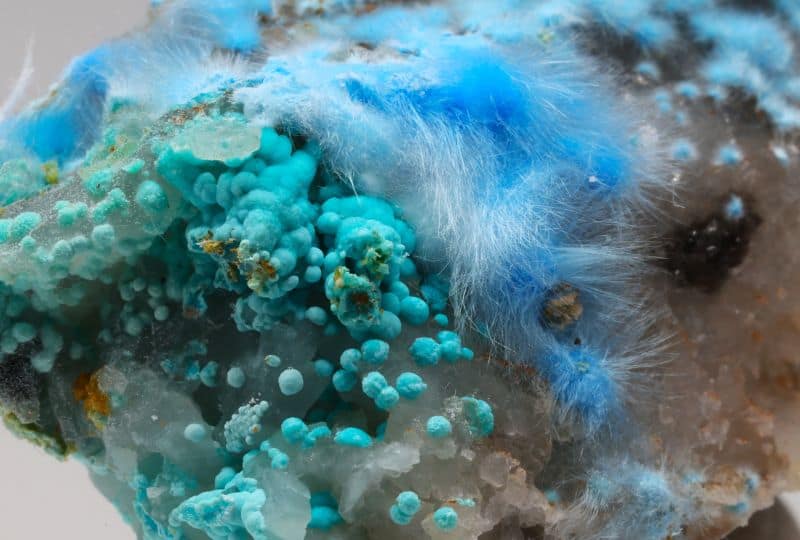
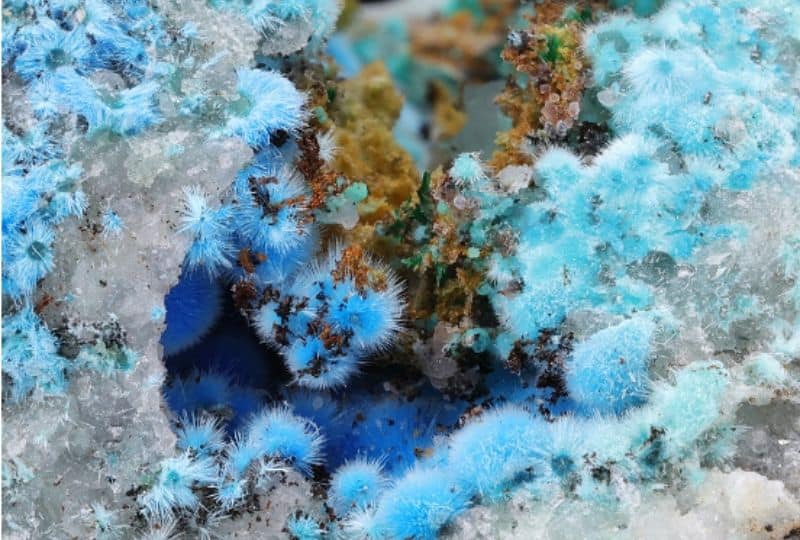
Two specimens of carbonatecyanotrichite (blue), along with associated minerals; the results of the analysis are still pending.
Well-known minerals from Qinglong
Fluorite
Qinglong is known among mineral collectors as a site with interesting and abundant fluorite specimens. The trade name “QR code” fluorite, for example, refers to cube-shaped crystals coveted by collectors for their distinctive growth pattern: crystals whose surfaces exhibit stepped, block-like, geometric growth patterns resembling the pixelated squares of a QR code. These patterns are natural, not man-made, and result from unusual growth conditions that produce attractive skeletal, etched, or porcelain-like textures. Fluorite (not just the “QR code” variety) is sometimes associated with barite and barite pseudomorphs, resulting in aesthetically appealing specimens.
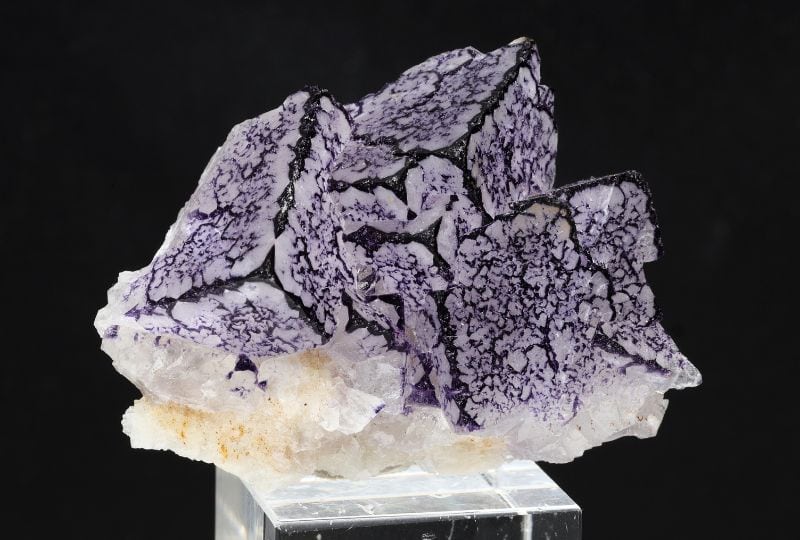
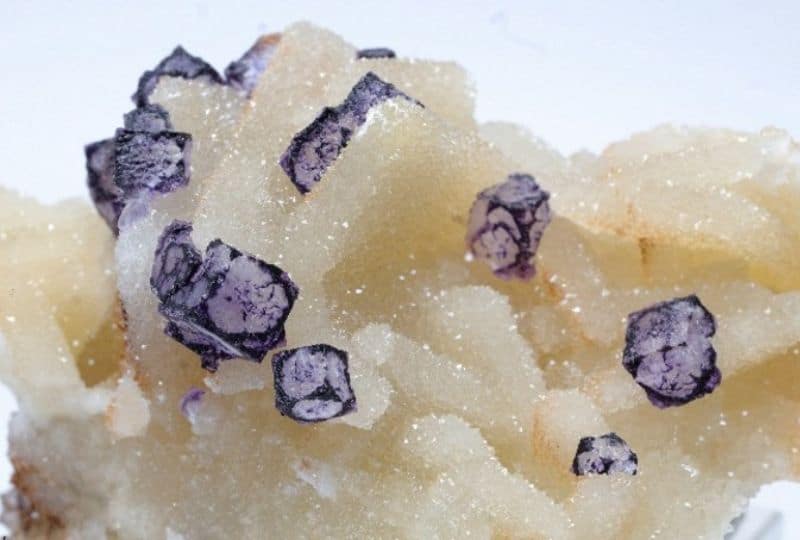
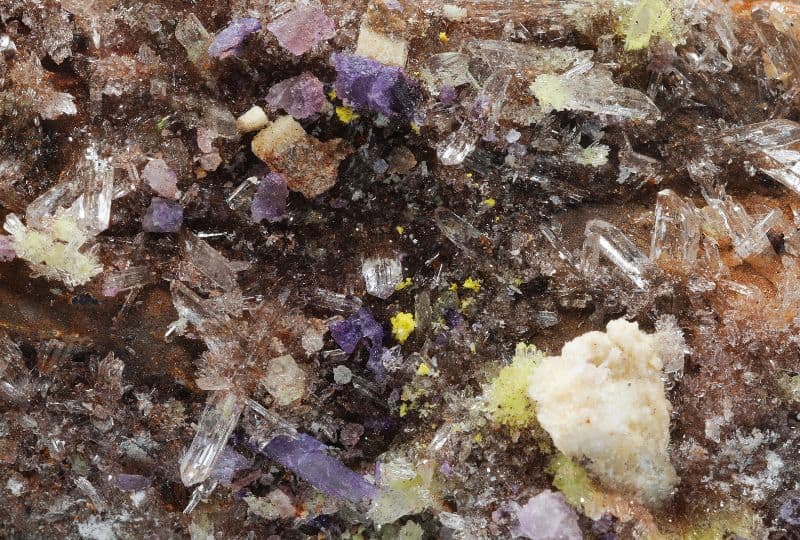
QR code: fluorite on quartz pseudomorph after barite (left); complex composite specimen with purple-etched fluorite, tyuyamunite/cornetite, creedite, and gearksutite (right).
The Qinglong District is also known for gypsum in all kinds of attractive growth forms and minerals such as gibbsite, allophane, aragonite, and carbonatecyanotrichite.
Gibbsite and allophane
Gibbsite is an aluminum hydroxide, while allophane is an aluminum silicate; both occur in weathering zones or are the result of hydrothermal changes.
As mentioned earlier, gypsum and sulfur are also present, which often results in a wide variety of minerals and forms that can develop under these conditions.
This can result in specimens with a mixed composition that are difficult to define or label without analyzing each specimen in multiple spots. Beautiful specimens with an aesthetically pleasing appearance have been collected and were briefly available on the mineral market in 2019–2020.
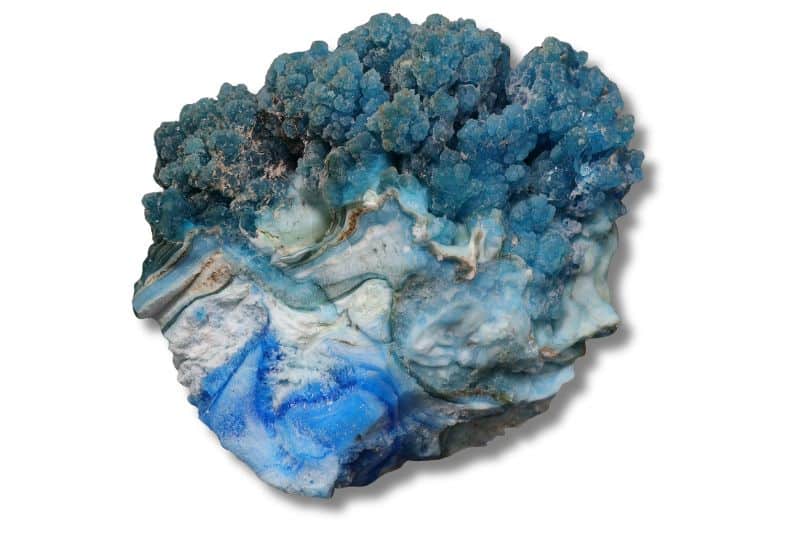
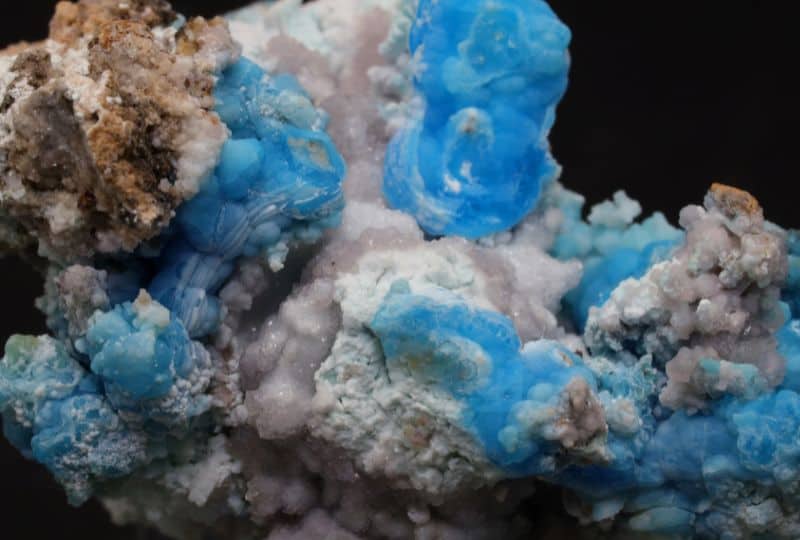
Allophane with creedite (FOV 4 cm).
Creedite
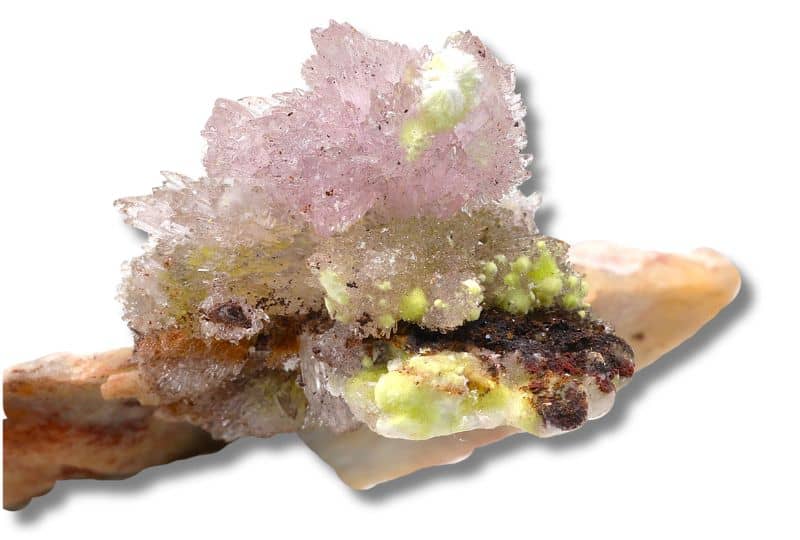
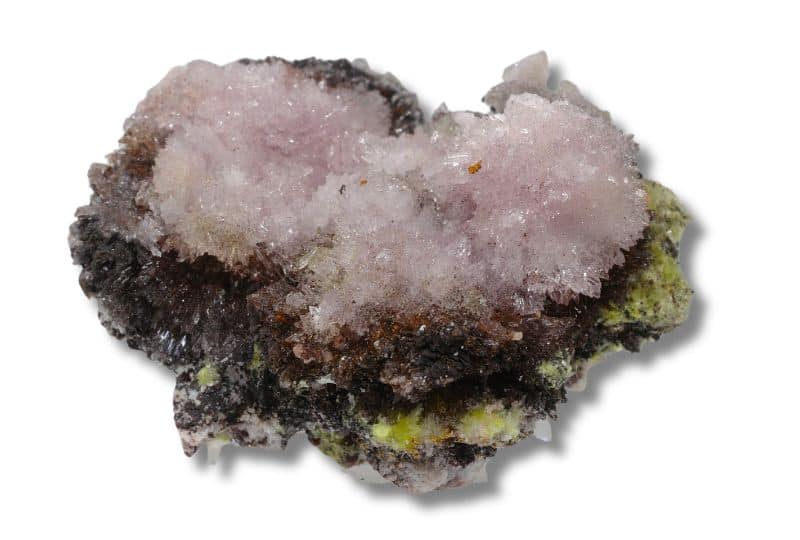
Qinglong has long been known for the excellent creedite specimens found there, primarily in colorless or lavender-colored varieties that form radial clusters and sprays. The finds from 2025 have once again yielded high-quality creedite specimens, often in combination with several of the rare minerals discussed here.
Carbonatecyanotrichite
What initially appeared to be cyanotrichite later turned out to be the much rarer carbonatecyanotrichite. It has been found in spectacular quality in Qinglong, specifically in the southern Houpo Mine near Dachang. The year 2025 has yielded very fine specimens, including large-format specimens suitable for display in a cabinet (full cabinet size). It is often found in association with fluorite, malachite, and several other minerals that have yet to be confirmed by analysis. Preliminary, but still ongoing, analyses in 2026 indicate the presence of a new mineral in the form of matte green spheres. Below are some close-ups of interesting carbonatecyanotrichite specimens with associated minerals.
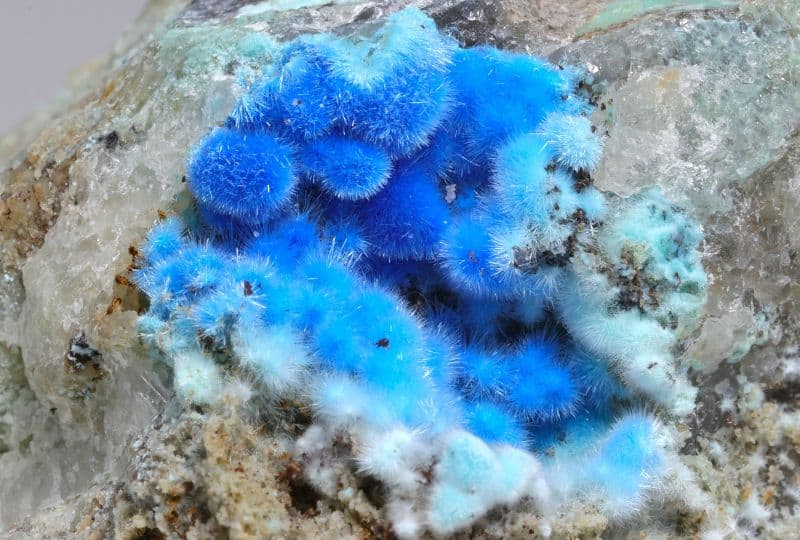
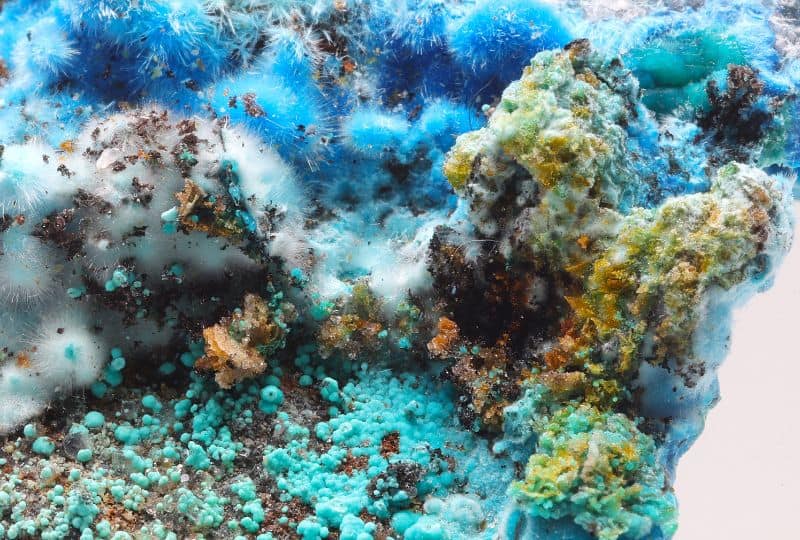
Carbonatecyanotrichite with various associated minerals, including the matte green spheres (on the right), which may represent a new mineral.
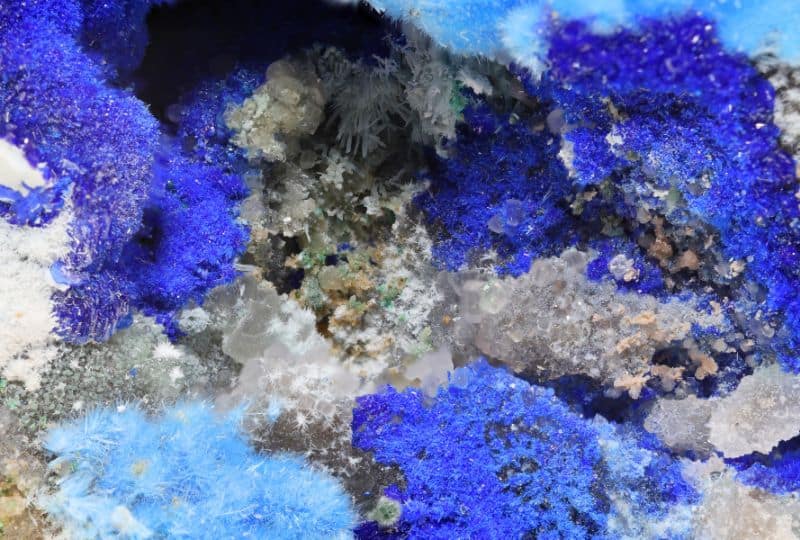
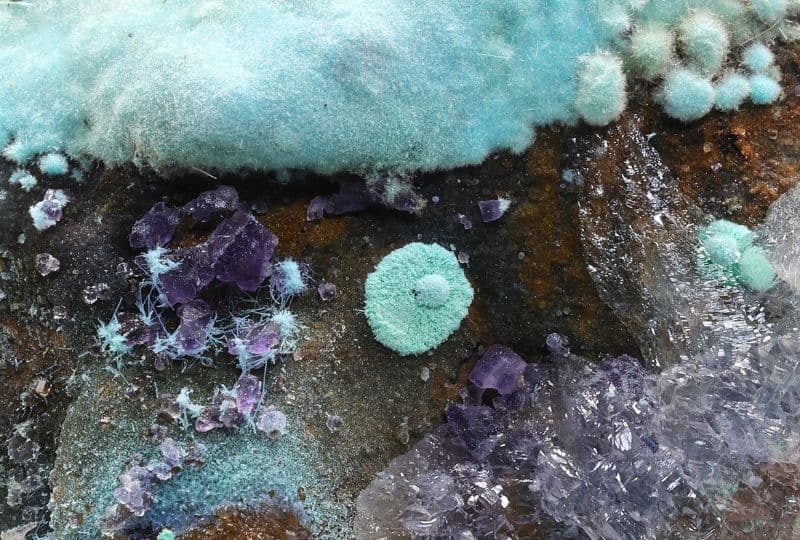
Carbonatecyanotrichite with azurite (left) and fluorite (right; FOV 1.8 cm).
Hewettite, tyuyamunite
The presence of vanadium in Qinglong has also led to the discovery of some rare minerals. Just a few years ago (2023), high-quality hewettite was collected, along with rare minerals such as gearksutite and tyuyamunite. Tyuyamunite contains a modest amount of uranium, which creates a beautiful, bright yellow contrast, especially when found alongside purple fluorite. More information about the minerals from this find can be found in the June 2023 issue of Lapis Magazine (Ottens, 2023).4
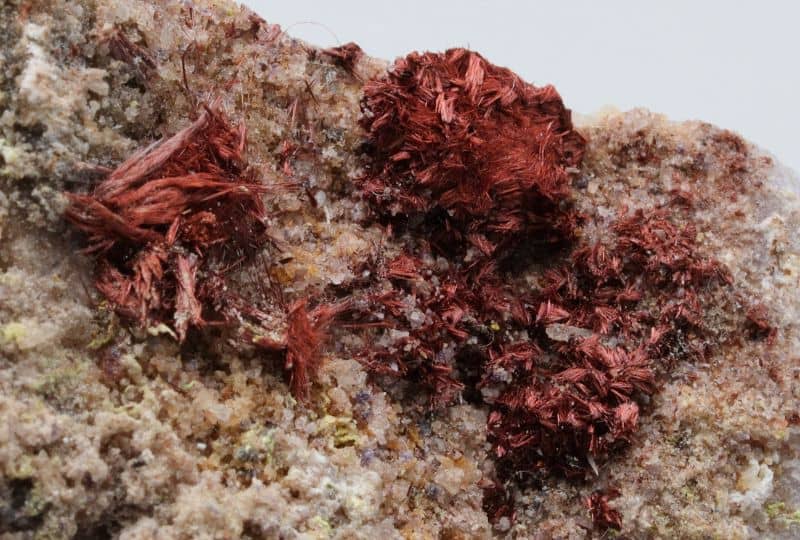
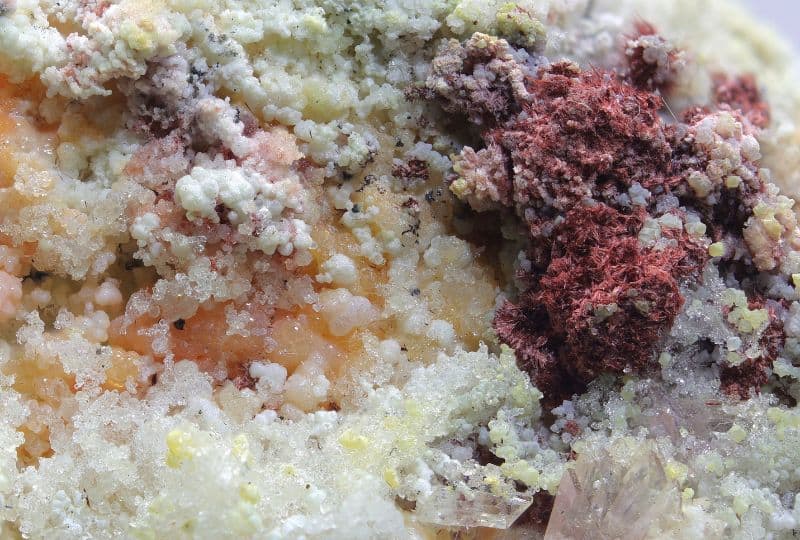
Hewettite (reddish-brown) with an as-yet-unidentified yellow mineral, possibly tyuyamunite (left, FOV ± 2 cm), and hewettite with gearskutite (right, FOV ± 1.5 cm).
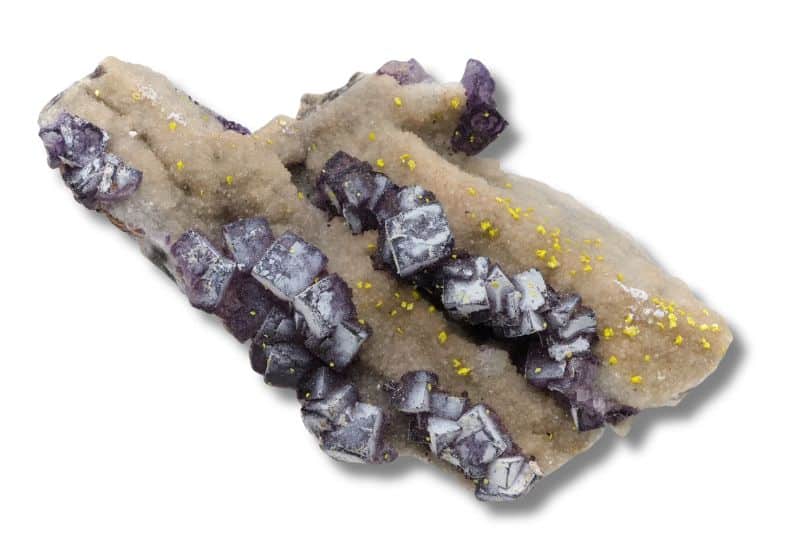
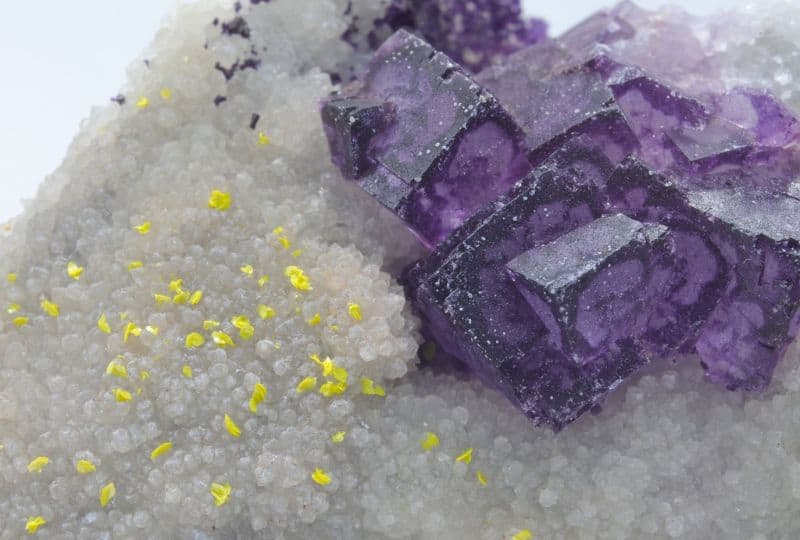
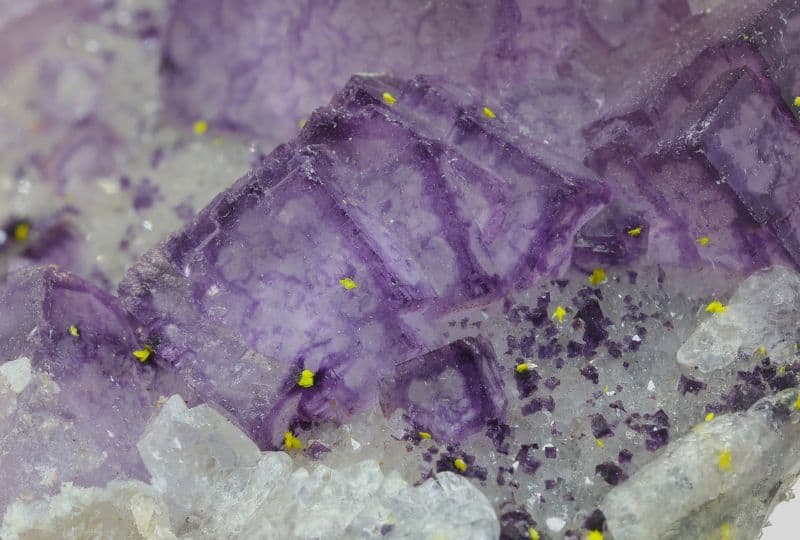
Yellow tyuyamunite crystals with (QR code) fluorite on quartz (left: FOV ± 1.5 cm; right: 1.7 cm).
Gearksutite
Gearksutite is a rare, complex aluminum salt mineral that occurs in Qinglong as an associated mineral, for example in combination with hewettite and tyuyamunite. Gearksutite has also been identified in specimens from the 2025 discoveries.
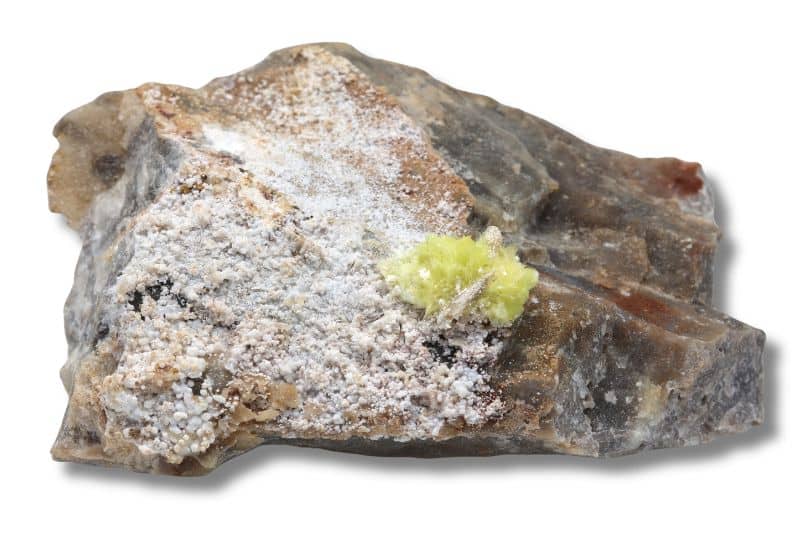
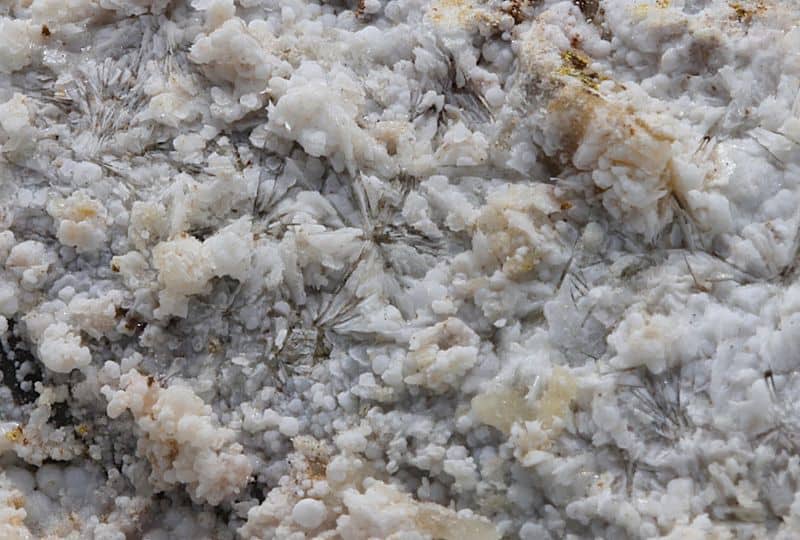
White gearksutite with yellow carlhintzeite (6 x 5 x 4 cm); on the right, a close-up photo of the same specimen (FOV ± 1 cm).
Ottensite
Although most attention is currently focused on the recent discoveries from 2025, a unique mineral — ottensite — was discovered in Qinglong about twenty years ago. This reddish-brown mineral occurs in association with stibnite and sometimes calcite, and was first described from this site. Qinglong is therefore the type locality of ottensite.
Ottensite is a rare and complex antimony oxysulfide salt consisting of Sb³⁺, Sb³⁺S₃ groups, oxygen, and structural water. The mineral is named after the German mineral dealer and China specialist Berthold Ottens (1942), author of the standard reference work *China: Minerals – Localities – Deposits*, which was also used as a key source for this article (Ottens, 2025)5. For photos of the rare ottensite, please visit Mindat.
The recent discoveries from 2025 prompted Pristine Minerals to purchase several promising samples of material from the Dachang Sb ore field and have them extensively analyzed, in collaboration with Joy Desor of Mineralanalytik. As a result, several minerals have now been identified that were not previously known to exist at this site.
New discoveries from 2025
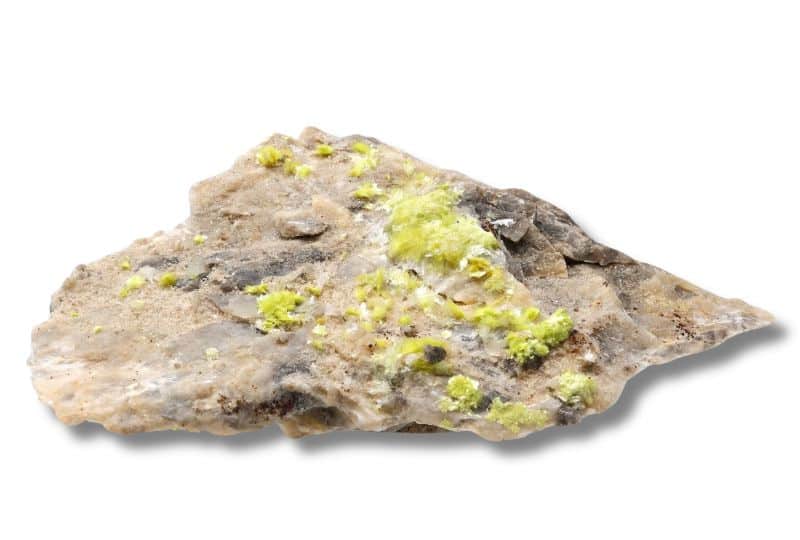
Carlhintzeiet
The lot from April/May 2025, collected in the Dachang Sb ore field, contained beautiful yellow specimens of this rare and complex halide of calcium, fluorine, and aluminum. At the type locality in Germany, carlhintzeite was originally found as colorless crystals. The later discovery in November 2025 also yielded a few white and colorless specimens, but both Qinglong finds consisted largely of strikingly bright yellow crystals. During the analyses, small crystals of the uranium mineral carnotite were found. Microscopic inclusions of this mineral are likely responsible for the characteristic yellow color of carlhintzeite. Research on uranyl vanadate mineralization shows that carnotite and tyuyamunite often form epigenetically from circulating meteoric water, which dissolves and redeposits uranium and vanadium from the surrounding rock.
The carlhintzeiet finds from Qinglong have previously been described in detail and compared with material from the type locality of Hagendorf (Germany) by Borja Sainz de Baranda Graf (2025)6, using, among other methods, Raman spectroscopy and earlier analyses by Christian Rewitzer to confirm the identification of the mineral.
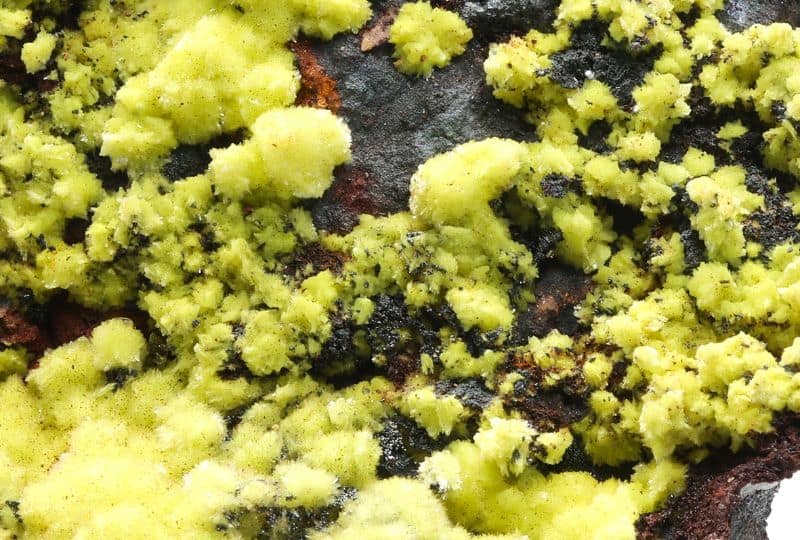
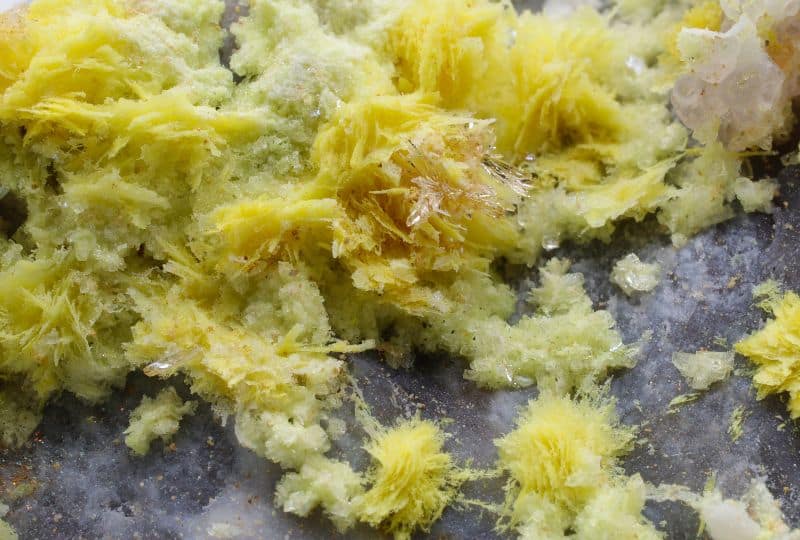
Yellow carlhintzeite crystals on a black hematite matrix (left) and carlhintzeite with clear creedite crystals and pale yellow pachnolite.
Thomsenolite and pachnolite
Pale yellow and colorless crystals with characteristic chisel-shaped terminations were observed on material from the early 2025 discovery. Later, the same crystals were also found on specimens from the November discovery. Analysis revealed that they were thomsenolite and pachnolite. These two halides have the same chemical composition but differ in crystal structure, making them dimorphs. Both minerals occur together on some specimens, although thomsenolite appears to be clearly the more common of the two. Both thomsenolite and pachnolite are new to this locality and are relatively rare worldwide.
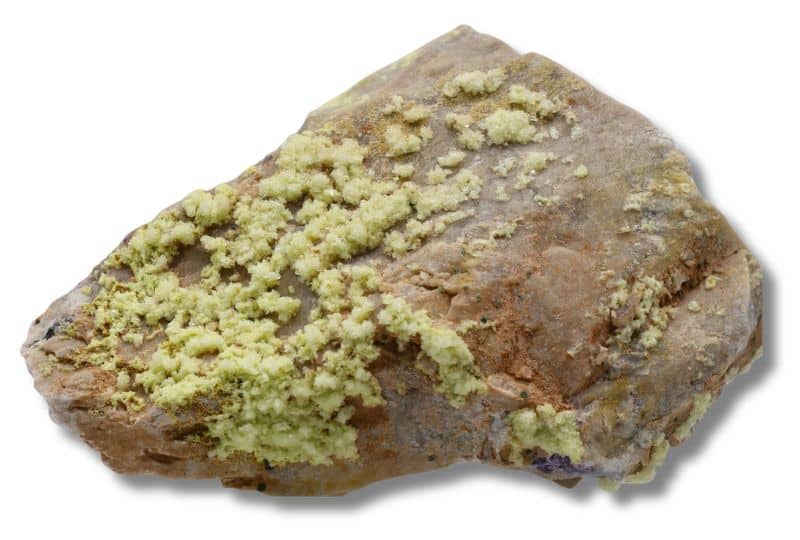
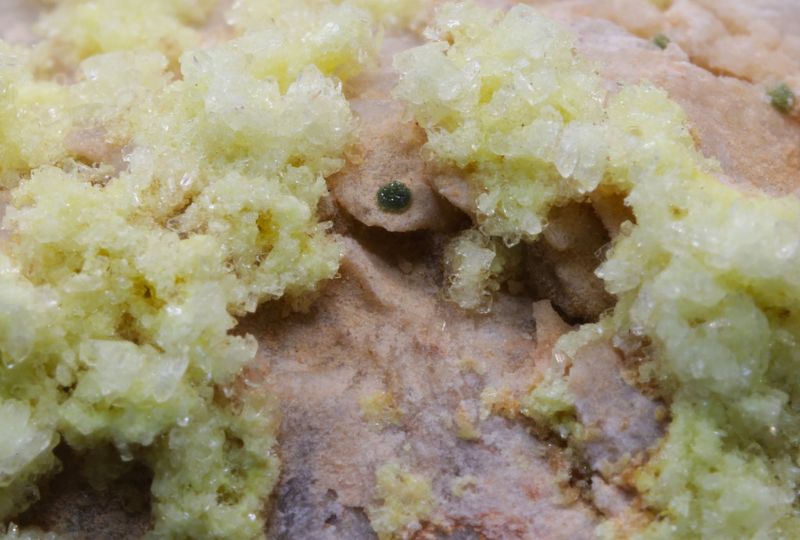
Thomsenolite (pale yellow), carnotite, carlhintzeite, and scorodite (7 x 5 x 2.5 cm); on the right, a close-up of the scorodite (green) surrounded by thomsenolite (FOV ± 0.7 cm).
Scorodite
Using EDX analysis, small green spheres were identified as scorodite in material from the first discovery of 2025. This hydrated iron arsenate typically forms as a secondary mineral during the weathering of arsenic-bearing ores. Although these are only very small aggregates, they represent a new mineral species for this site.
Schubnelite, mikehowardite, fervanite
Christian Rewitzer recently identified a very rare vanadium mineral from Qinglong. Specimens from the April/May and November 2025 discoveries were found to contain well-developed crystals of schubnelite. Until then, this mineral had been known only from two other localities, in Gabon and the United States. This discovery thus represents the first confirmed locality in China. Further analysis of the material from 2025 may reveal even more unusual vanadium minerals.
Rewitzer had previously identified another vanadate as fervanite, but it was later determined to be mikehowardite. For this reason, it is worth carefully inspecting specimens containing carlhintzeite for these extremely rare associated minerals. The crystals reach a size of only a few millimeters and are usually smaller than 1 mm. We have also since found a specimen that has been provisionally identified as fervanite.
Jarosite
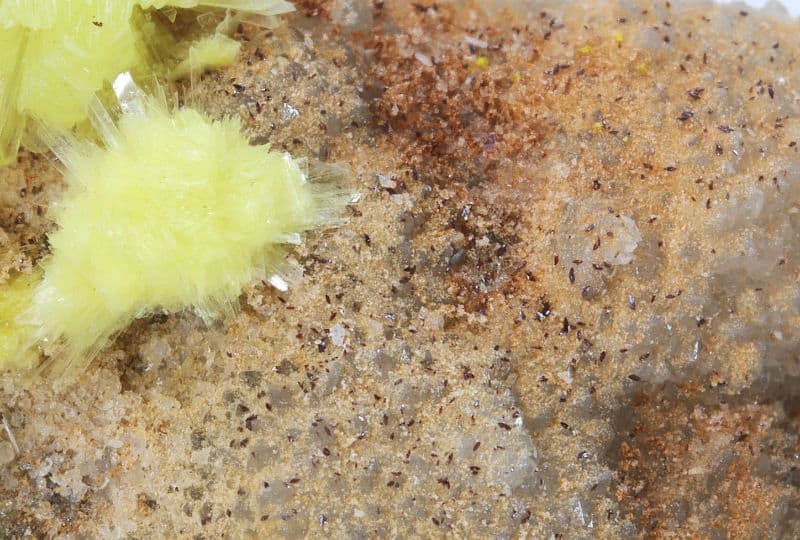
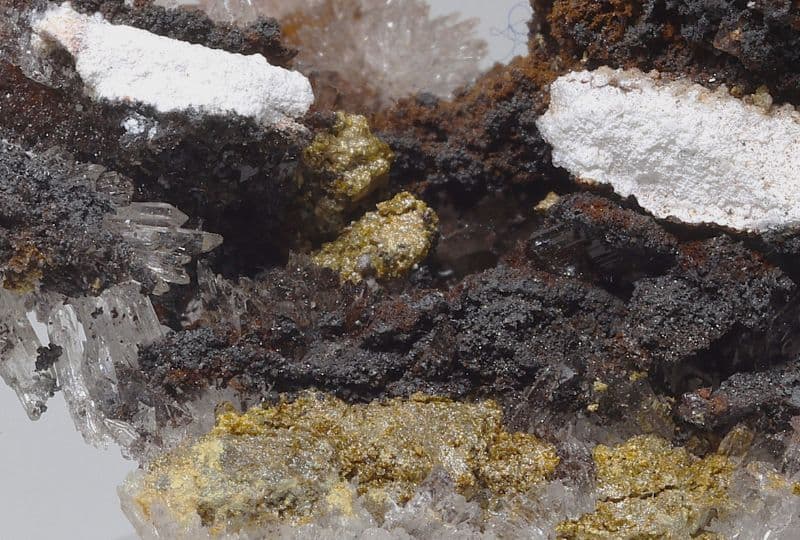
Gold-yellow structures that were difficult to identify visually were found on many specimens from the November 2025 discovery. Analysis confirmed that they are jarosite, an iron-bearing potassium sulfate. As far as is known, this is the first documented discovery of this mineral from the Dachang Sb ore field and, consequently, the first recorded occurrence in China.
In conclusion
The recent discoveries from 2025 show that the Dachang Sb ore field can still hold surprises. Thanks to targeted collection and additional (laboratory) research, several minerals have been identified from this site for the first time, and the mineralogical diversity of the area has been further mapped. At the same time, studies of various specimens are still ongoing, which means that even more new or rare minerals from Qinglong may be described in the coming years.
Below is an overview of the minerals discussed in this article. For each mineral, the chemical formula and a link to the corresponding Mindat page are included. This allows interested readers to easily learn more about the properties, crystal structure, and any other known locations where each mineral species can be found.
Allophane – (Al₂O₃)(SiO₂)₁.₃–₂·2.5–3H₂O
Barite –BaSO₄
Carbonatecyanotrichite –Cu₄Al₂(CO₃,SO₄)(OH)₁₂·2H₂O
Carlhintzeite –Ca₂[AlF₆]F·H₂O
Carnotite –K2(UO2)2(VO4)2 ·3H2O
Creedite –Ca₃Al₂(SO₄)(OH)₂F₈·2H₂O
Fervanite*–Fe3+4V5+4O16 ·5H2O
Fluorite –CaF2
Gearksutite – Ca[Al(F,OH)₅(H₂O)]
Gibbsite – Al(OH)₃
Gypsum –CaSO₄·2H₂O
Hewettite –CaV6O16·9H2O
Jarosite –KFe₃⁺₃(SO₄)₂(OH)₆
Mikehowardite –Fe3+4(V5+O4)4(H2O)2·H2O
Ottensite – (Na,K)₃Sb₃+₆(Sb₃+S₃)O₉·3H₂O
Pachnolite – NaCa[AlF6] ·H2O
Scorodite –Fe³⁺AsO₄ ·2H₂O
Schubnelite –Fe³⁺VO₄·H₂O
Stibnite –Sb₂S₃
Thomsenolite – NaCa[AlF6] ·H2O
Tyuyamunite – Ca(UO₂)₂(VO₄)₂·5–8H₂O
* The identification of fervanite is preliminary and is still under investigation.
- Chen, J., Yang, R. D., Du, L. J., Zheng, L. L., Gao, J. B., Lai, C. K., et al. (2018). Mineralogy, geochemistry, and fluid inclusions of the Qinglong Sb-(Au) deposit, Youjiang Basin (Guizhou, SW China). Ore Geology Reviews, 92, 1–18. Retrieved July 10, 2026, from https://www.sciencedirect.com/science/article/abs/pii/S016913681730392X ↩︎
- Yan, J., Fu, S., Liu, S., Wei, L., & Wang, T. (2022). Giant Sb metallogenic belt in South China: A product of Late Mesozoic flat-slab subduction of the paleo-Pacific plate. Ore Geology Reviews, 142, 1–18. Retrieved July 10, 2026, from https://www.sciencedirect.com/science/article/pii/S0169136822000051 ↩︎
- Mindat.org (n.d.). Qinglong Mine (Dachang Mine). Retrieved July 10, 2026, from https://www.mindat.org/loc-33918.html ↩︎
- Ottens, B. (2023). Seltene Sekundärmineralien: Die Antimon-Lagerstätte Qinglong, Guizhou, China. Lapis, 48-6, 12-25. ↩︎
- Ottens, B. (2025). Minerals – Localities – Deposits. Self-published. Available through Lapis ↩︎
- Sainz de Baranda Graf, B. (2025). Carlhintzeite from Dachang, Qinglong Co., Qianxi’nan (Guizhou, China) and Hagendorf (Bavaria, Germany). Mineral Forum. https://www.mineral-forum.com/message-board/viewtopic.php?p=85824#85824 ↩︎


Responses