
Terra Mineralia and Krüger-Haus in Freiberg: a paradise for mineral enthusiasts

A day trip from Leipzig
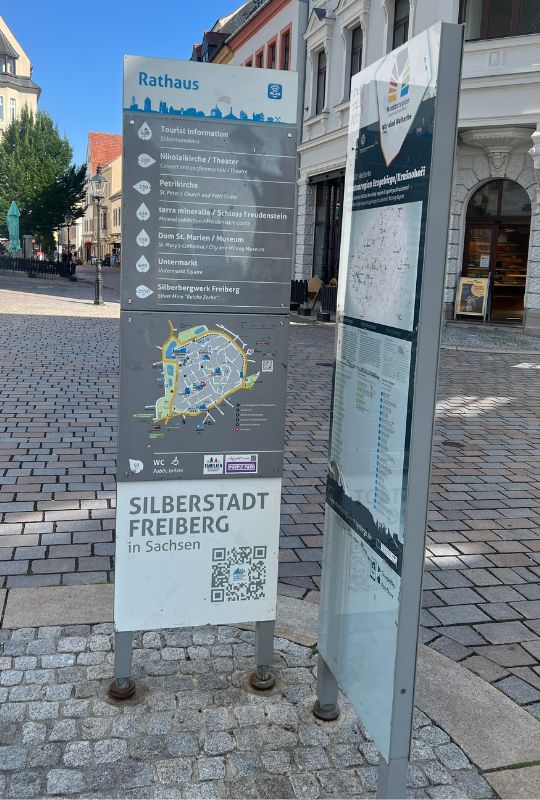
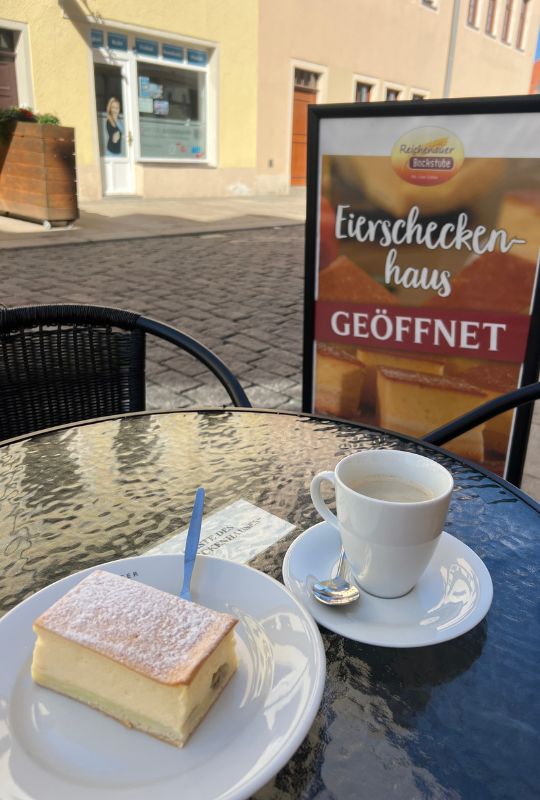
In late July 2026, I visited two well-known mineral museums in Freiberg, a historic mining town in the German state of Saxony. Terra Mineralia had been high on my bucket list for years. Since Freiberg isn’t exactly around the corner from the Netherlands, a weekend in Leipzig was the perfect excuse for me to finally plan the visit. I traveled without a car and opted for an affordable combination of FlixBus from Maastricht to Leipzig, followed by a train ride that takes about 1 hour and 45 minutes to reach Freiberg. I arrived in Freiberg early and, even before the museums opened, enjoyed a cup of coffee with a traditional Eierschecke at the Eierscheckenhaus on Burgstraße. Highly recommended for a leisurely start to the day.
At exactly 10:00 a.m., I walked into Terra Mineralia as the first and only visitor. On a hot summer day, that turned out to be a big advantage: it was wonderfully cool inside, and I had all the peace and quiet I needed to view the collection. I bought a combo ticket (€14) for Terra Mineralia and the Krüger-Haus at the ticket counter. At the time of my visit, only individual day tickets were available online (for a small surcharge), so the combo ticket was available exclusively at the museum ticket counter. Individual tickets for the Krüger-Haus are also available there; you cannot purchase admission tickets inside the Krüger-Haus itself. I also immediately bought a photography permit (Fotogebühr, €3), which I highly recommend. Despite the display cases, the minerals are actually surprisingly easy to photograph. The combo ticket is valid for both museums on two consecutive days and also entitles you to reduced admission to the Geowissenschaftliche Sammlungen at the TU Bergakademie Freiberg. Be sure to check the current rates and ticket options on the museum’s website before you go.
In this article, you’ll find a detailed account of my visit to both museums, complete with plenty of photos and practical tips for anyone planning a visit of their own. Would you rather get a quick overview first? Below, you’ll also find a short video—about one minute long—in which I share my first impressions of Terra Mineralia and the Krüger-Haus.
Terra Mineralia
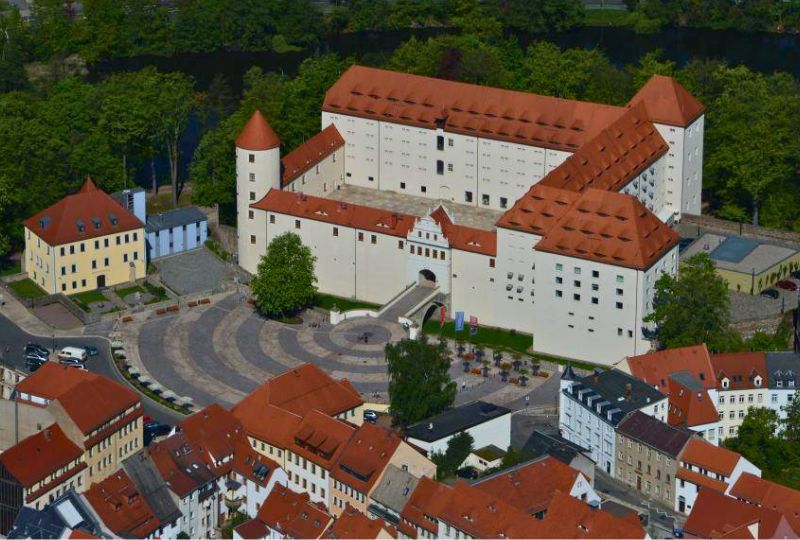
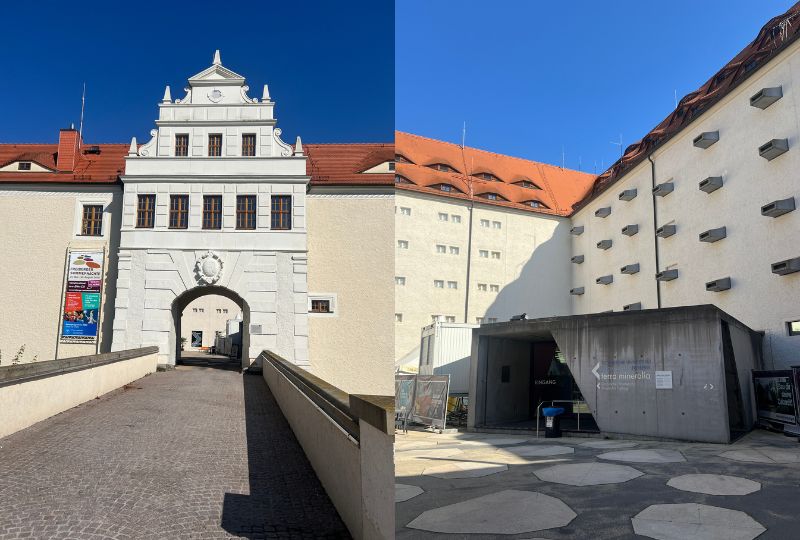
Terra Mineralia is since 2008 located in the historic Freudenstein Castle and, with more than 3,500 specimens on display, is one of the largest and best-known mineral museums in Europe. The collection consists largely of items from the collection of Erika Pohl-Ströher and is managed by the TU Bergakademie Freiberg, the oldest surviving mining university in the world.
My first impression
For a mineral enthusiast, Terra Mineralia is simply overwhelming. During my visit, I even deliberately took two short breaks outside so I could continue exploring with a fresh perspective. There’s so much to see that it’s impossible to take it all in at once.
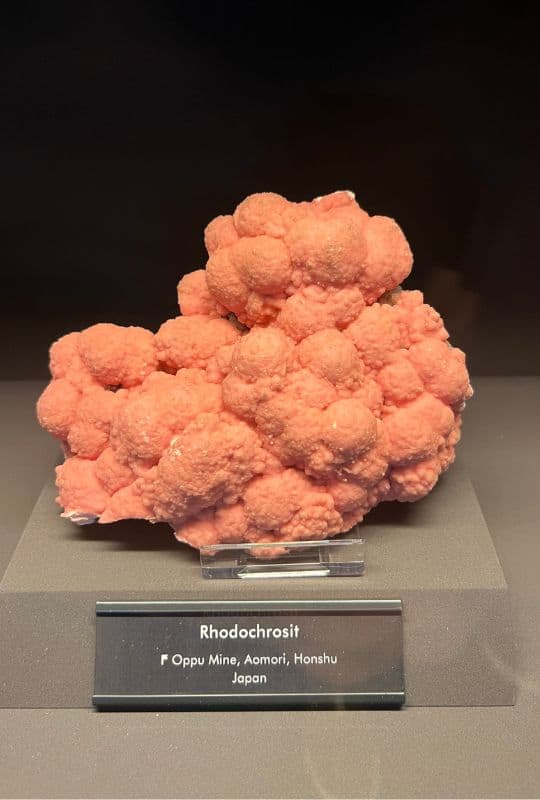
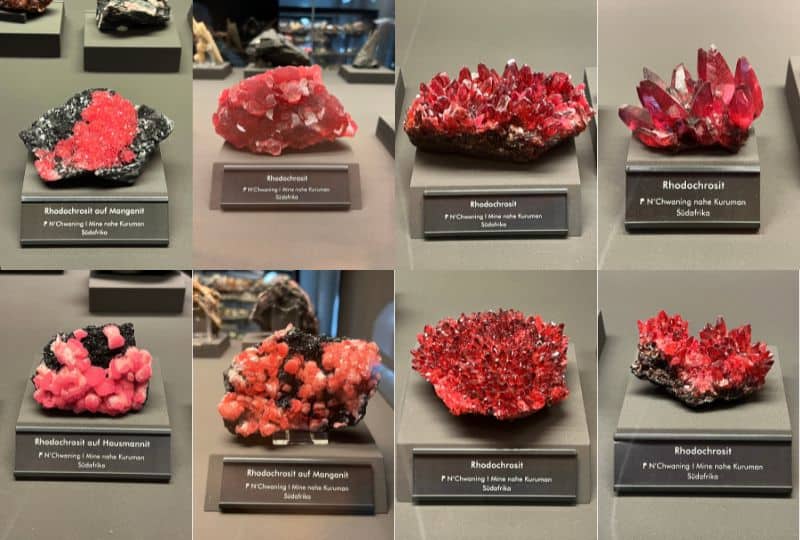
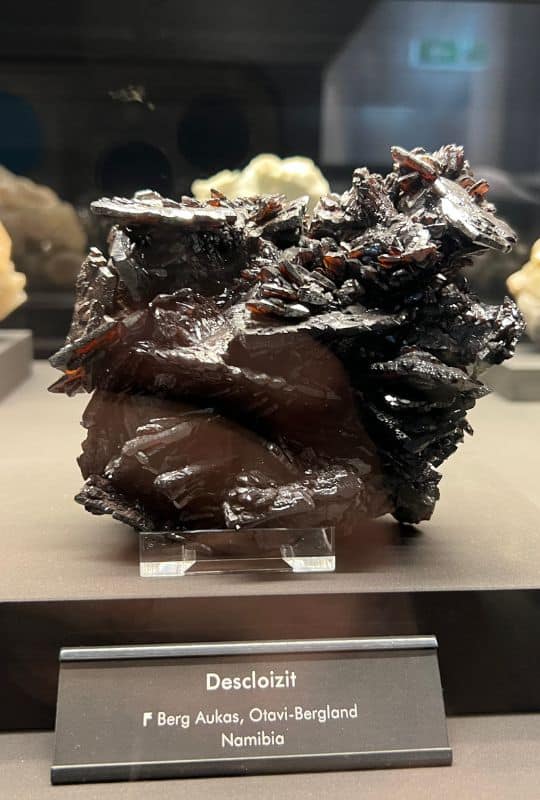
Virtually all of the minerals on display are clearly labeled with their name and location, making the museum a highly valuable reference collection. However, the focus is strongly on the collection itself. Explanations regarding the formation of the minerals, their chemical composition, or the geology of their locations remain relatively limited. For collectors, this is not an issue, but for visitors without a background in mineralogy, it can sometimes feel as though you’re looking at a great many beautiful specimens without it always being clear why they’re special. Moreover, the enormous size of the collection means that some world-class specimens almost seem to go without saying. Seeing multiple specimens side by side—such as rhodochrosite from the N’Chwaning Mine (South Africa) or descloizite from Berg Aukas (Namibia)—can easily give the impression that these are common minerals, when in fact they are highly exceptional and sought-after specimens.
A Mineralogical Journey Around the World
Anyone who frequently visits mineral museums knows that many collections are organized according to the mineralogical classification system: all quartz specimens together, all fluorites together, all sulfides in a separate display case, and so on. At Terra Mineralia, however, a completely different approach has been deliberately chosen. The exhibition is designed as a mineralogical journey around the world, taking you not through groups of minerals but across the various continents.
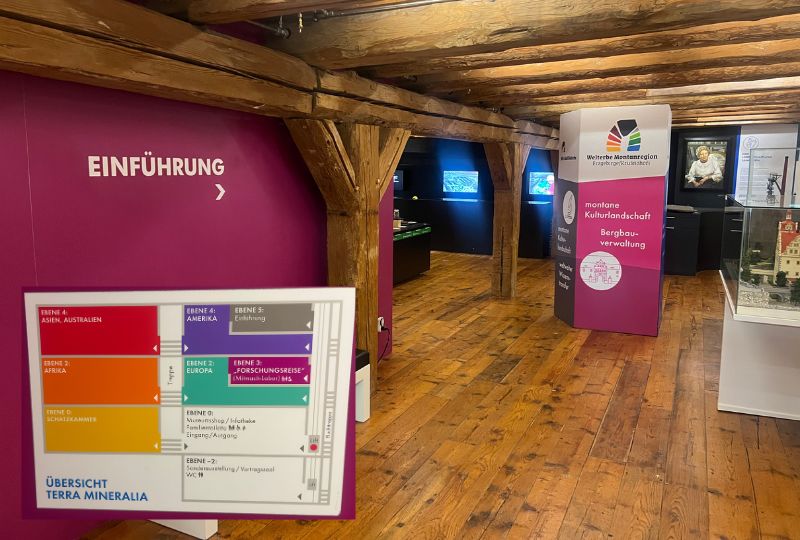
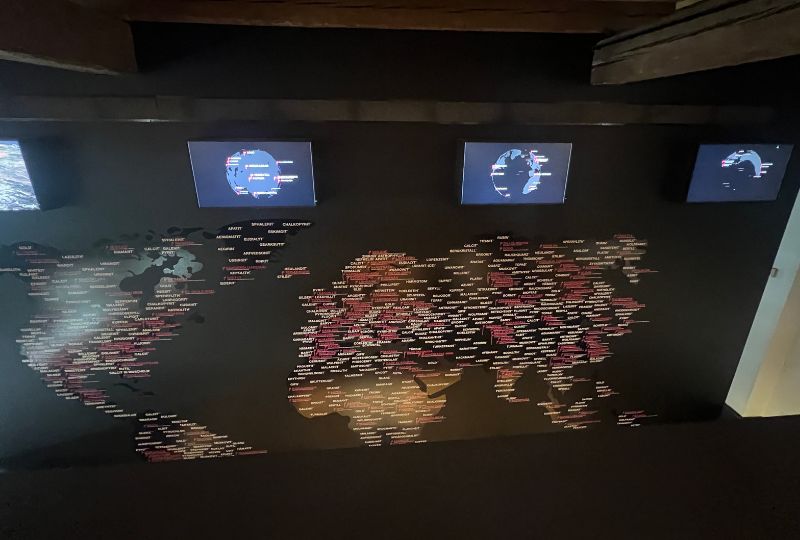
After a brief introduction on the top floor—which features, among other things, the history of the collection, the role of founder Erika Pohl-Ströher, and a large interactive world map showing all the sites where the minerals were found—the journey around the world begins. The exhibition is also completely darkened, which makes the illuminated minerals stand out even more. This works surprisingly well; as a result, each room has its own unique atmosphere, and the minerals in the display cases are also easy to photograph.
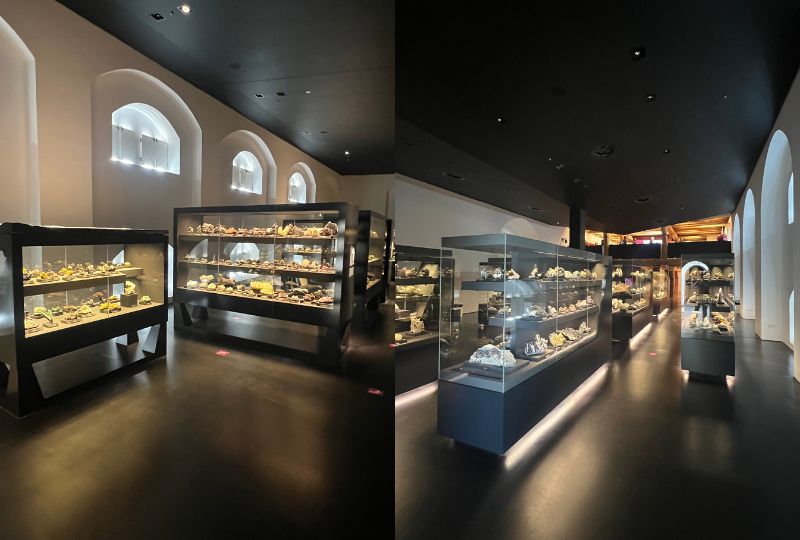
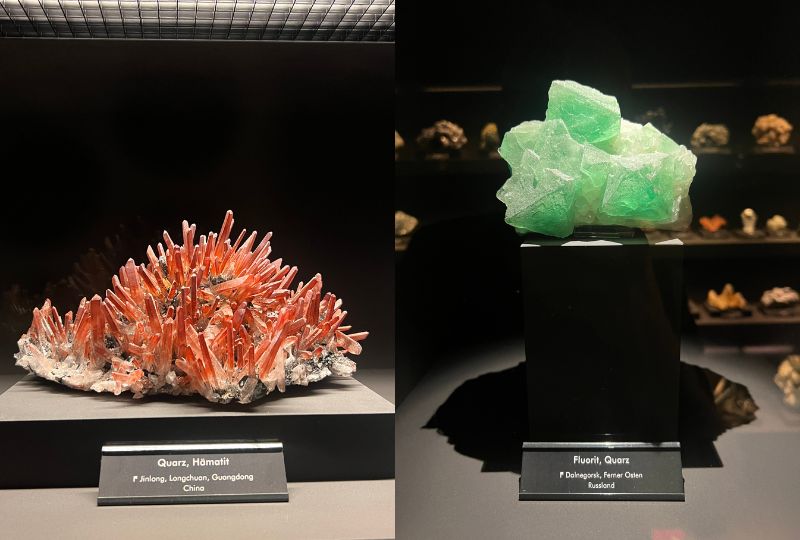
Examples of display cases in the Terra Mineralia galleries and of how individual minerals are highlighted in the display cases, making them easy to view and photograph.
America – Classic Exhibition Spaces and a Spectacular UV Room
The journey begins on the fourth floor in North, Central, and South America. For many collectors, this gallery will immediately feel like a trip down memory lane. Here you’ll find beautiful fluorites from Illinois, fluorite and sphalerite from the Elmwood Mine in Tennessee, amazonite with smoky quartz from Colorado, amethysts from Las Vigas and Guerrero (Mexico), as well as top-quality rhodochrosite specimens from the Sweet Home Mine in Colorado and stunning specimens from Peru. Unique quartz varieties, tourmaline, and, for example, brazilianite from Brazil. The classic localities are featured in particular detail.
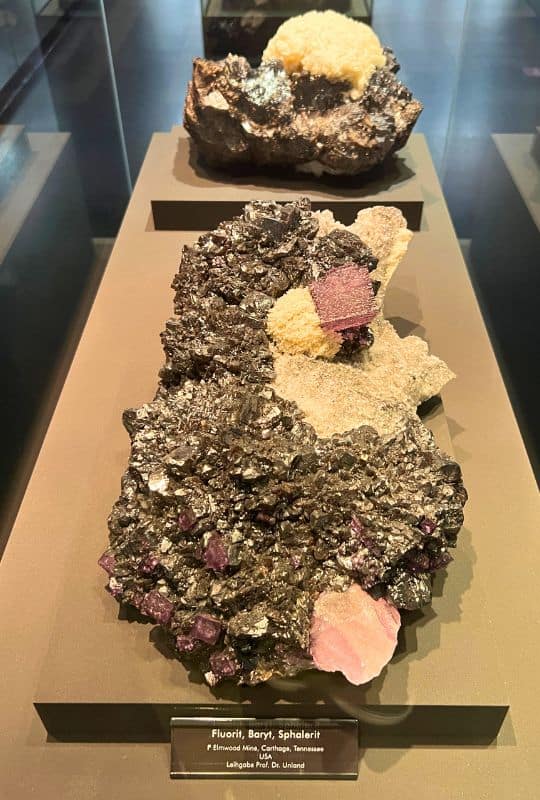
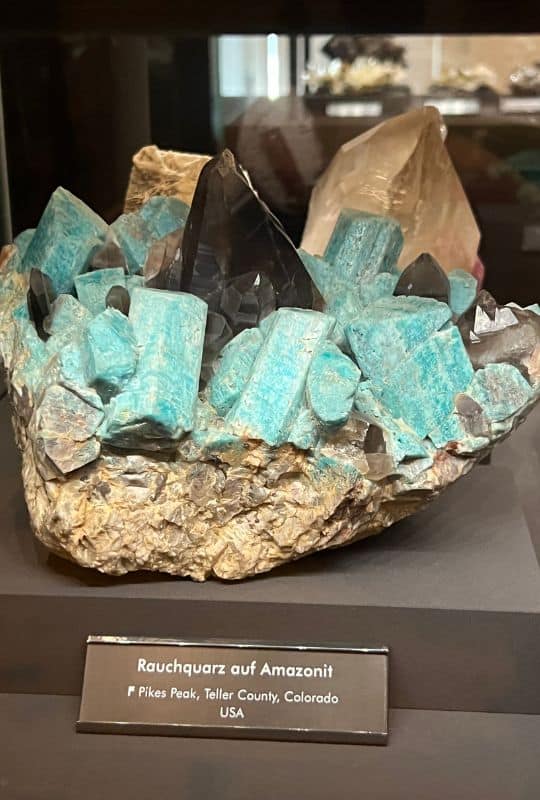
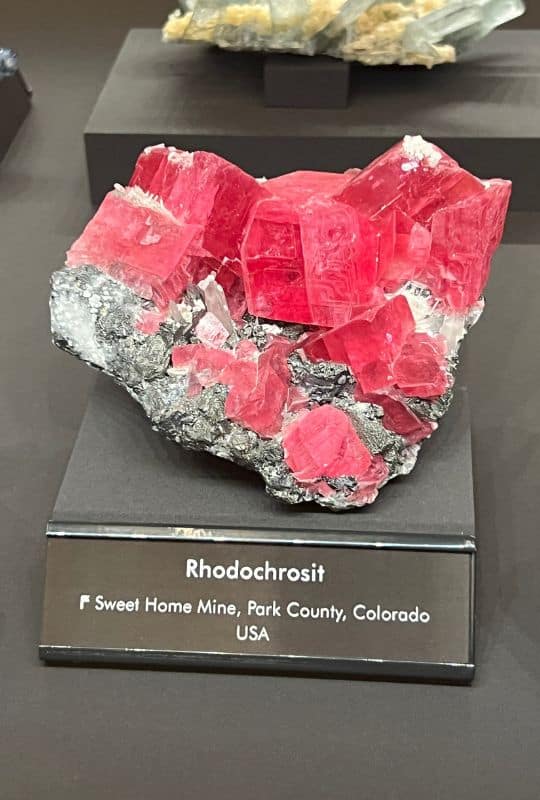
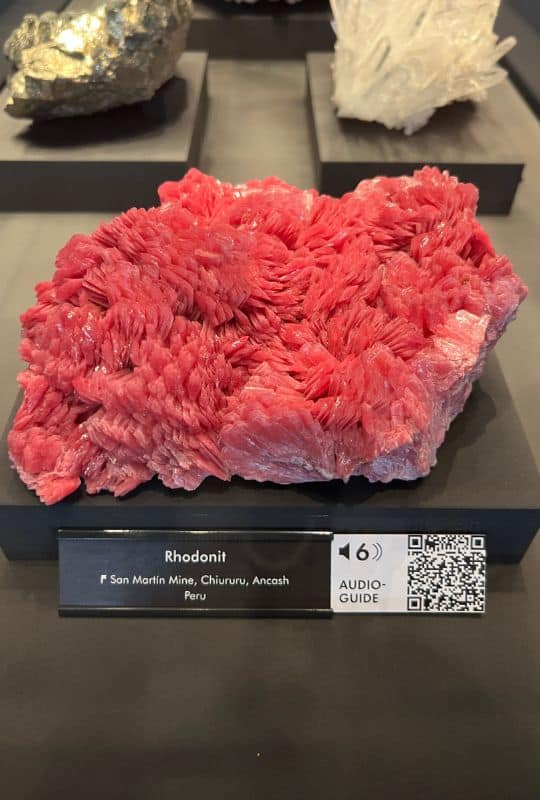
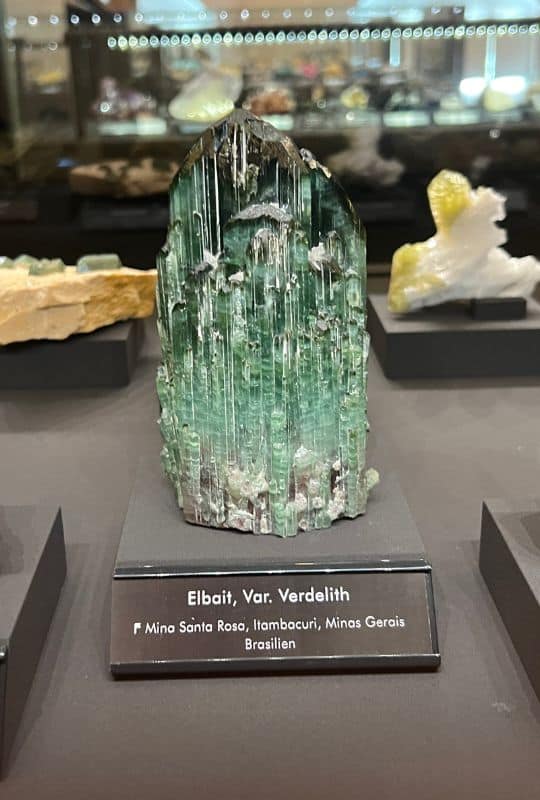
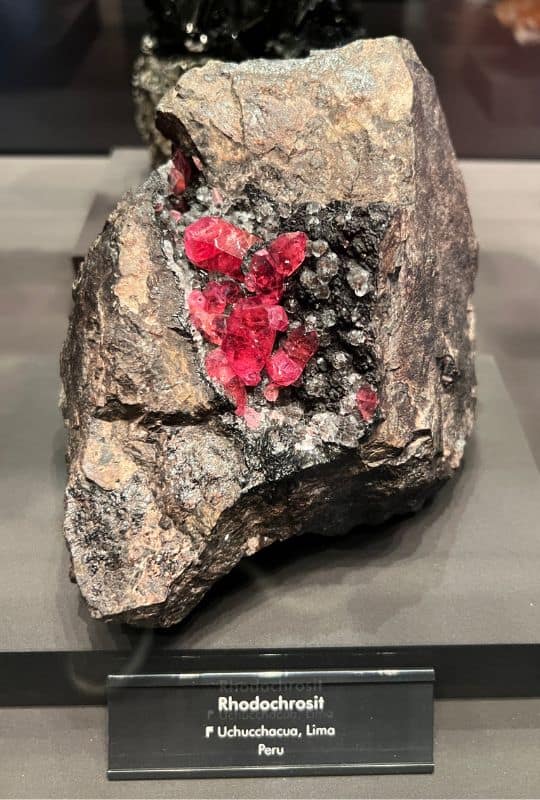
Another highlight is the dedicated UV room. Here, fluorescent minerals are displayed alternately under natural light and various UV wavelengths, including a beautiful collection of UV minerals from Franklin, New Jersey.
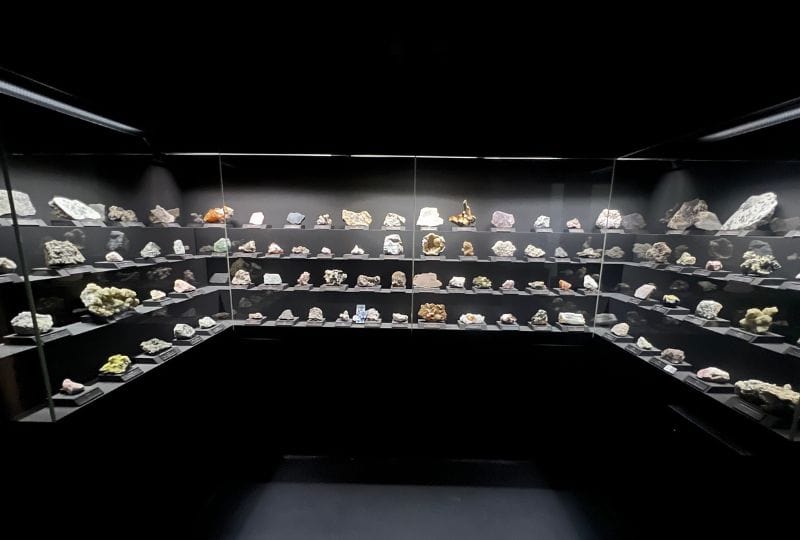
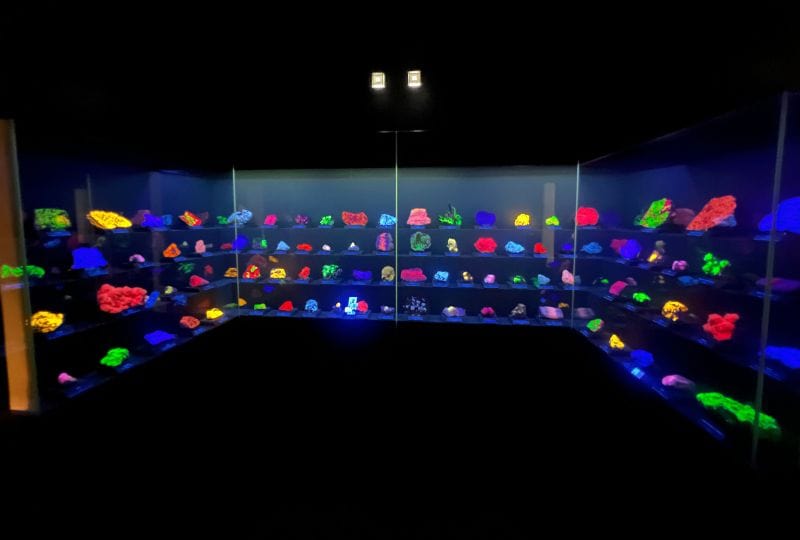
Asia and Australia – fluorite, pegmatites, and zeolites
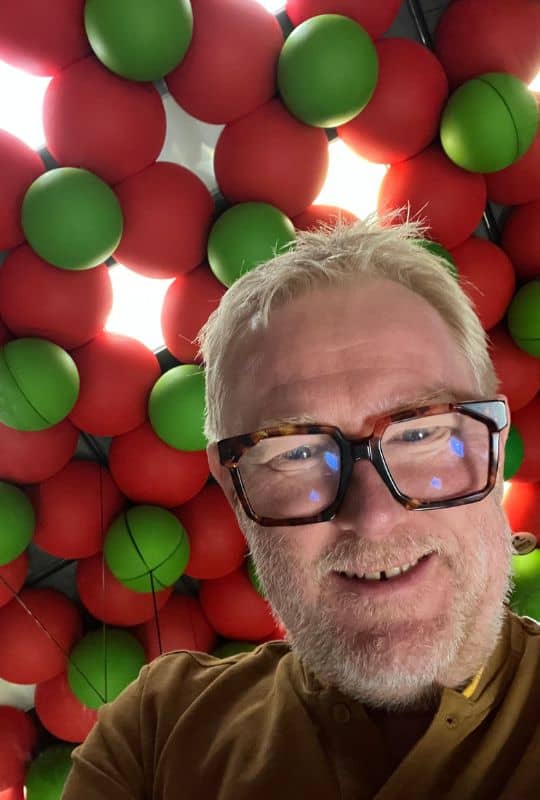
On the same floor, you continue your journey around the world through Asia and Australia. In the center of the hall, a large, walk-through passageway with cavities filled with fluorite has been recreated, giving you the literal feeling of walking into a mine shaft. In addition, the exhibition explains crystal chemistry and the structure of minerals in an accessible way. You can even crawl inside a “crystal lattice”!
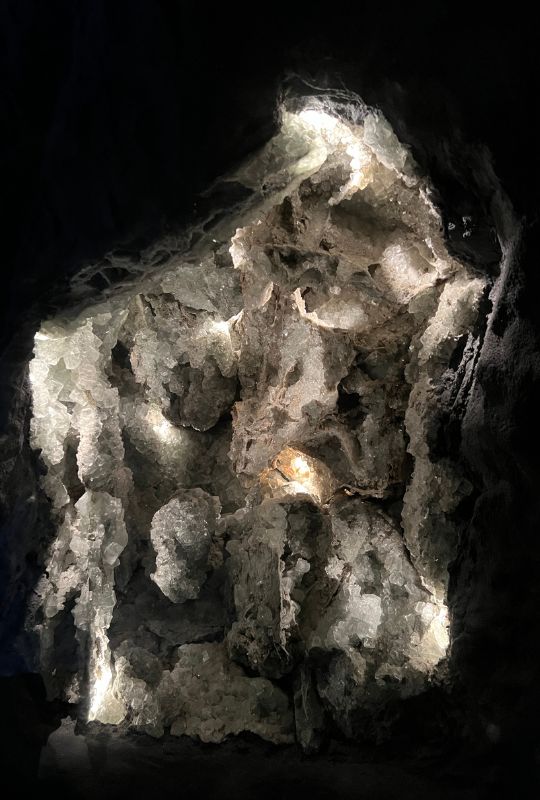
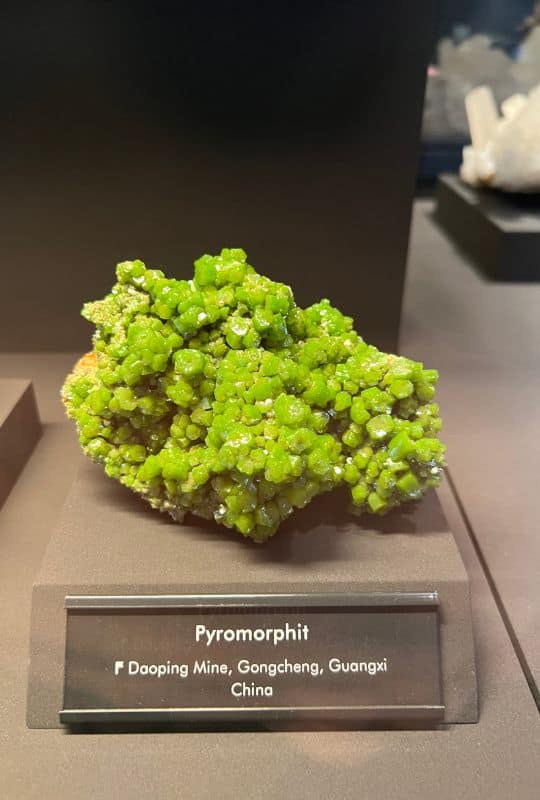
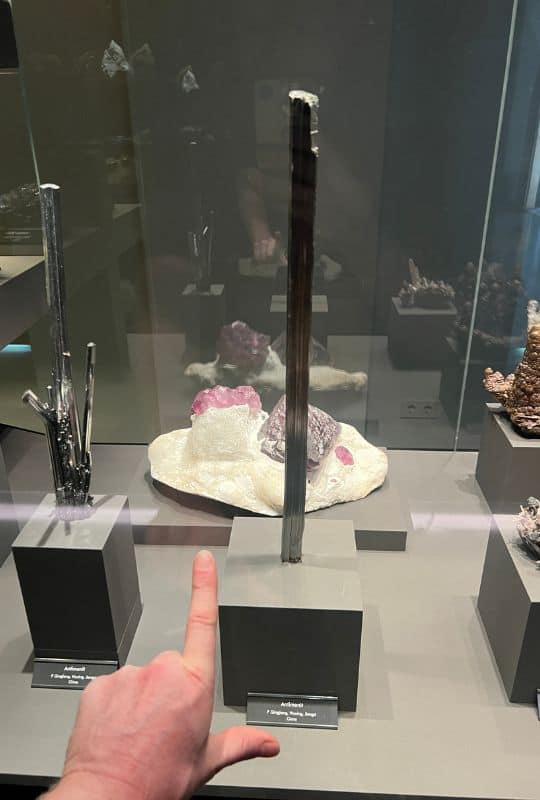
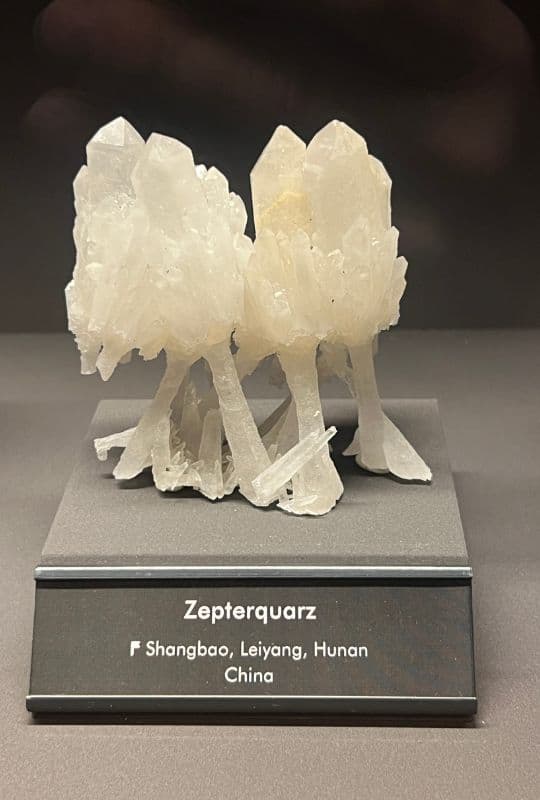
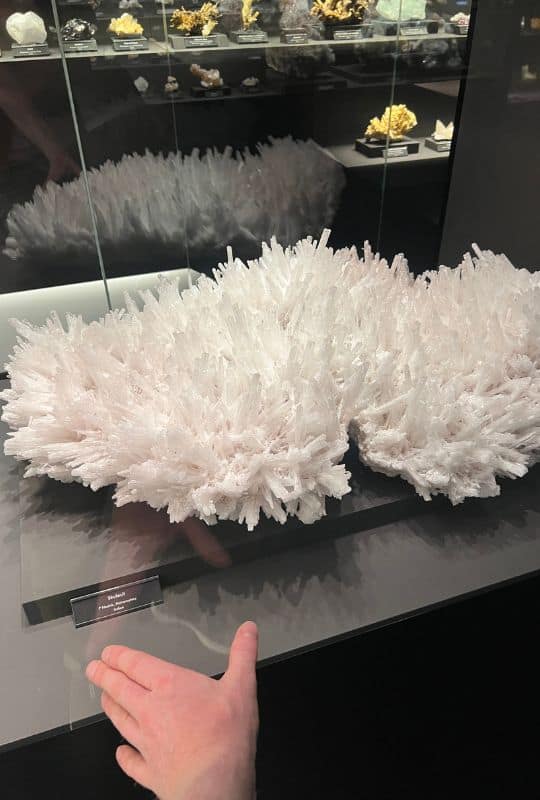
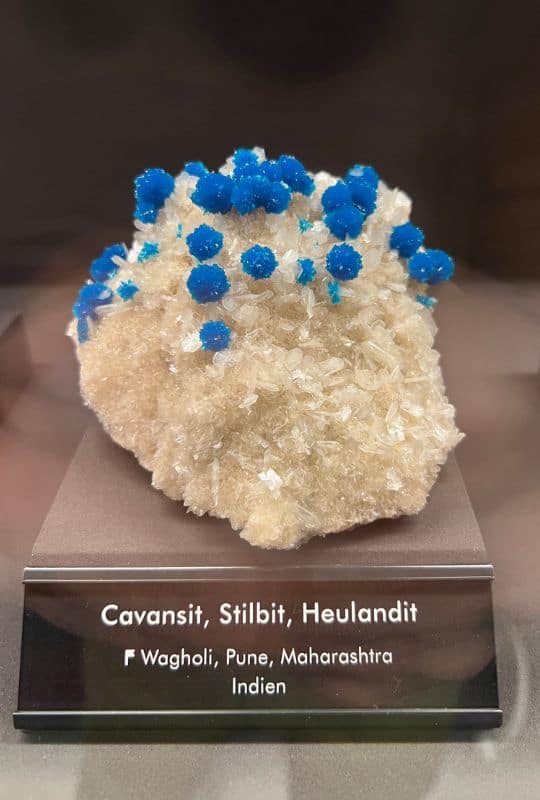
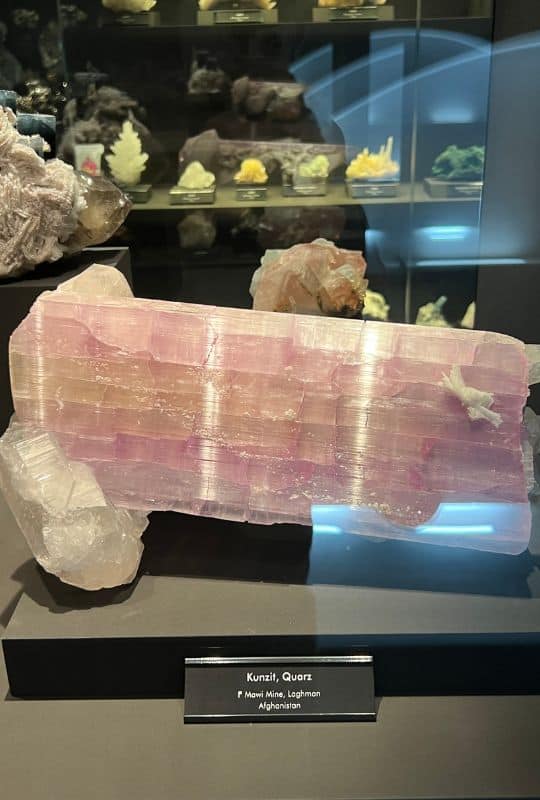
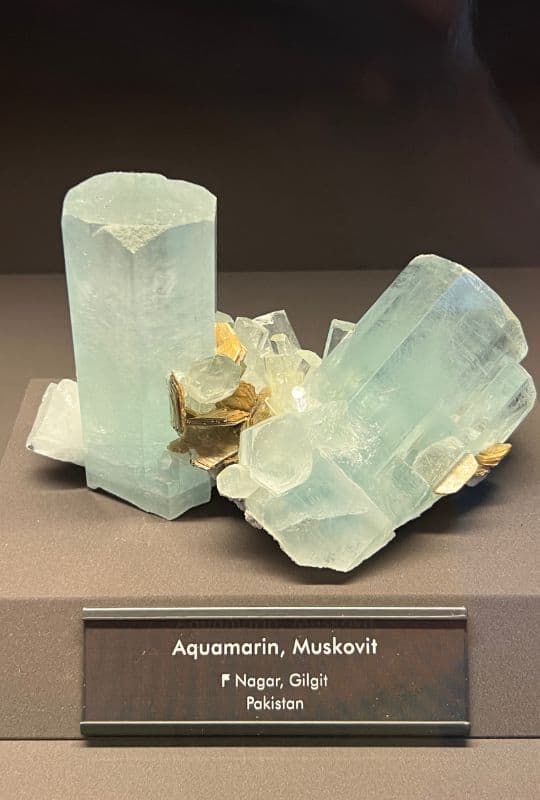
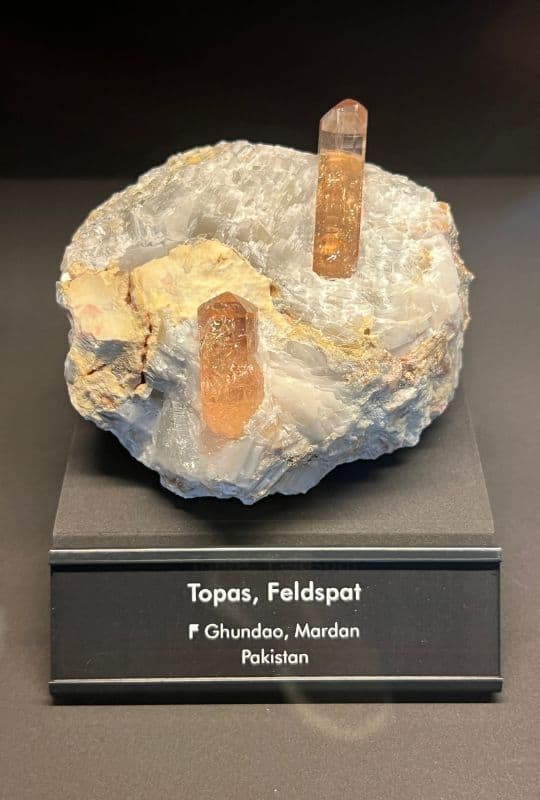
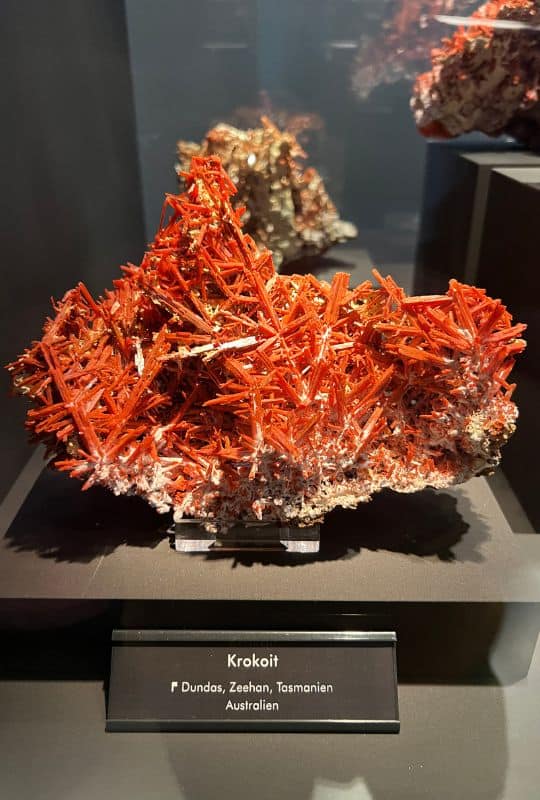
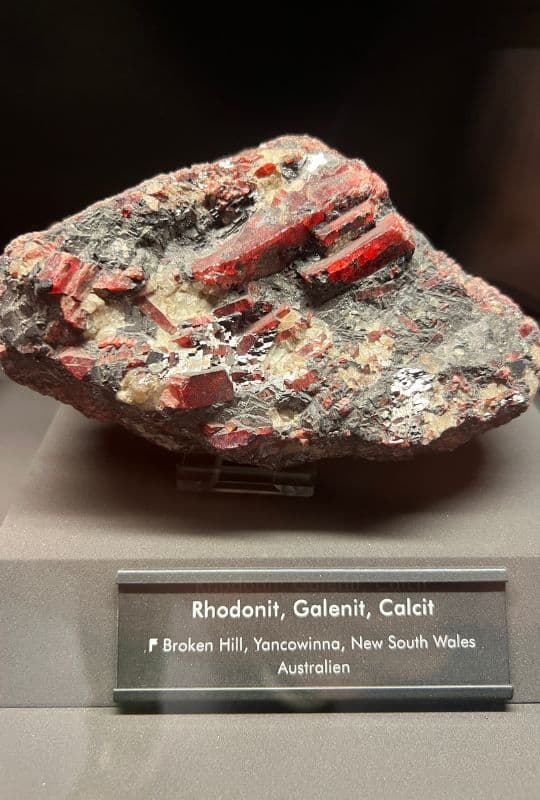
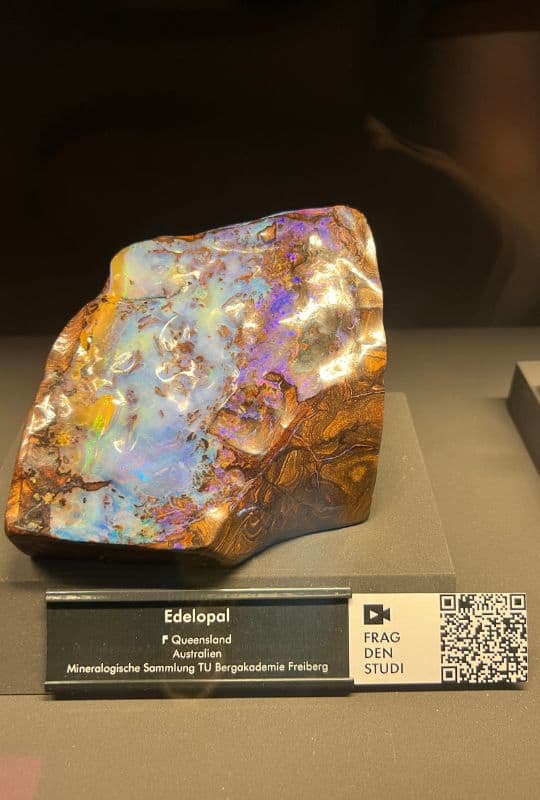
The focus is clearly on China, with an impressive array of fluorites, pyromorphites, stibnites, and other classic Chinese minerals. India is also well represented with stunning zeolites, cavansite, and apophyllite, while Pakistan and Afghanistan primarily showcase why this region is world-renowned for its pegmatites containing aquamarine, tourmaline, kunzite, feldspars, and other gemstones. Australia is represented by, among other things, classic crocoites from Tasmania, minerals such as rhodonite and galena from Broken Hill, and precious opals from Queensland.
Africa – from Morocco to Tsumeb
The imposing Renaissance staircase leads to the second floor, where you’ll find the Africa and Europe galleries. The Africa Gallery focuses on the evolution of minerals over time and illustrates how their uses have changed throughout history.
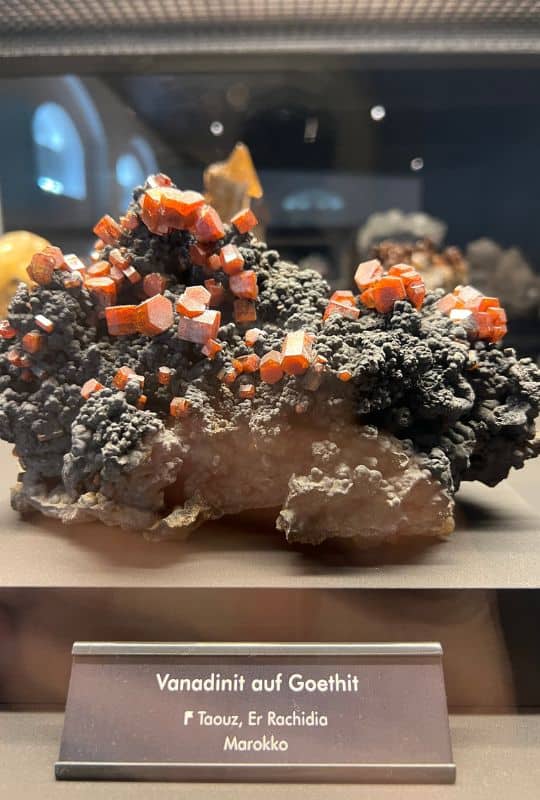
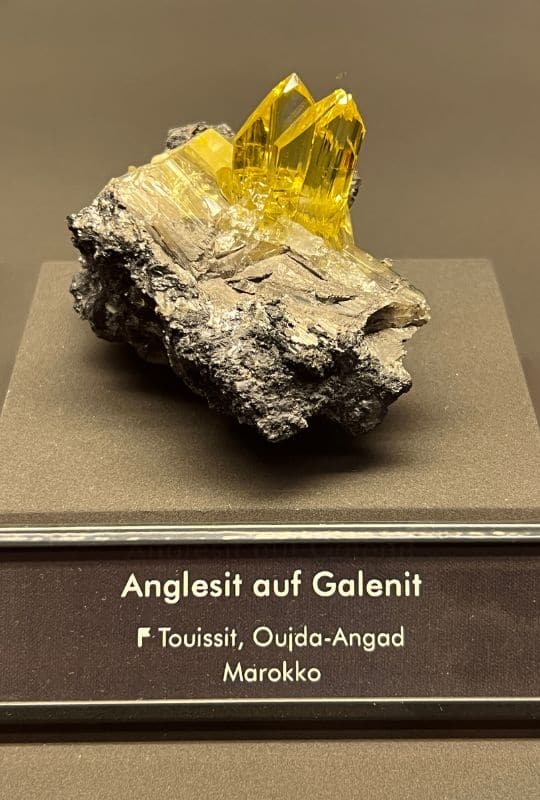
The collection offers an overview of many world-famous African sites. Morocco is represented by beautiful vanadinites, cerussites, anglesites, and erythrites, while the Democratic Republic of the Congo is represented by impressive malachites, dioptases, and other copper minerals. South Africa is also well represented, featuring, among other things, magnificent rhodochrosites from the N’Chwaning Mine and other classic specimens.
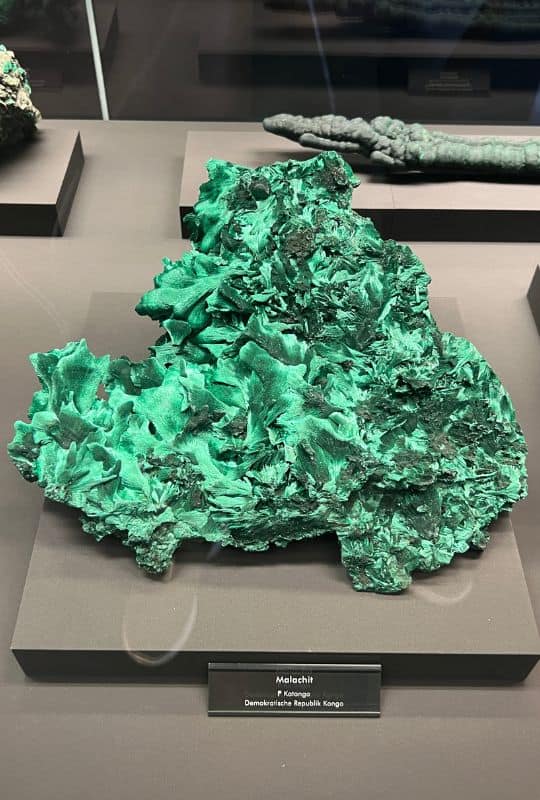
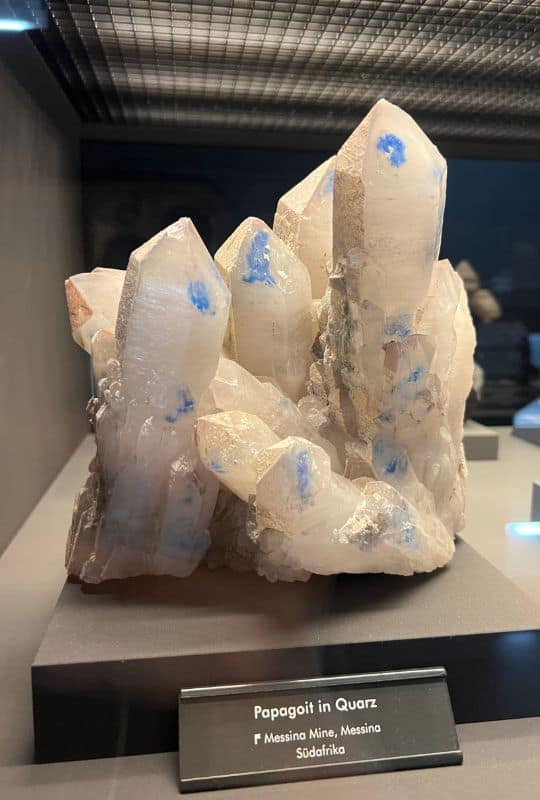
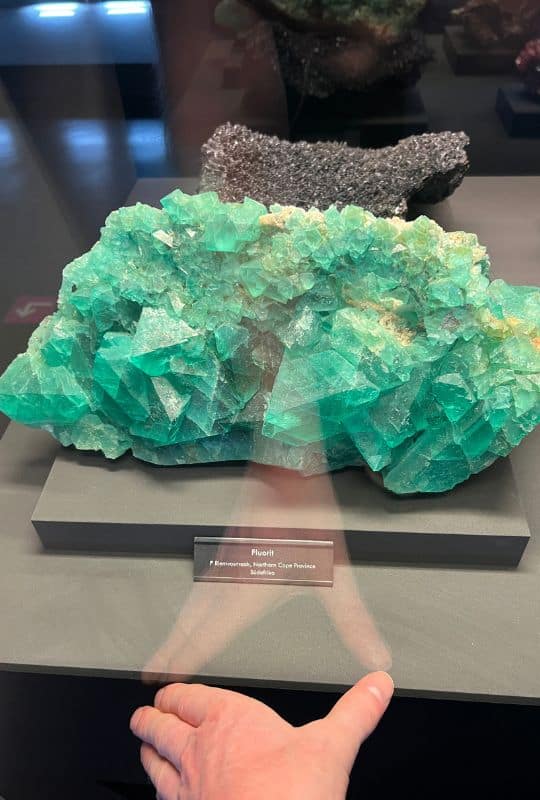
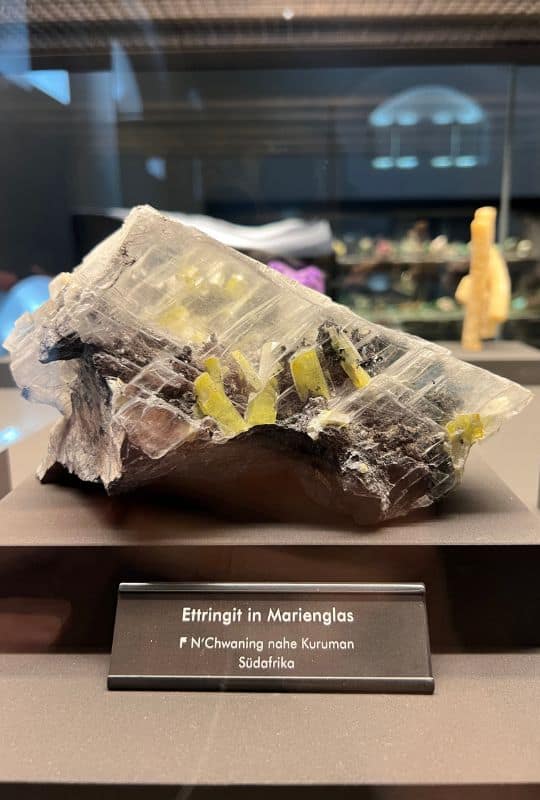
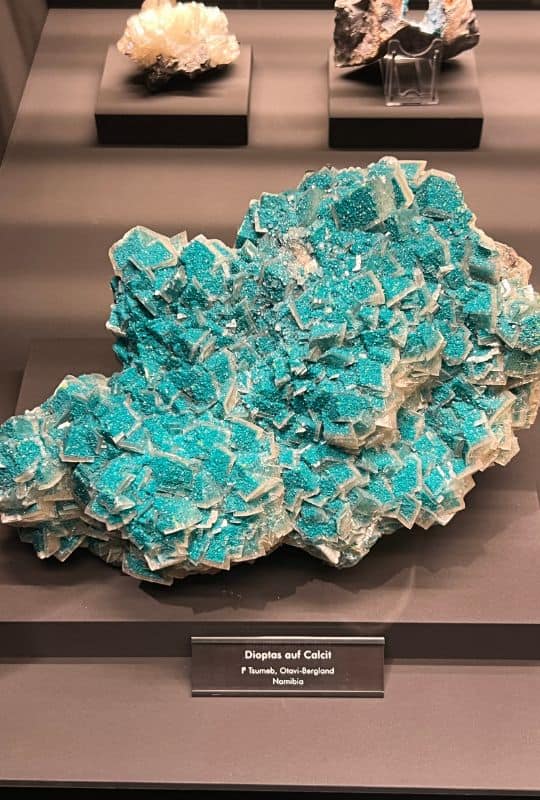
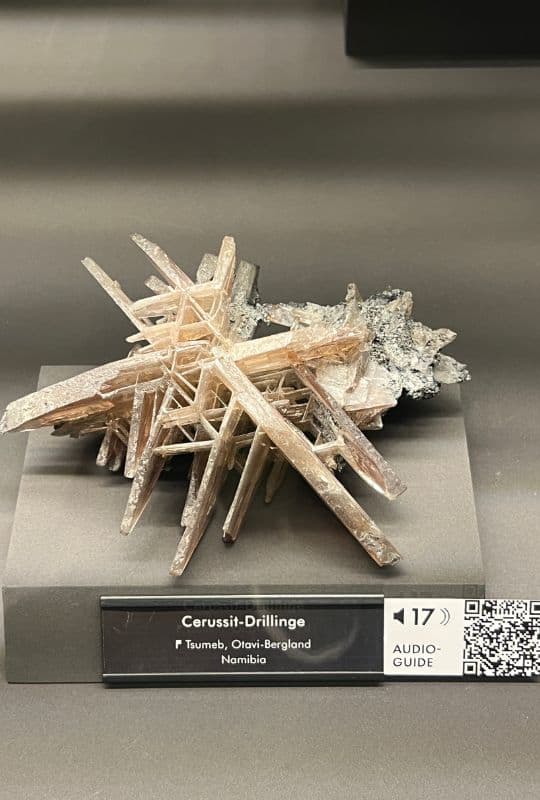
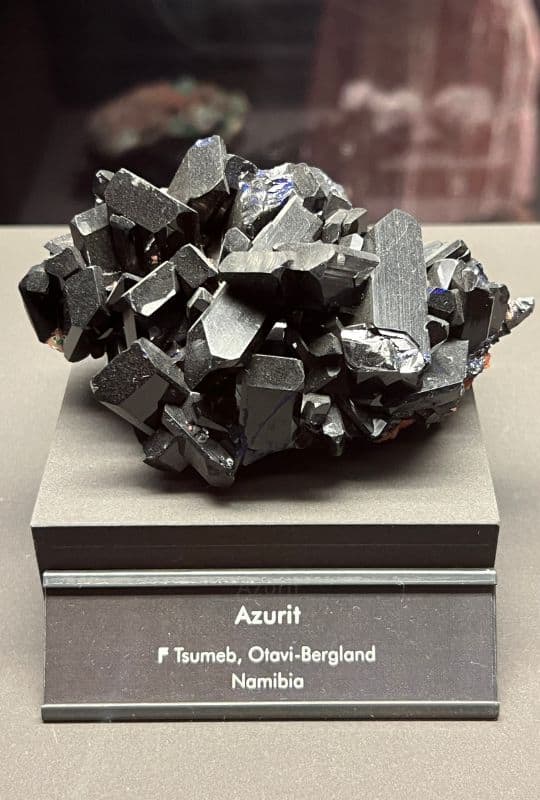
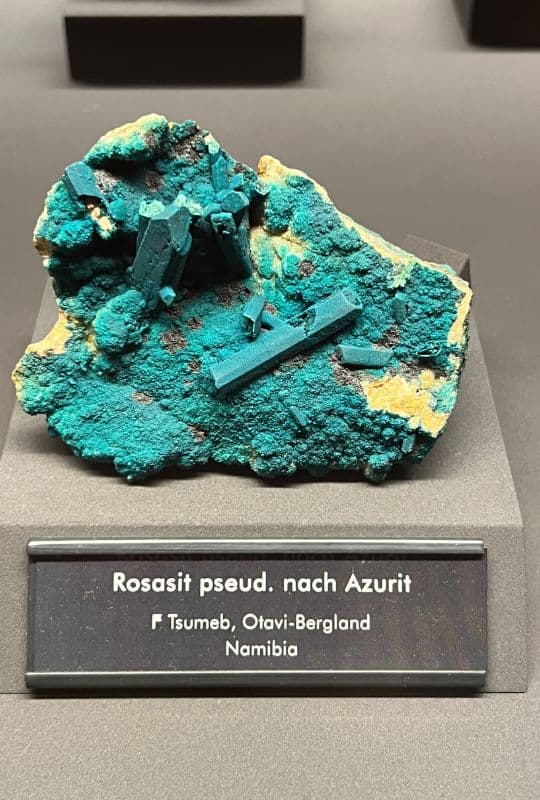
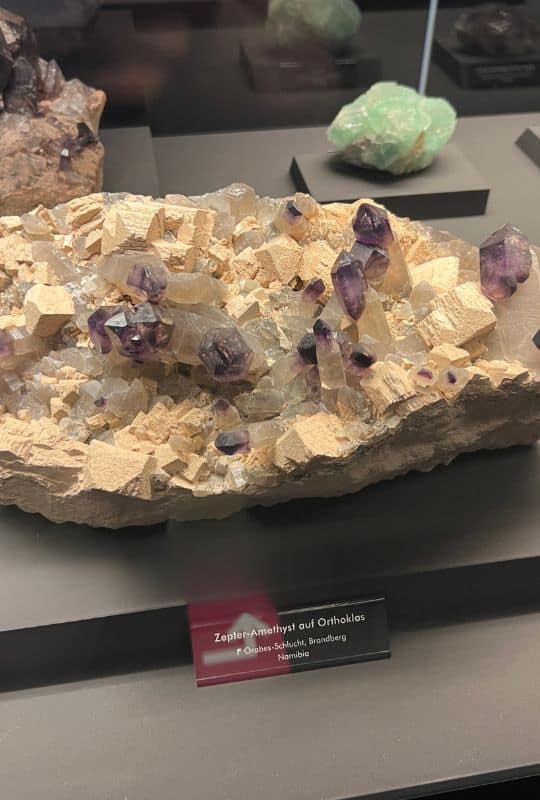
As far as I’m concerned, however, the absolute highlight is Namibia. The collection from Tsumeb is nothing short of impressive, featuring exceptional specimens of azurite, dioptase, mimetite, smithsonite, and cerussite, among others. Other famous Namibian sites, such as Mount Aukas, Okoruso, Erongo, and Goboboseb, are also well represented.
Europe – A Journey to Its Origins
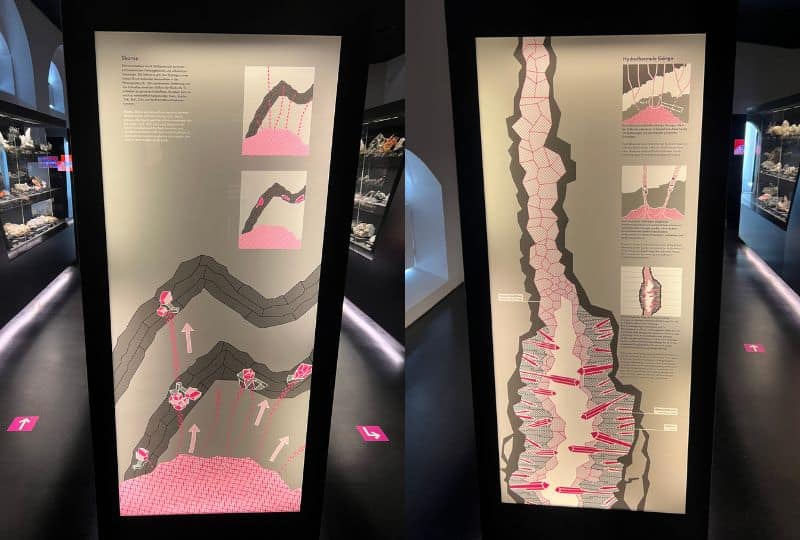
The final leg of the world tour takes visitors through Europe and Russia. According to the museum, this section is dedicated to a “journey to the origins of minerals.” This theme is reflected in the illuminated information panels along the display cases, which explain various geological processes and how minerals are formed. Through the open atrium leading to the top floor, the large interactive world map is once again visible, bringing the world tour full circle, so to speak. On the mezzanine level, there is also a small “hands-on lab,” where visitors can sit down at microscopes and consult a small mineralogical library.
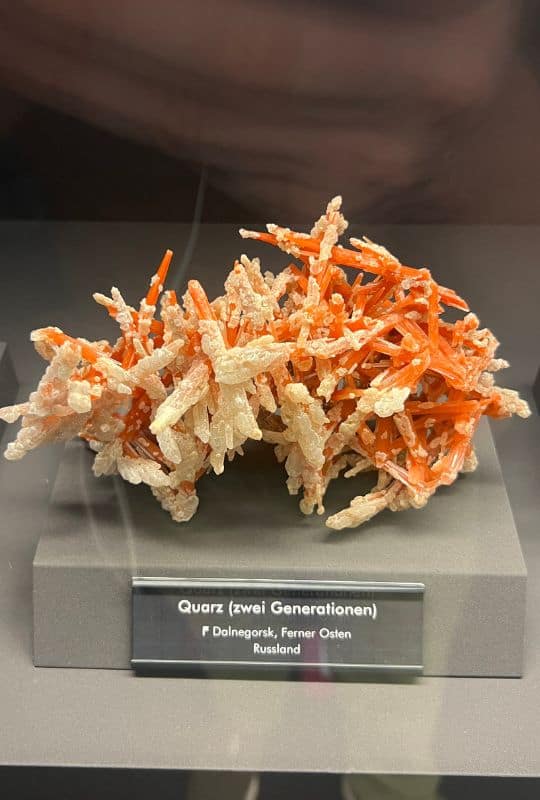
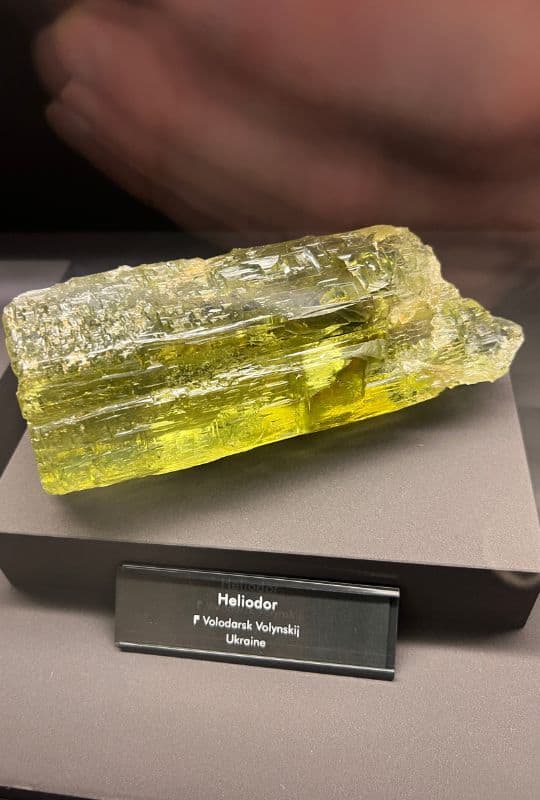
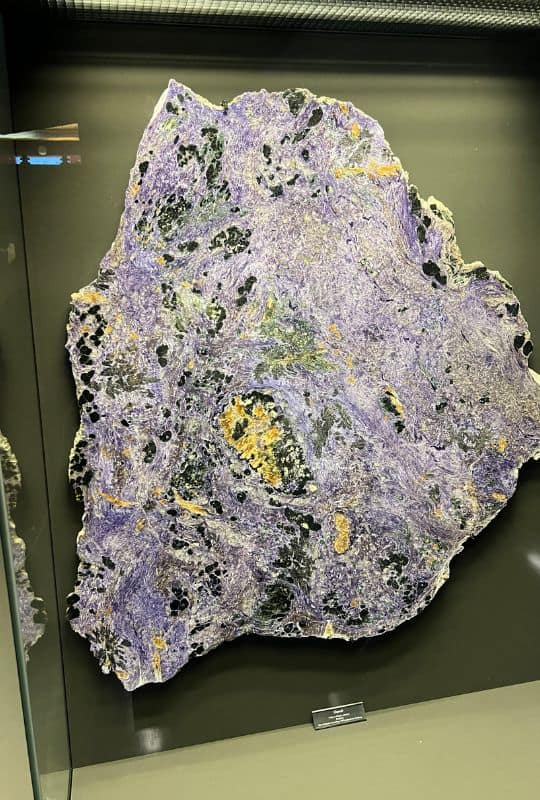
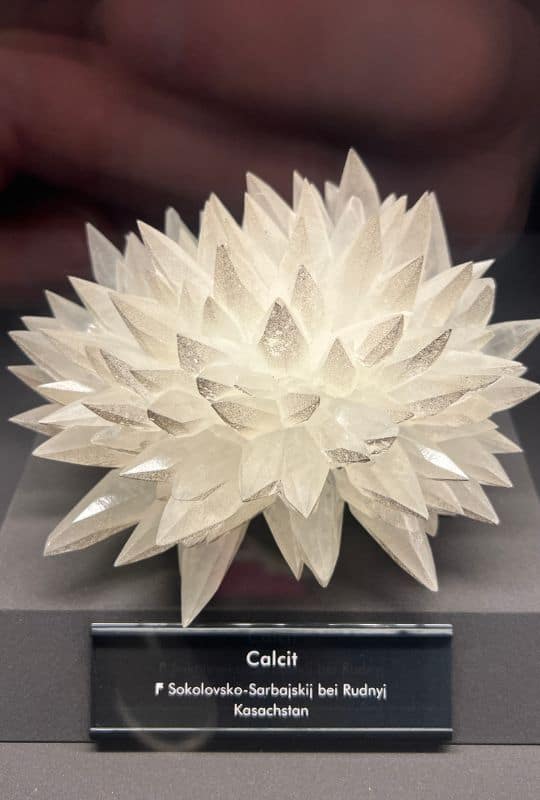
What immediately struck me was that Russia and the former Soviet republics are represented much more prominently than the countries of Western Europe. The display cases featuring specimens from Dalnegorsk, Ukraine, Kazakhstan, and other classic sites are, in my opinion, among the museum’s finest. Of course, France, Switzerland, Austria, Italy, and Romania are also represented, with beautiful specimens of fluorite, sulfur, gypsum, aragonite, and pyromorphite, among others. The Western European countries are thus well represented, but presented on a more modest scale than I had anticipated. As a result, the Eastern European and Russian masterpieces attract even more attention.
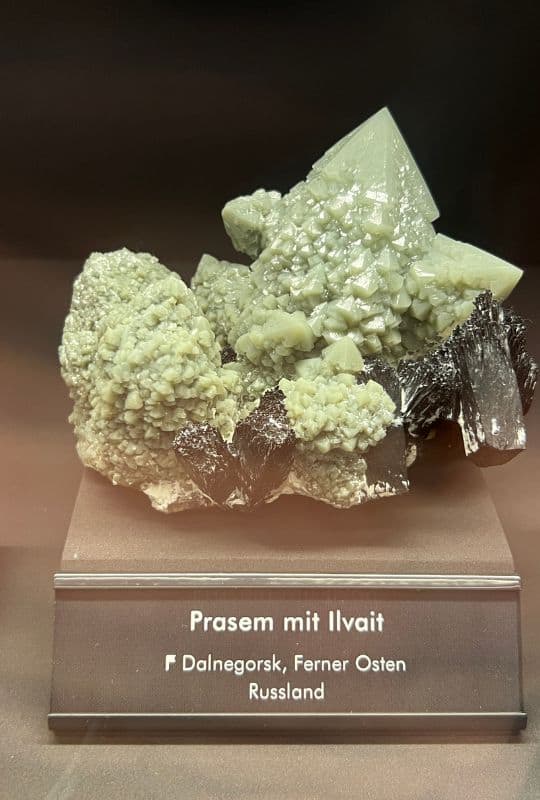
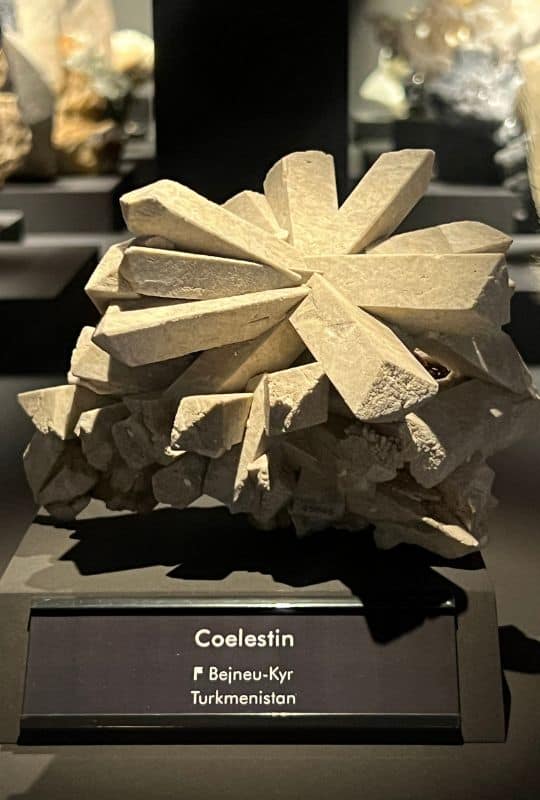
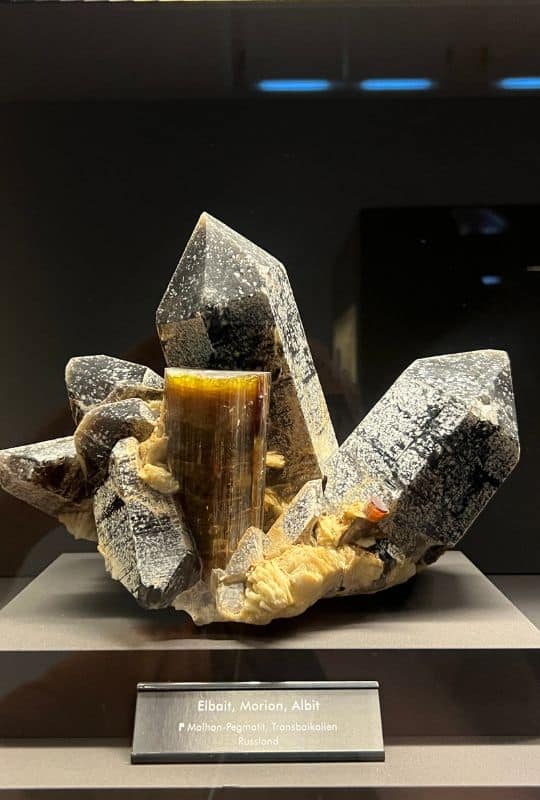
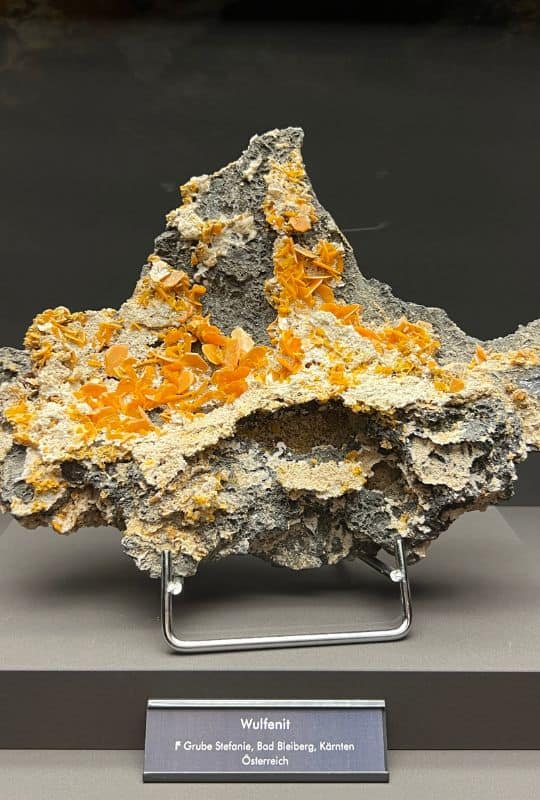
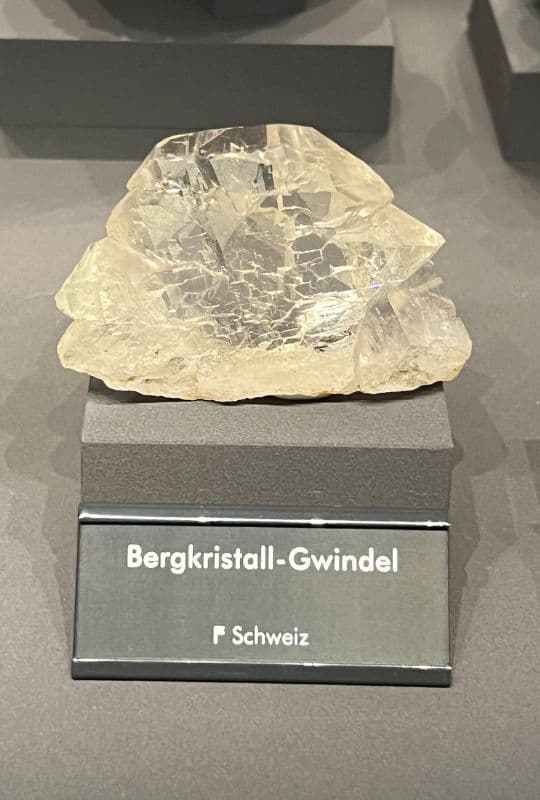
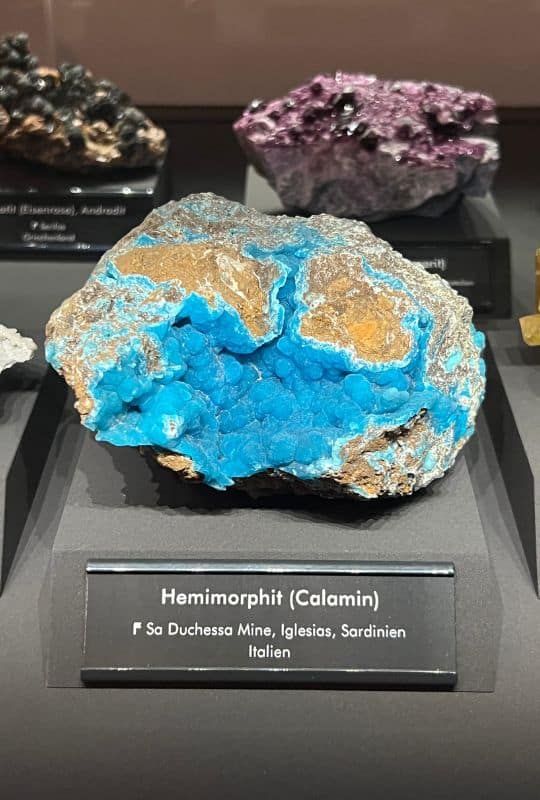
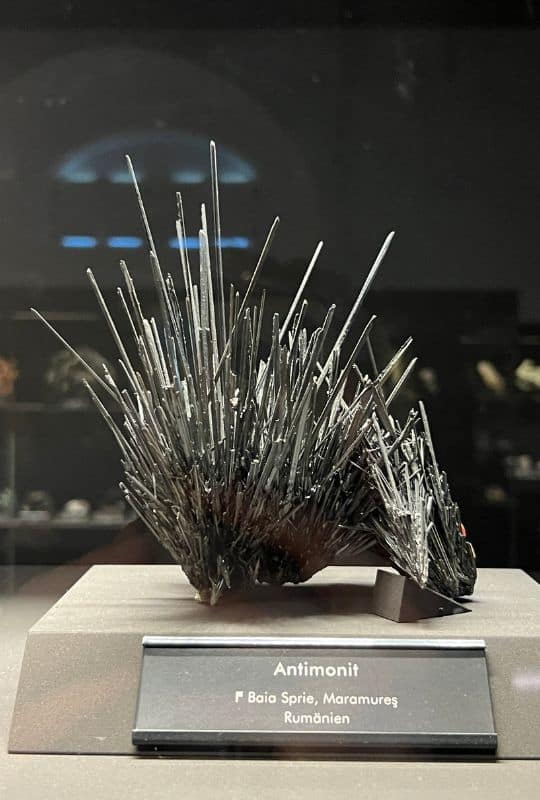
The Treasure Chamber
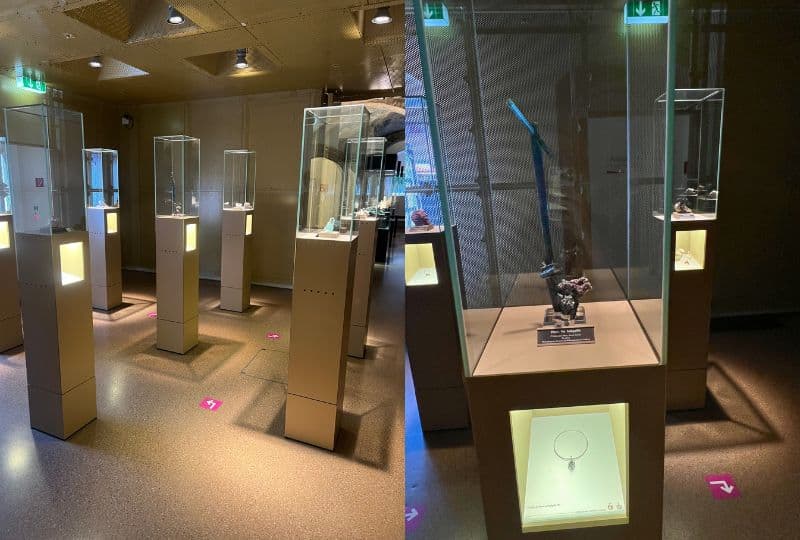
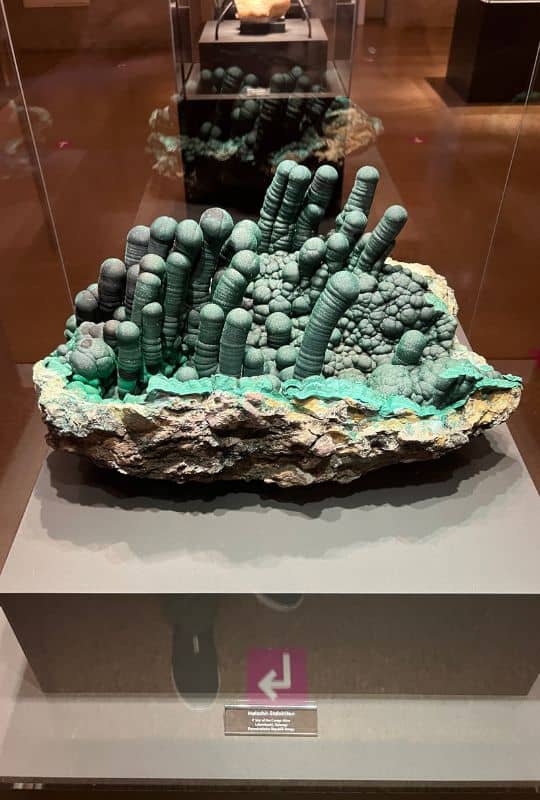
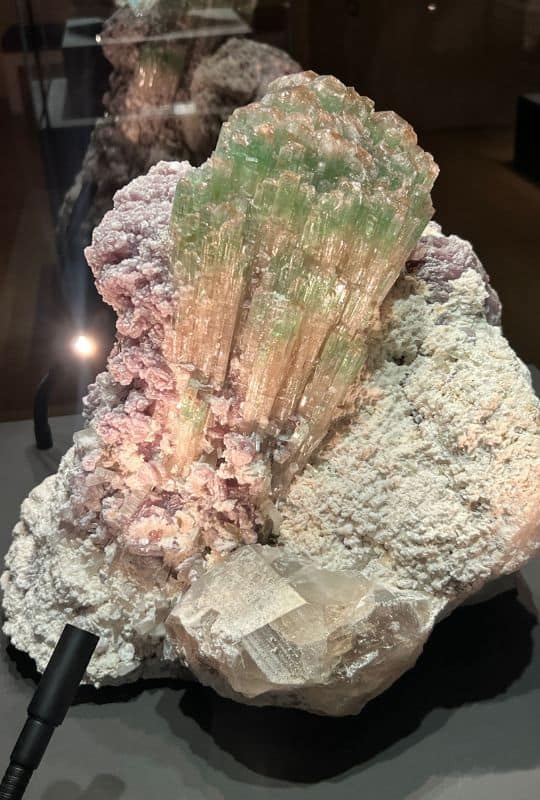
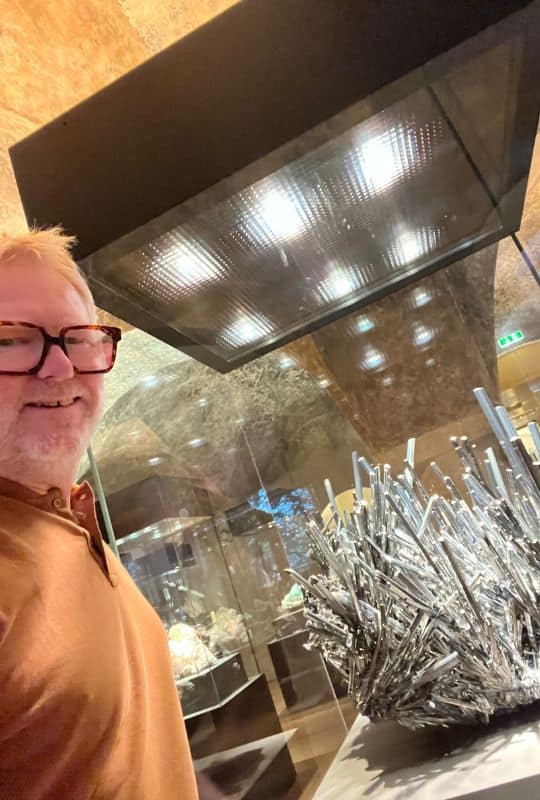
On the ground floor, the world tour concludes in the Treasure Chamber. Here, the largest and most impressive minerals are displayed individually, alongside a section featuring cut gemstones and jewelry and a separate exhibition on meteorites, tektites, and impact rocks.
Personally, I found this finale a bit underwhelming. Not because the collection isn’t impressive—on the contrary—but mainly because the rest of the museum sets the bar so high. Perhaps, after spending hours among thousands of masterpieces, I was simply completely overwhelmed. That probably says more about my own enthusiasm than about the quality of the Treasury.
Museum Shop and Lunch Recommendation
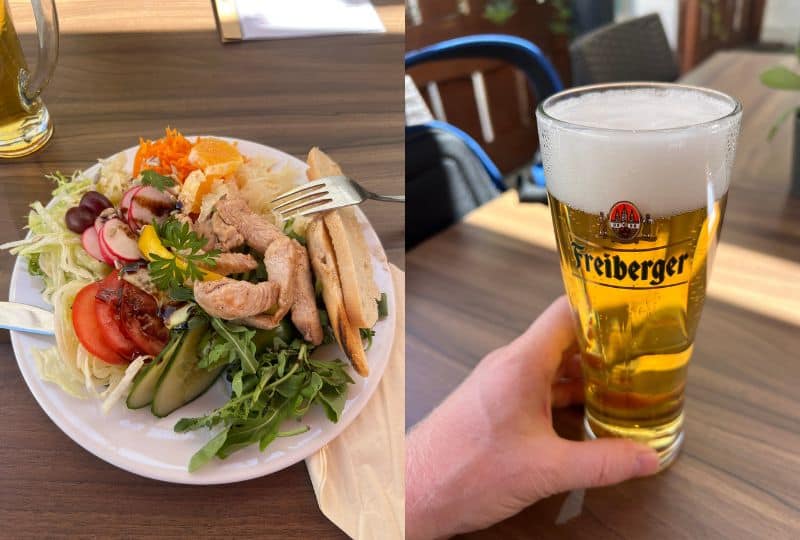
After looking around for a few hours, to be honest, my head was starting to feel pretty full. That’s exactly why I liked that you can walk straight from the museum into the courtyard of Schloss Freudenstein. On the terrace of the Schloss-Café , I first had a cup of coffee and later a simple lunch with a local Freiberger beer. Highly recommended if you’re visiting Terra Mineralia; sitting outside for a bit ensures you can continue your visit with renewed energy.
Before I left, I naturally stopped by the museum shop as well. The selection is surprisingly extensive, with plenty of books, souvenirs, and a nice selection of minerals. I found the German specimens, in particular, to be attractively priced. It was also striking that they were selling lab-grown crystals, which were clearly labeled as such. I was less enthusiastic about a heat-treated amethyst crystal that was being sold for a high price as “citrine.” In the end, I went home with a beautiful lab-grown pruskite crystal cluster for my Gem or Scam collection.
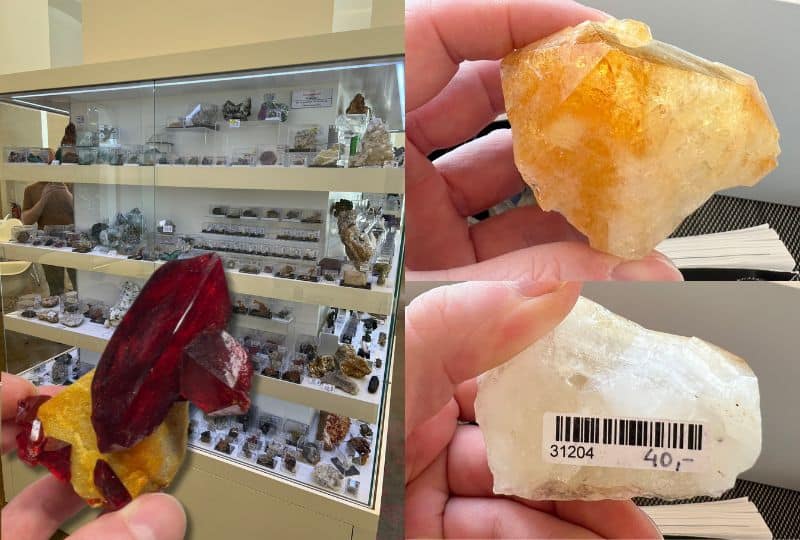
After my visit to Terra Mineralia and lunch, I walked a few minutes to the Krüger-Haus, which turned out to be a completely different—but just as interesting—experience.
Krüger House
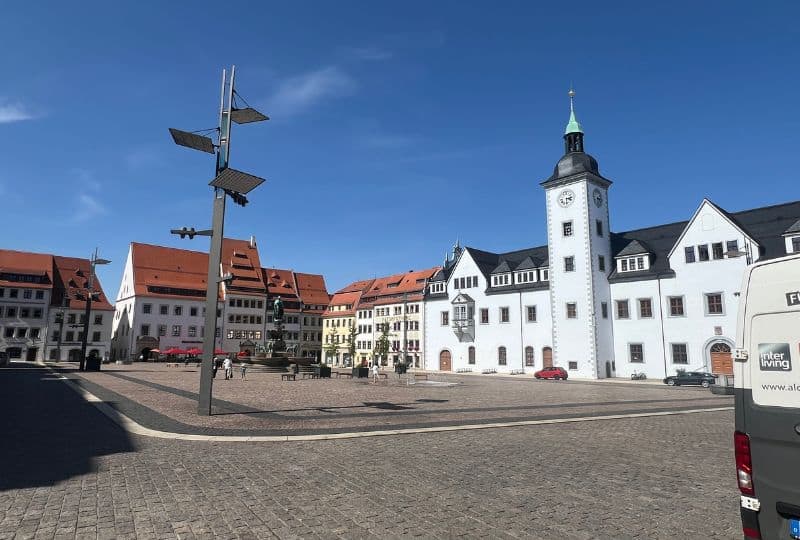
Since 2012, the Krüger-Haus has been located in the former Freiberg town hall and houses the Mineralogical Collection of Germany of the TU Bergakademie Freiberg. Unlike Terra Mineralia, which focuses on minerals from around the world, this collection is entirely dedicated to minerals from German sites. As such, the museum serves as a valuable complement to Terra Mineralia and offers a wonderful overview of Germany’s rich history of mining and mineralogy.
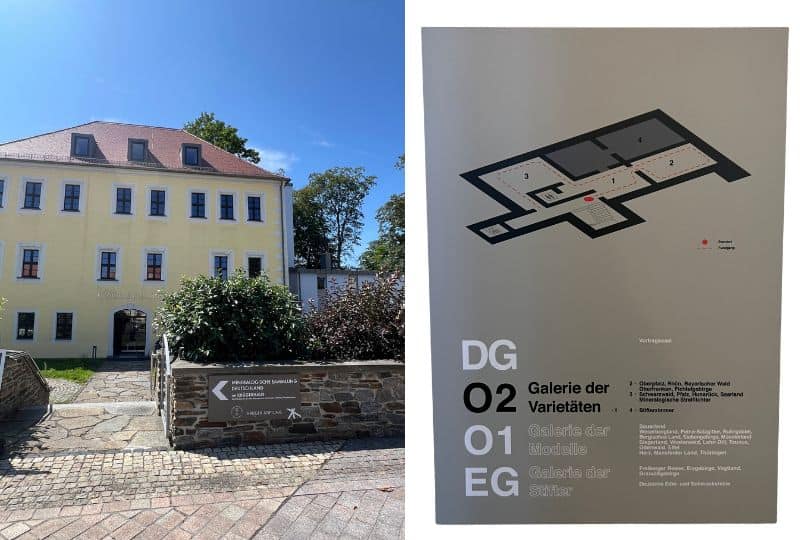
My first impression
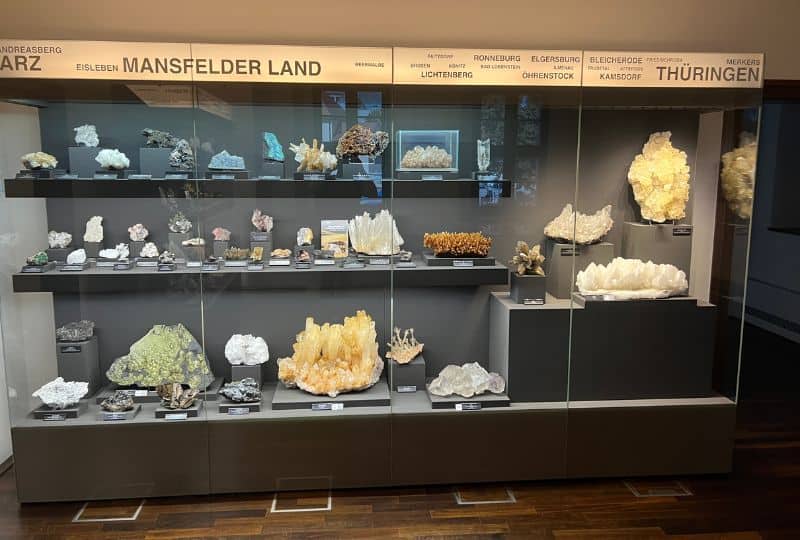
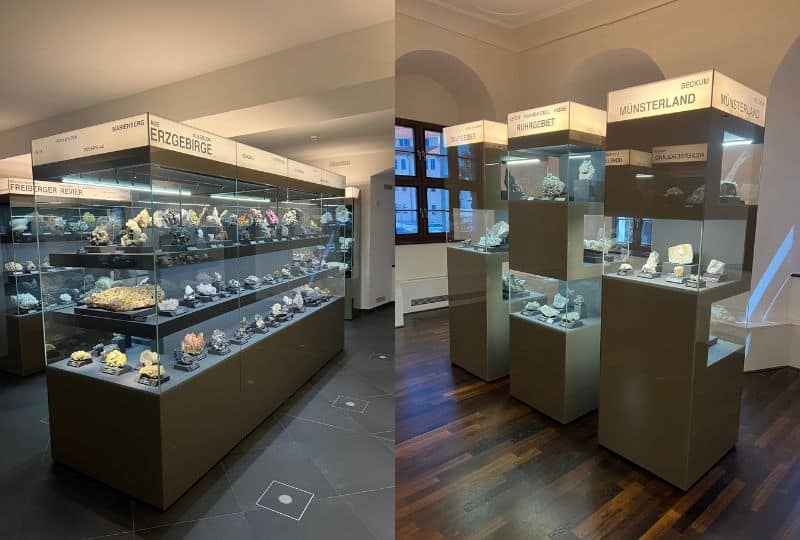
To be honest, it took me a moment to adjust when I walked in. While Terra Mineralia impresses primarily with its modern presentation and spectacular global collection, the Krüger-Haus has a much more classic feel. Long display cases filled with numerous specimens, historical collections, and extensive attention to the sites of discovery give the museum more the character of a traditional mineralogical collection than that of an interactive museum. That actually fits very well with the nature of the collection. After viewing a few display cases, I began to appreciate this approach more and more and realized that the museum actually offers a great deal of depth for collectors. For enthusiasts of German minerals, the Krüger-Haus is therefore at least as interesting as Terra Mineralia.
From top to bottom
Although you enter on the ground floor, the museum recommends starting on the upper level, just as you would at Terra Mineralia. That way, you’ll take a journey through Germany, so to speak, that ultimately ends with the rich mining history of Saxony and Freiberg.
On the second floor, the tour begins with the Galerie der Varietäten, where polished specimens of quartz, jasper, amethyst, fluorite, and other minerals demonstrate just how much variation a single mineral or rock type can exhibit. Next come the southern German states, featuring classic sites such as Grube Clara, Idar-Oberstein, the Upper Palatinate, and the Black Forest. Here, beautiful fluorites, barites, pyromorphites, amethyst geodes, and many other classic German minerals are on display. This was very familiar to me; I have collected specimens from many of these sites myself, or I have specimens from them in my own collection.
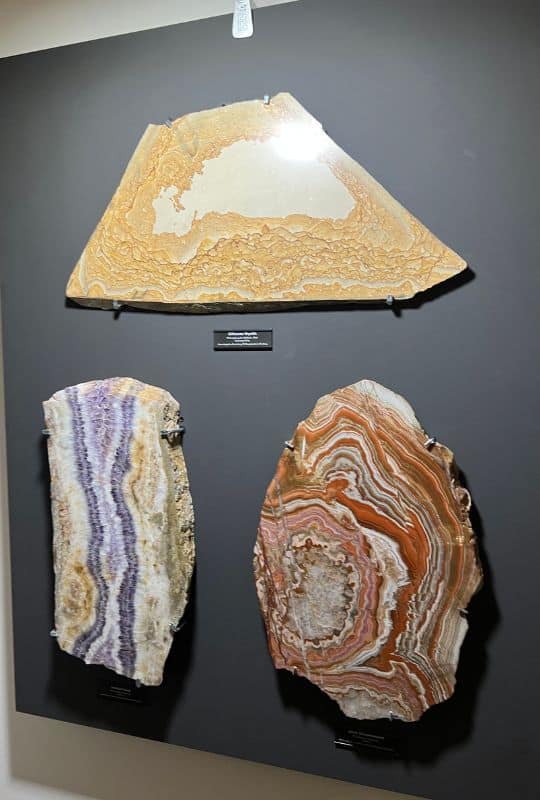
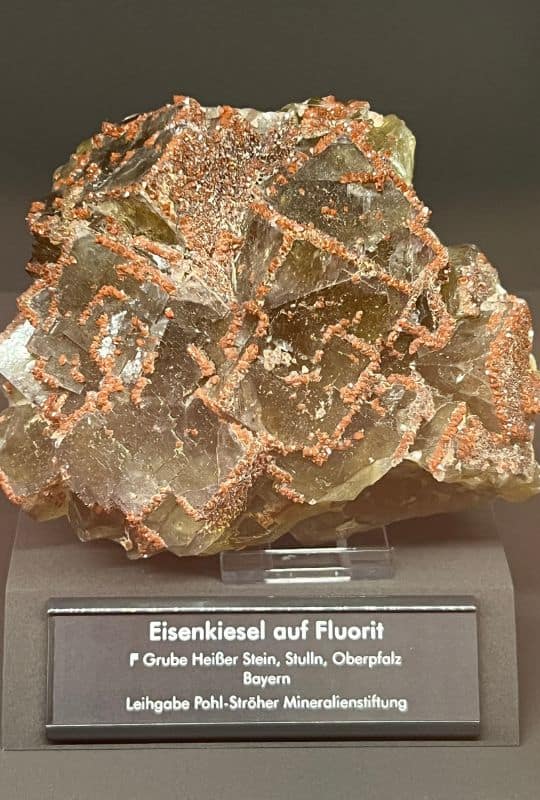
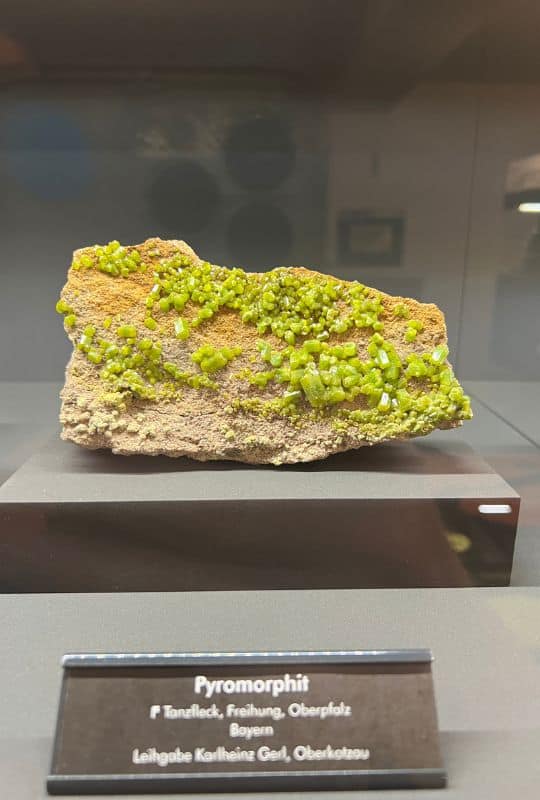
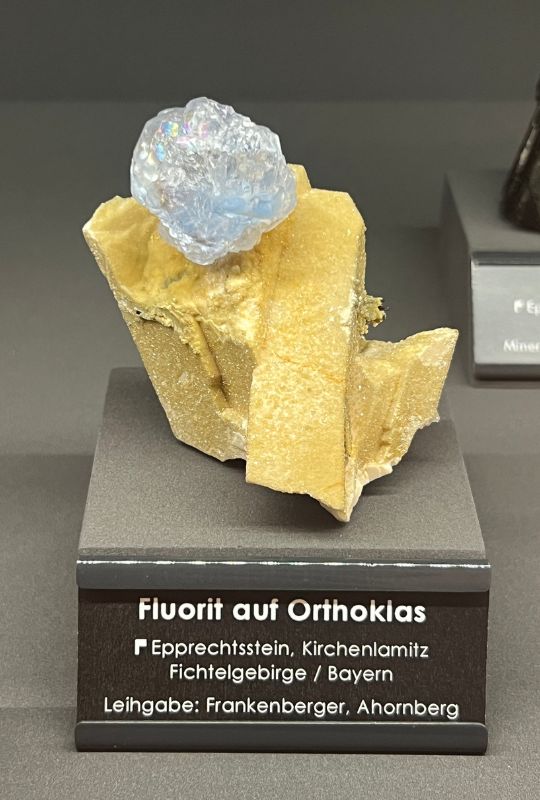
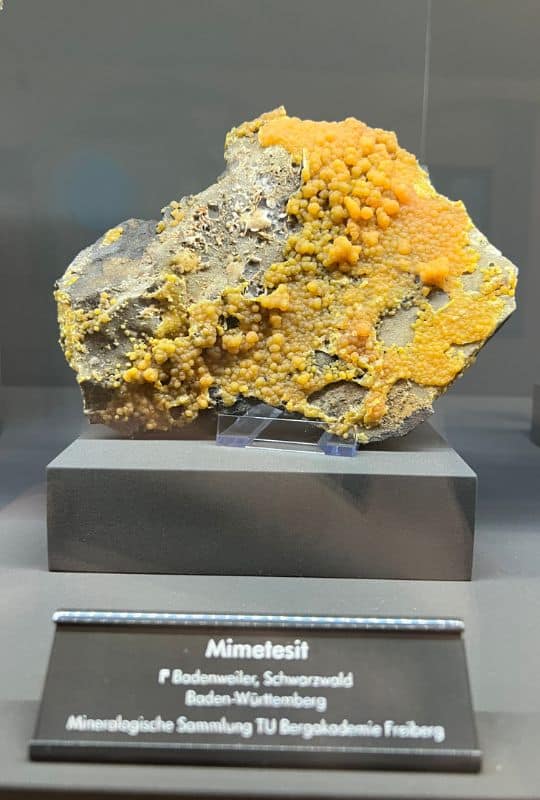
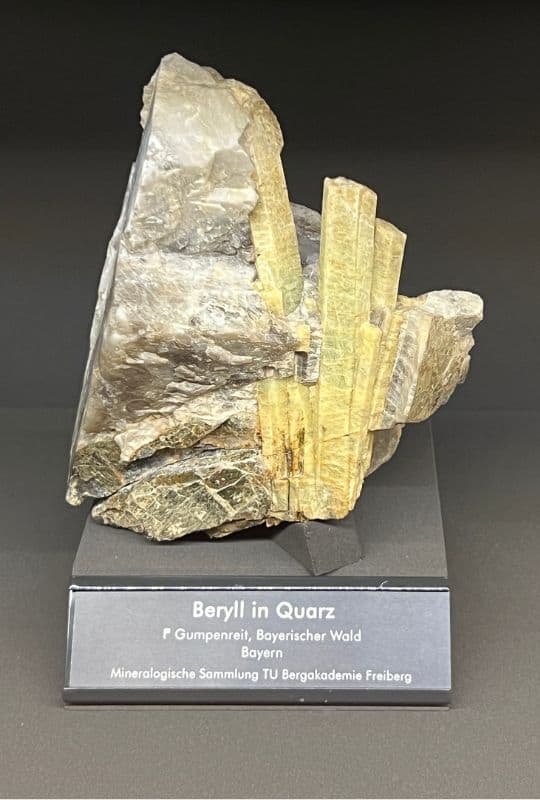
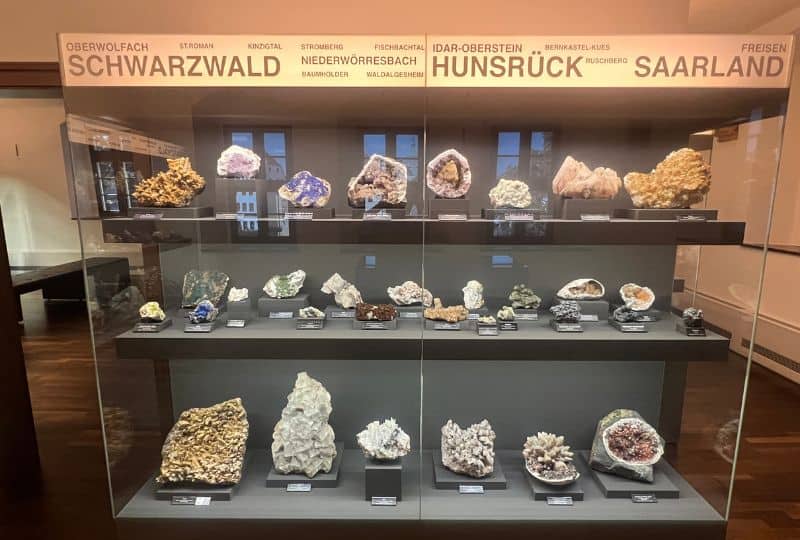
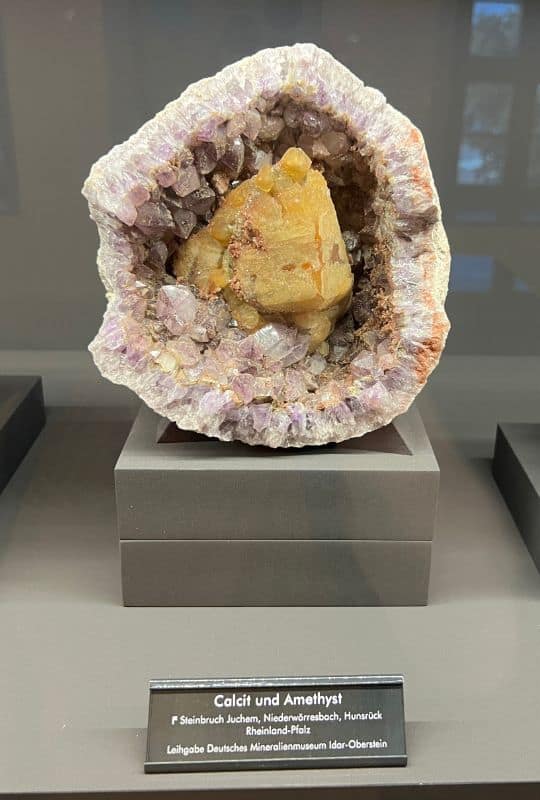
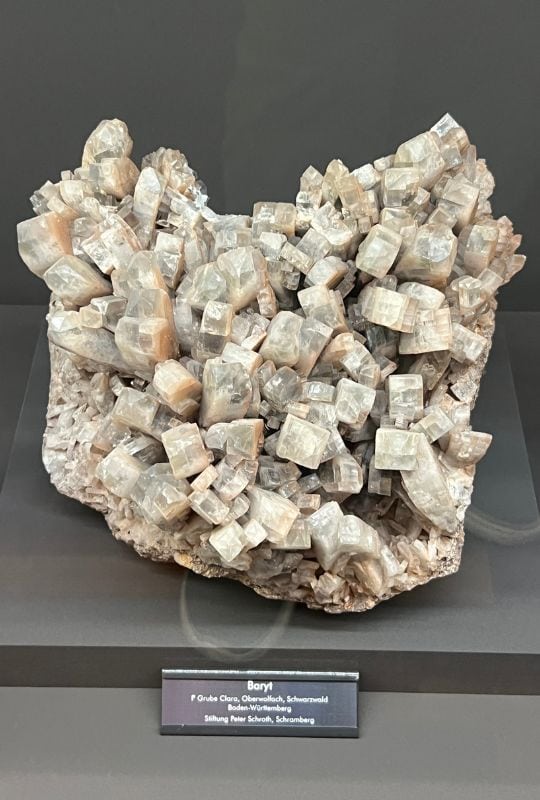
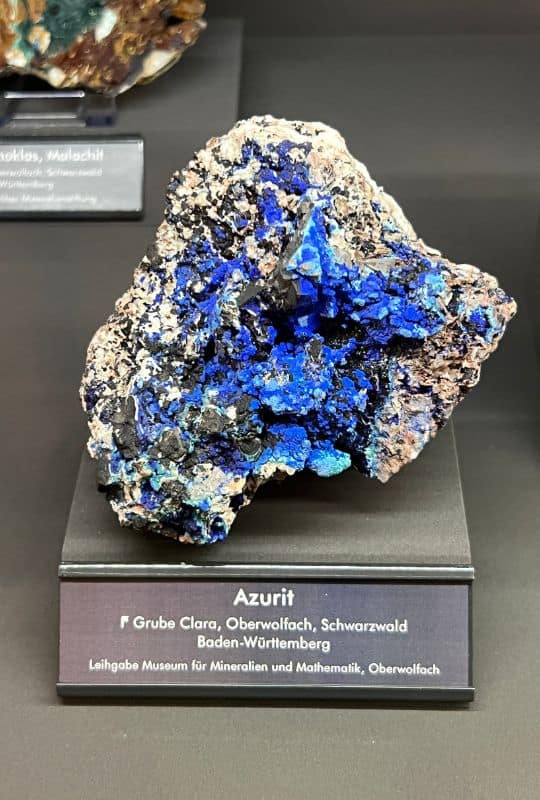
The first floor then takes you from East to West Germany. In addition to minerals from the Harz Mountains, Hesse, the Sauerland, and the Münsterland, among other places, it was the impressive collection of wooden crystal models that particularly caught my attention. The hundreds of models, crafted by Krantz in Bonn, showcase the enormous variety of crystal shapes and remain an important teaching tool for me as an instructor. The many well-known historical sites, such as Wolsendorf, Dreislar, and Beckum, also made this floor particularly interesting.
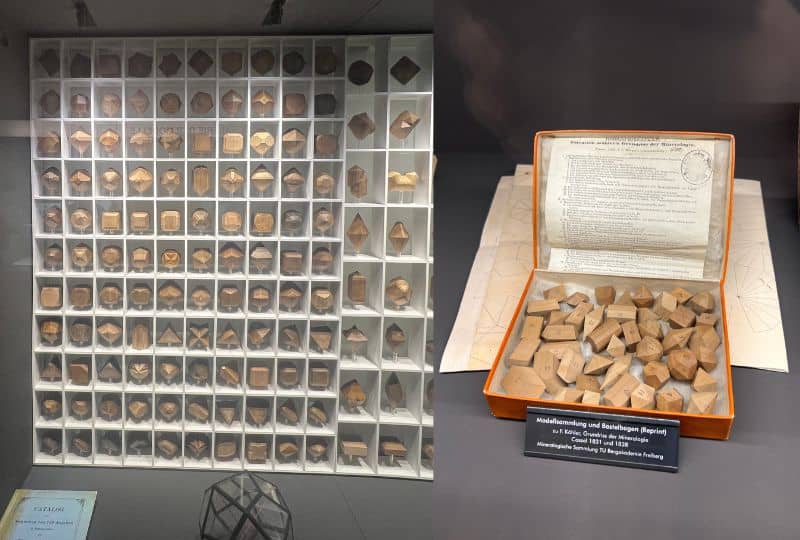
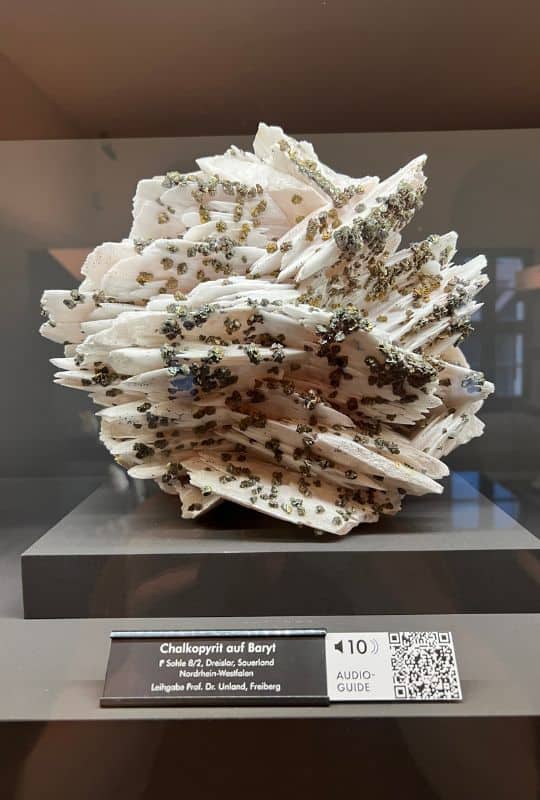
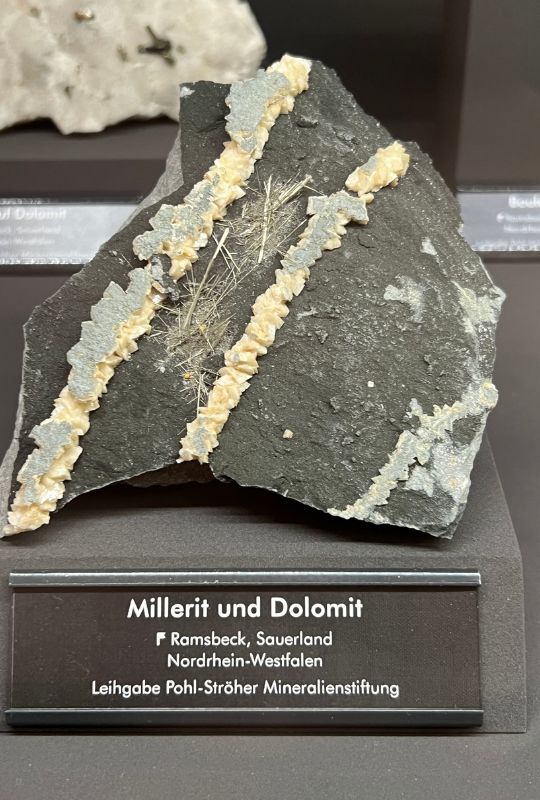
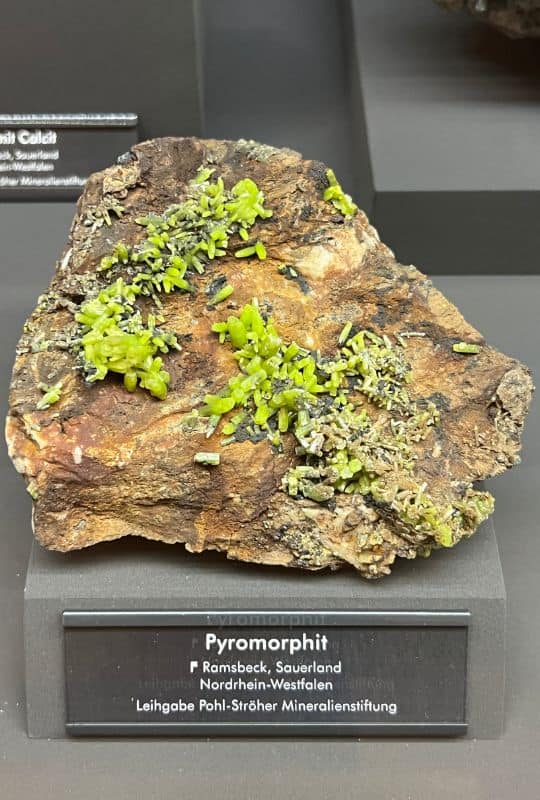
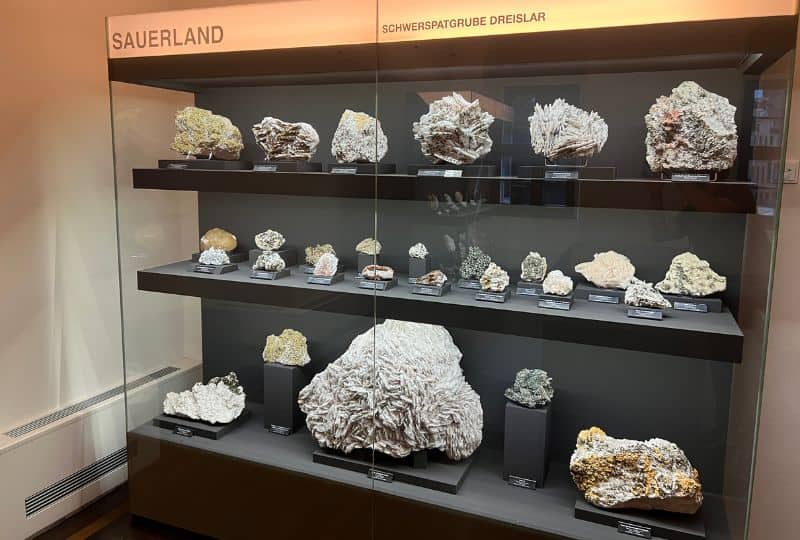
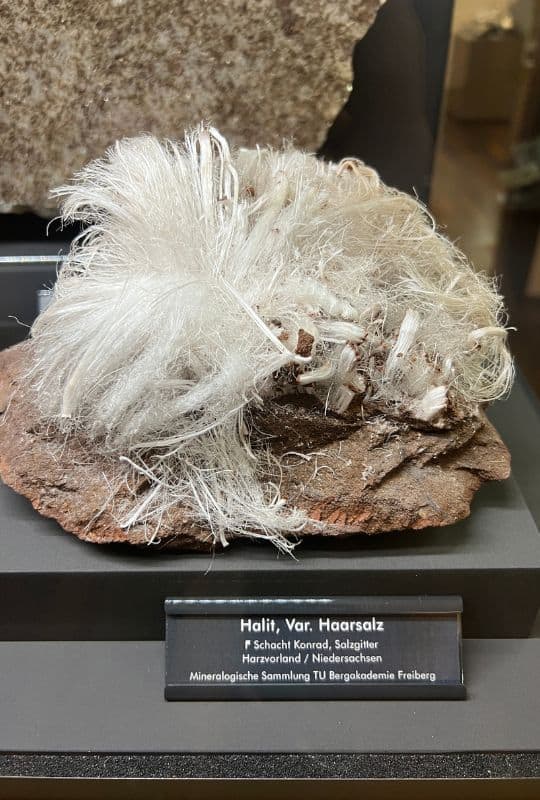
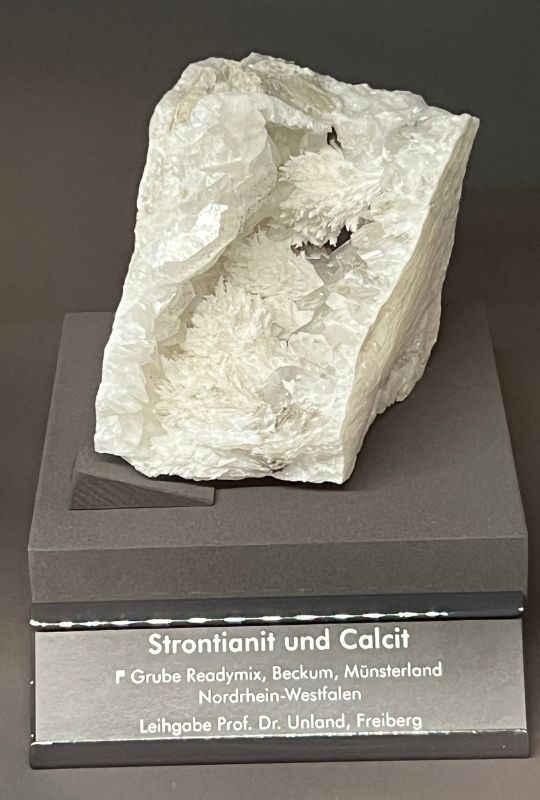
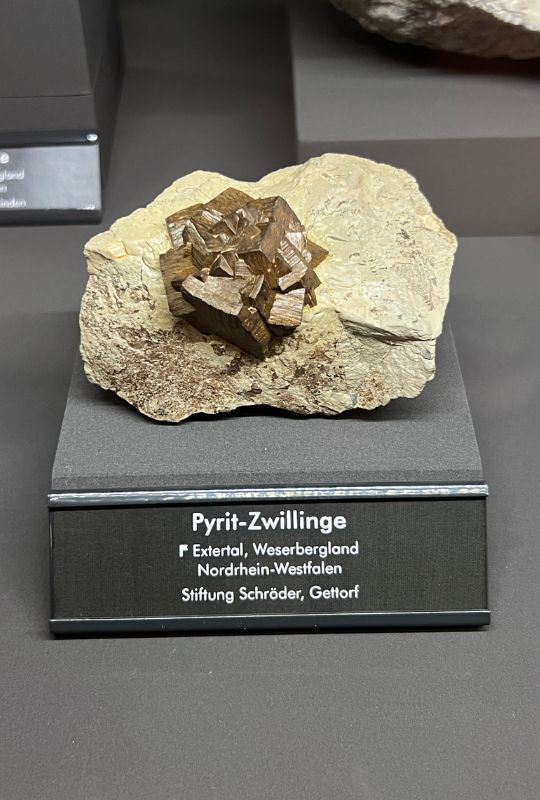
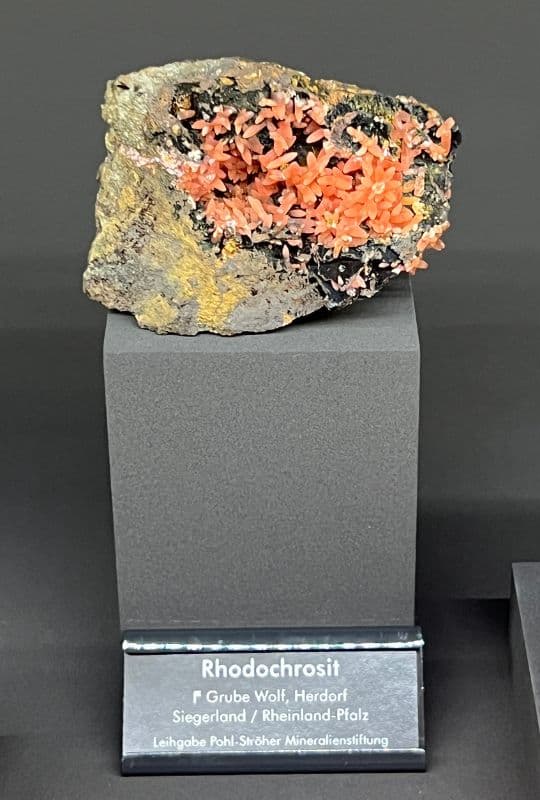
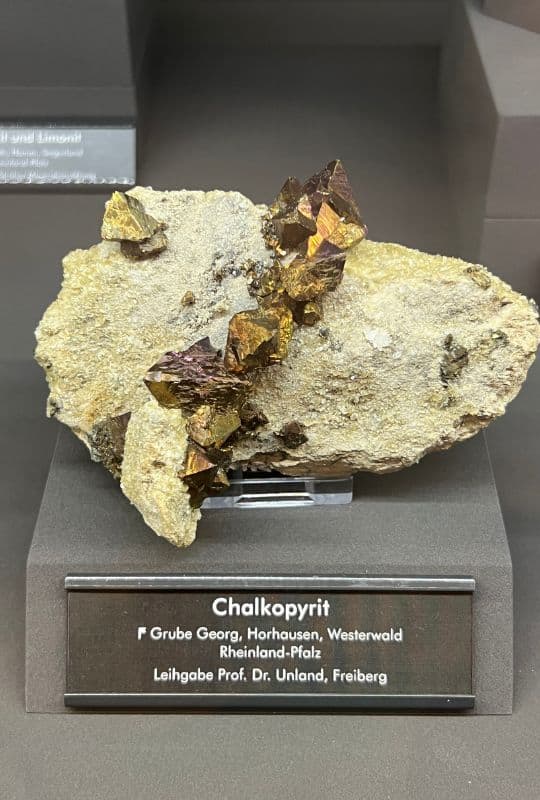
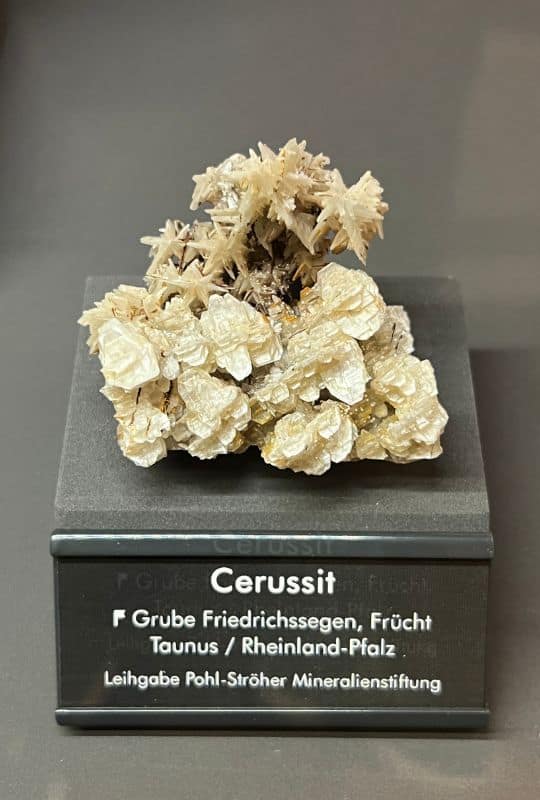
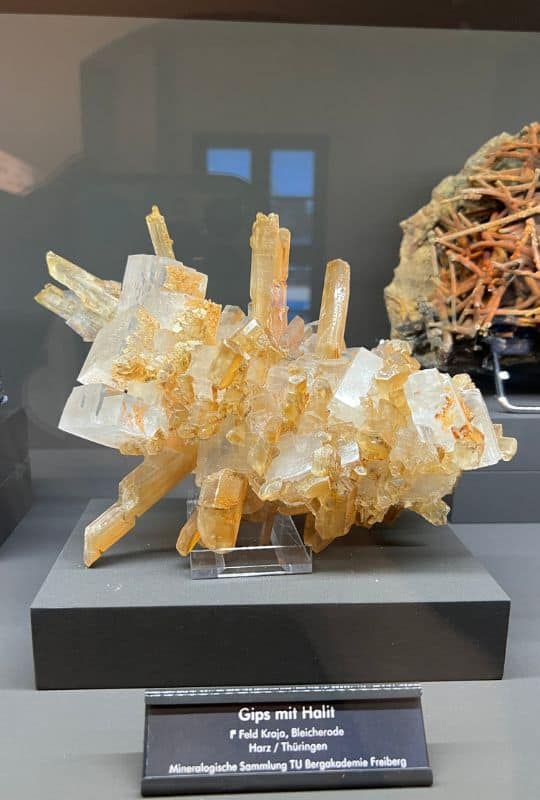
On the ground floor, the focus is on the mining history of Saxony and the Freiberg region. Here, visitors can admire beautiful silver minerals from the Ore Mountains, along with historical artifacts from old scientific collections. Among the minerals are original labels from well-known mineralogists, including August Breithaupt, making the history of mineralogy here literally tangible. The tour concludes with a small display of cut gemstones and ornamental stones. Personally, I might have preferred to see this section in the Terra Mineralia Treasure Chamber; in my opinion, it would have been shown to even better advantage there.
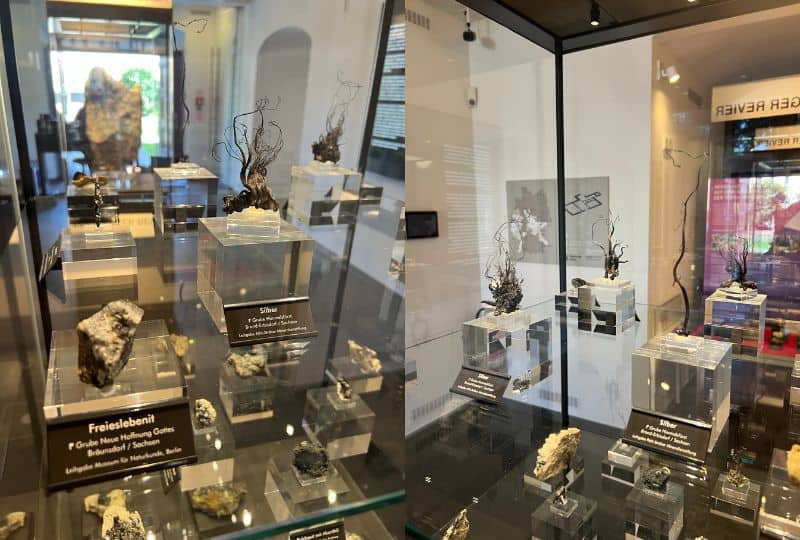
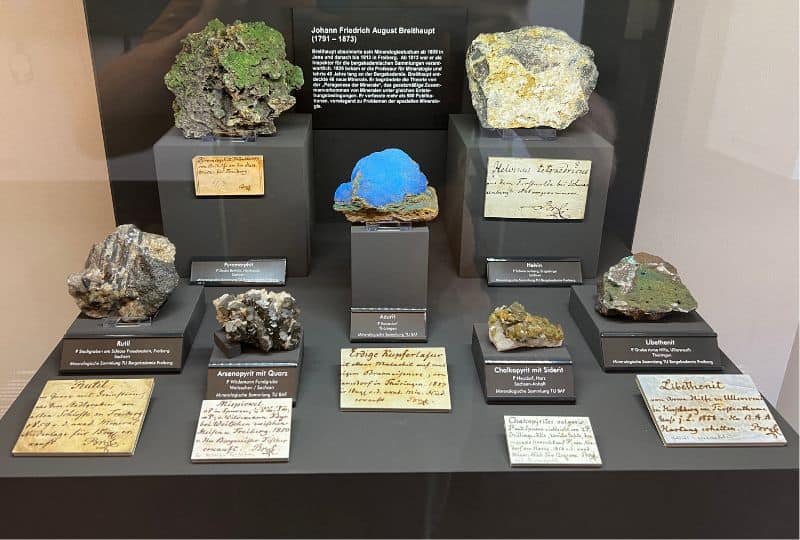
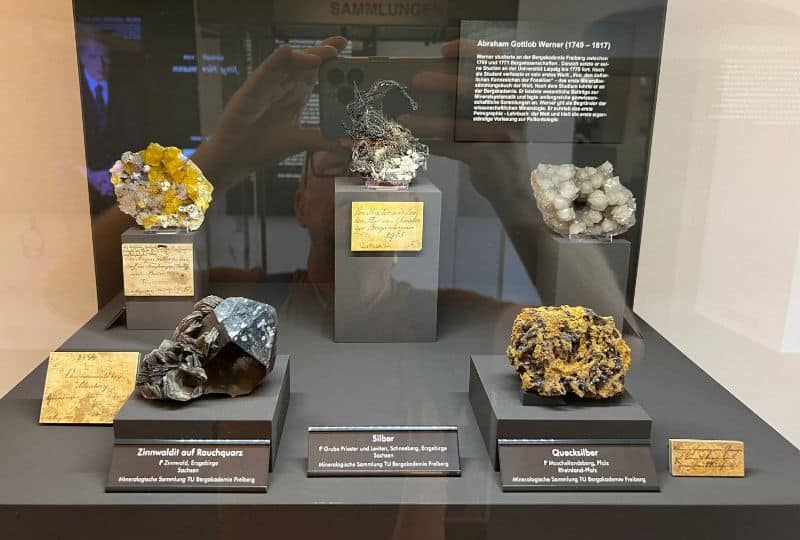
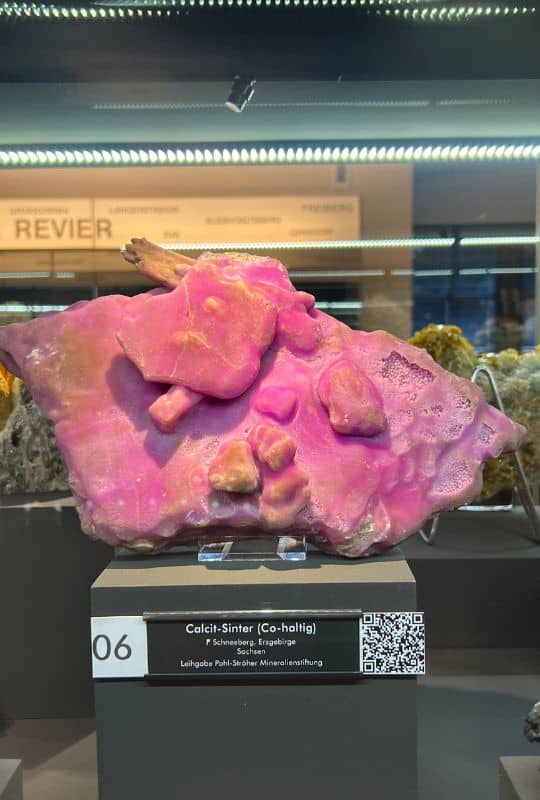
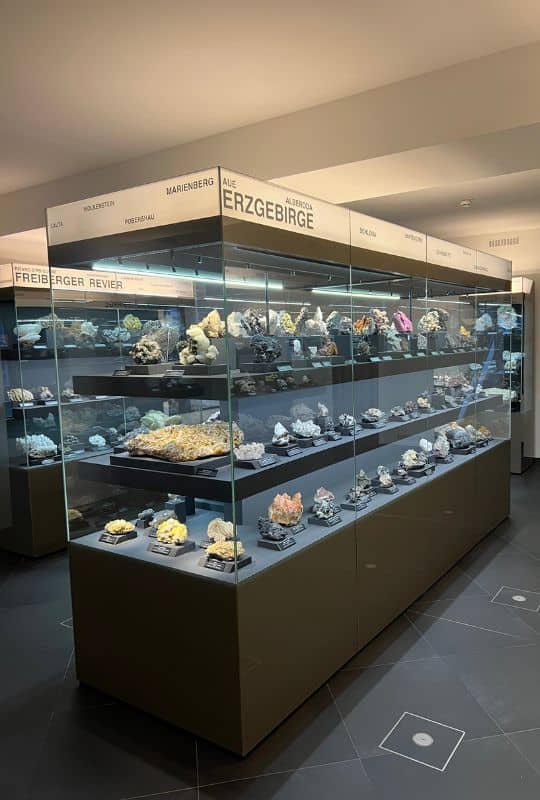
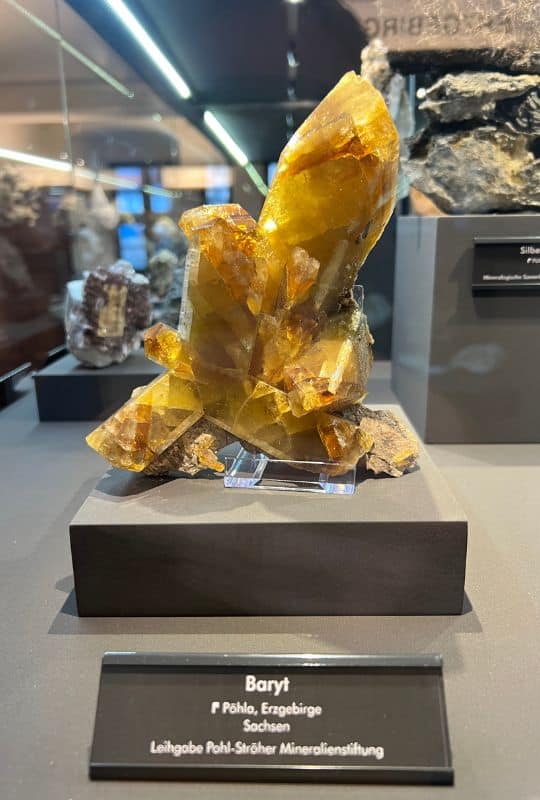
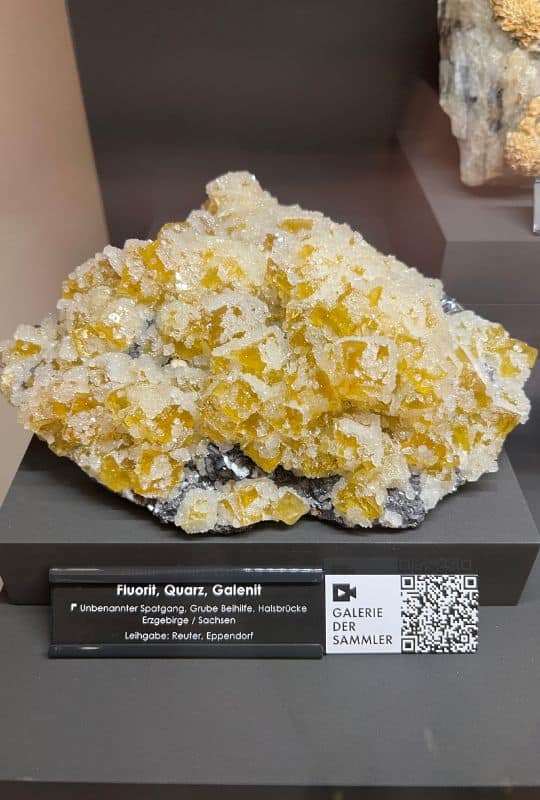
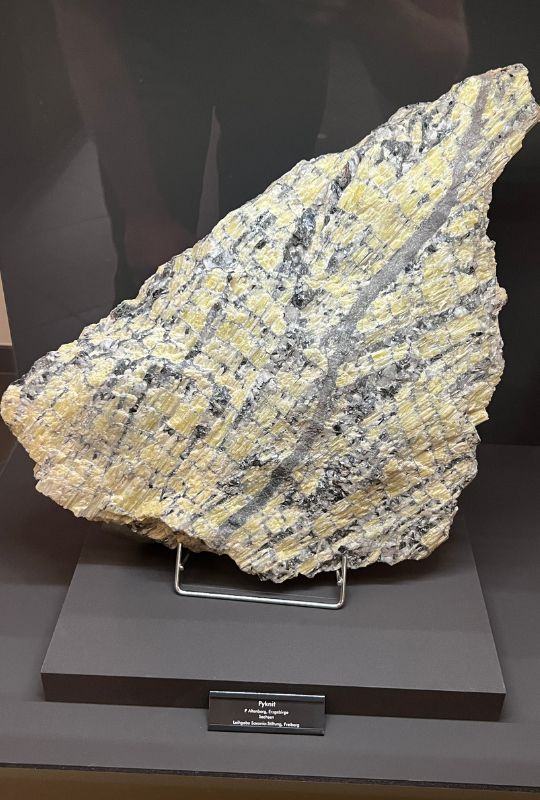
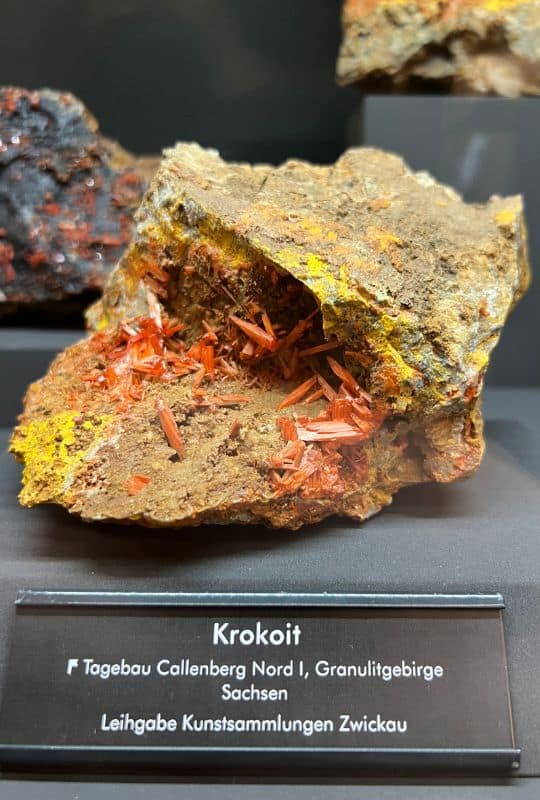
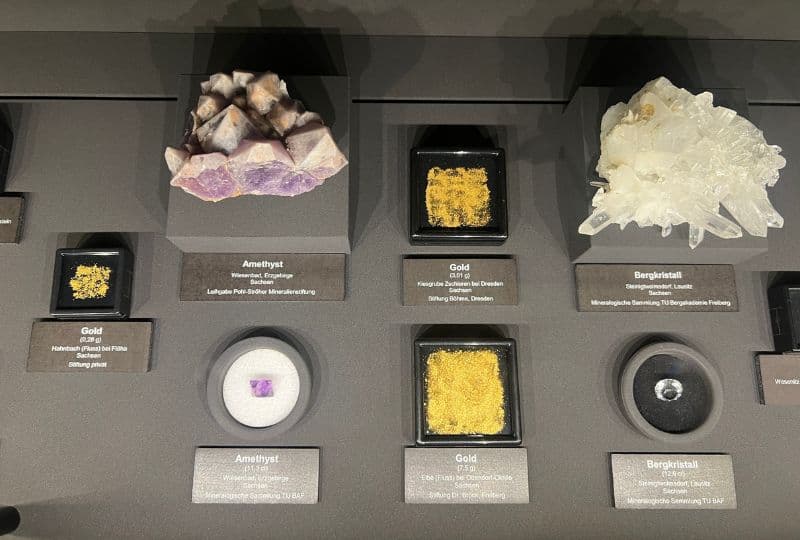
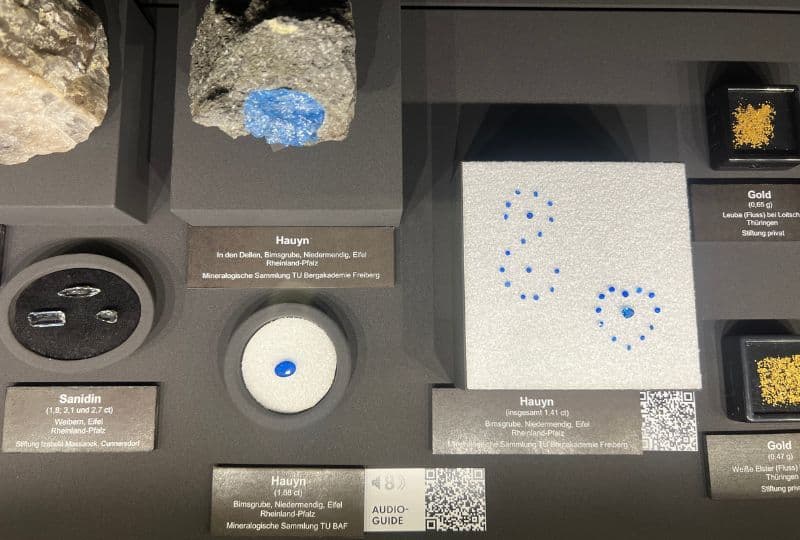
Although the collection may seem less colorful and spectacular than Terra Mineralia, its mineralogical quality is just as high. Precisely because the focus is on classic German sites, you get an excellent sense of Germany’s immense geological wealth. For collectors who regularly search for specimens in Germany themselves or collect material from German sites, a visit to the Krüger-Haus is, in my opinion, definitely worth the trip.
Even more to discover in Freiberg
I had planned to spend one day there, during which I wanted to visit both Terra Mineralia and the Krüger-Haus. That turned out to be a good choice for a first visit to Freiberg, but in hindsight, I would set aside more time next time.
In any case, my list also includes a visit to the Geoscientific Collections at the TU Bergakademie Freiberg. Among other things, it houses the historical collections of Abraham Gottlob Werner, August Breithaupt, and Friedrich Mohs. Please note that this collection is only open Monday through Thursday (9:00 a.m.–12:00 p.m. and 1:00 p.m.–4:00 p.m.). So if you’d like to visit this collection, it’s a good idea to plan your trip accordingly. In addition, the Freiberg City and Mining Museum, which focuses on the history of the city and silver mining, seems well worth a visit to me. Finally, I’d also like to mention visit the Freiberg Silver Mine , one of the historic silver mines in the area.
Freiberg clearly has more to offer than I could see in a single Saturday. So next time, I plan to spend several days there, so I’ll have plenty of time to explore the various collections and the city’s mining history at my own pace.


Responses