
Exhibition Pristine Minerals & Stack of Stones

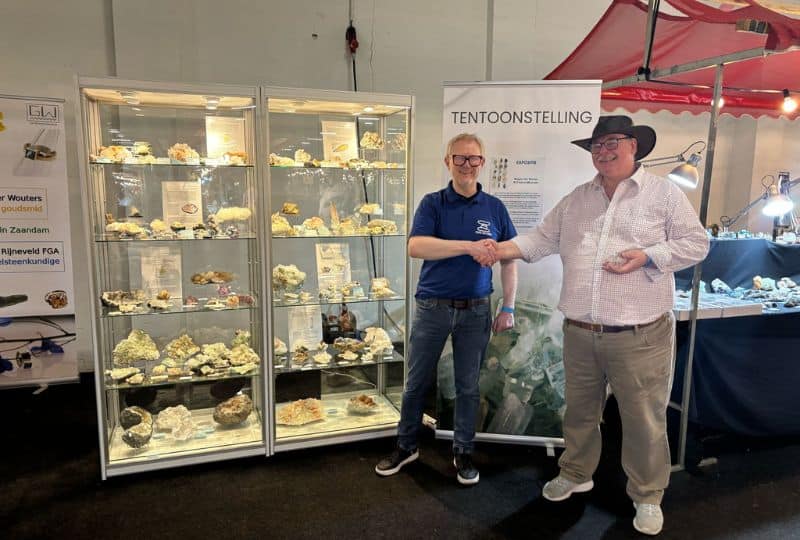
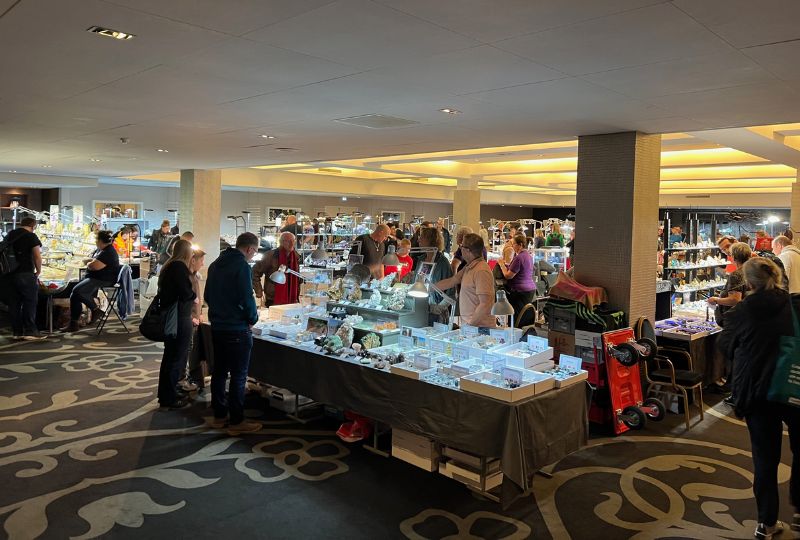
International Mineral Show Rijswijk (NL) – March 22 & 23, 2025
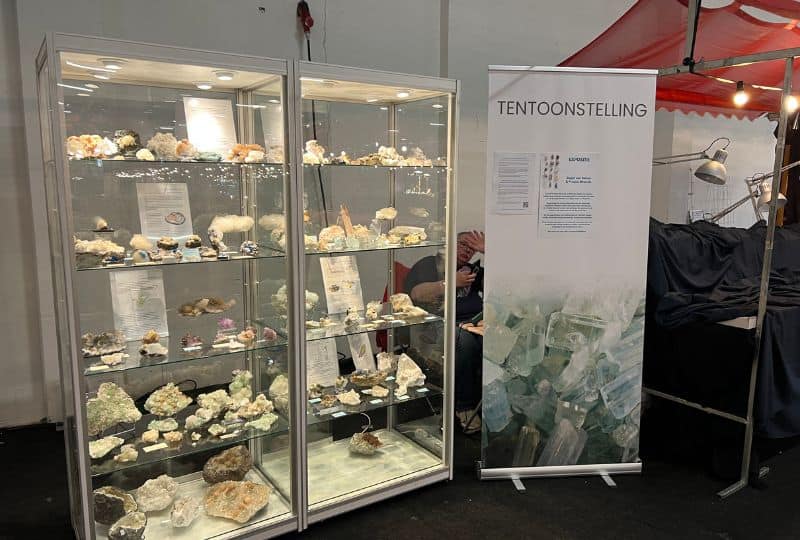
For the international mineral show in Rijswijk (NL) in March 2025, Ed from Pristine Minerals and Rolf of Stack of Stones have put together a special exhibition with minerals from India and the pegmatites of Afghanistan and Pakistan. Watch a video impression of the exhibition and read the texts with background information below.
The minerals in this exhibit show how geological conditions determine which minerals form in a particular location. India is known worldwide for the beautiful zeolites that grow in the cavities of the ancient lava layers of the Deccan Traps. From the pegmatites of Afghanistan and Pakistan come unique crystals such as aquamarine, topaz and tourmaline.
Besides well-known species, less common and unique minerals were also on display. A must-see for any mineral lover! Are you interested in a mineral passing by? The pieces from the exhibit and more such minerals are available for purchase through Pristine Minerals’ website or their Facebook page.
Minerals from India
India is known for a huge variety of minerals (as many as 663 recorded in Mindat), of which the secondary minerals from the Deccan Traps are particularly world-famous. This vast volcanic area in northwest India contains basalt strata in which cavities have formed, ideal for the growth of crystals. The circulation of hydrothermal fluids dissolves minerals in the volcanic rock and these later crystallize in the cavities as the water cools and evaporates.
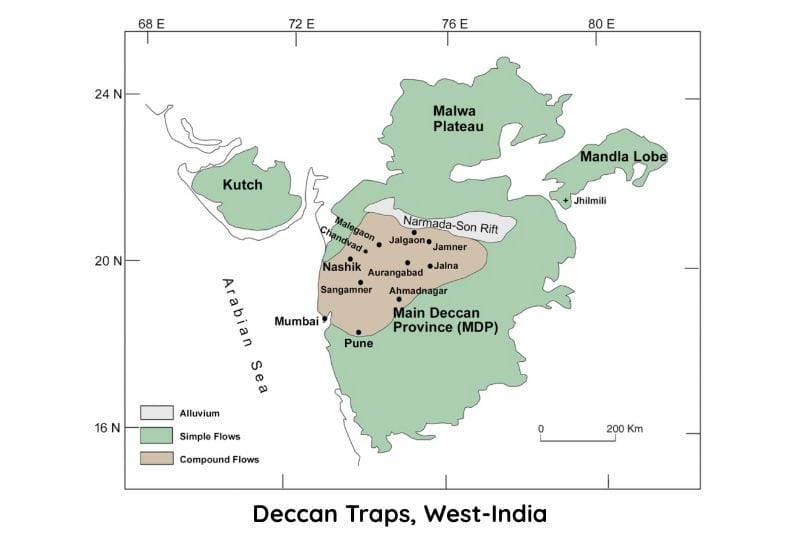
The best known minerals from the Deccan Traps area are zeolites such as heulandite, mesolite, scolecite, stilbite and thomsonite, often in combination with apophyllite, prehnite, okenite, calcite and quartz. We also find some unusual minerals here, such as stellerite and powellite. Not to mention the strikingly bright blue cavansite and pentagonite from Wagholi.
In addition to the Deccan Traps, India is also home to other unusual minerals from other locations, such as amethyst from Karur and the rare quartz with hematite phantoms (“Sunset quartz“) from Telangana. These unique combinations make India one of the most fascinating countries for mineral lovers and collectors.
Zeolite minerals from the Deccan Traps, India
Zeolites belong to the tectosilicates, a group of minerals with a three-dimensional network of silicon, aluminum and oxygen atoms. These atoms form quadrilaterals that together create a porous crystal structure consisting of channels and cages. These spaces contain water molecules and exchangeable ions such as sodium, calcium and potassium. This unique structure allows zeolites to absorb and release moisture and exchange ions. When heated, the water present evaporates, which explains the name: zeolite comes from the Greek ζέω (zéō, “boiling”) and λίθος (lithos, “stone”).
Zeolites are mainly found in volcanic rocks, where they form as secondary minerals by the conversion of pre-existing rocks. They usually form through the deposition of dissolved elements from hydrothermal fluids.
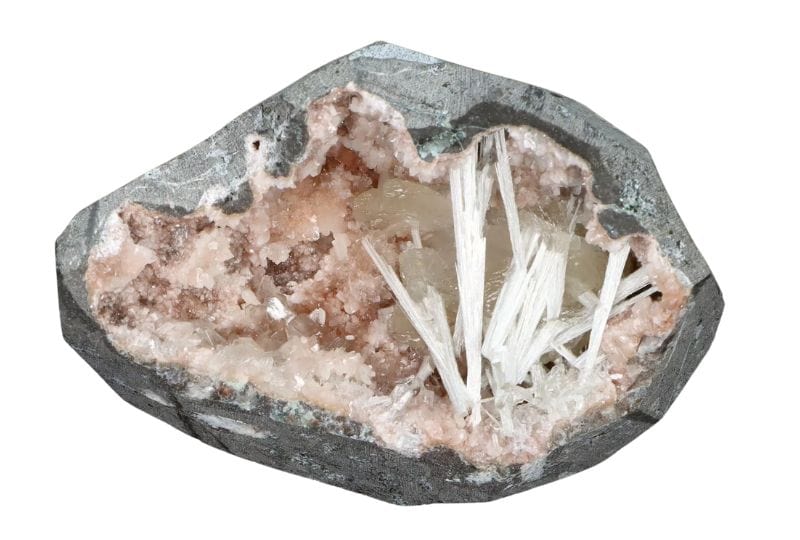
About fifty natural zeolites are known, in addition to over two hundred synthetic varieties. Well-known zeolites from the Deccan Traps area include stilbite, heulandite, chabazite, thomsonite, laumontite, mordenite, mesolite and scolecite. They often grow together with apophyllite, calcite, cavansite, prehnite, gyrolite, quartz and clay minerals.
Sources:
- Ottens, B. (2024). India, the secondary minerals from the Deccan Volcanic Province. Munich: Christian Weise Verlag.
Minerals from pegmatites
Pegmatites form in the final stage of magma solidification, when much of the molten rock has already crystallized into granite, for example. This leaves in the remaining magma rare elements such as lithium, beryllium, niobium and tantalum, which do not fit into the previously formed minerals in the granite. Slow cooling allows large crystals to form, sometimes up to 10-15 meters long.
Pegmatite occurrences are generally small, usually no longer than a few hundred meters and often much smaller. Pegmatite bodies often exhibit mineralogical zoning, where the composition and size of minerals changes from the outside to the core.
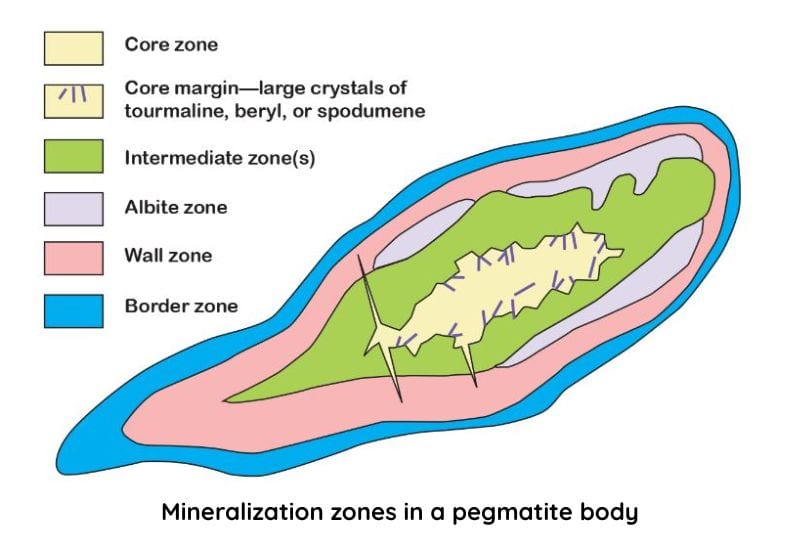
The outer edge zone is usually fine-grained (granite) and only a few centimeters thick. This is followed by the wall zone several meters thick, where the crystals can become much larger, sometimes up to 30 cm long. This zone often contains much quartz, feldspar and mica, with sometimes beryl and tourmaline. In the intermediate zone, the crystals grow even larger and may include rare minerals such as beryl, spodumene, tourmaline, columbite, pollucite and lithic phosphates. The core of many pegmatites consists almost entirely of quartz.
Minerals from the pegmatites of Northern Afghanistan
Northern Afghanistan, particularly the regions of Nuristan, Badakhshan and Laghman, is home to some of the richest pegmatite fields in the world. Important deposits include Paprok, Pech Valley and Nilaw-Kulam, which are home to numerous gemstones and rare minerals.
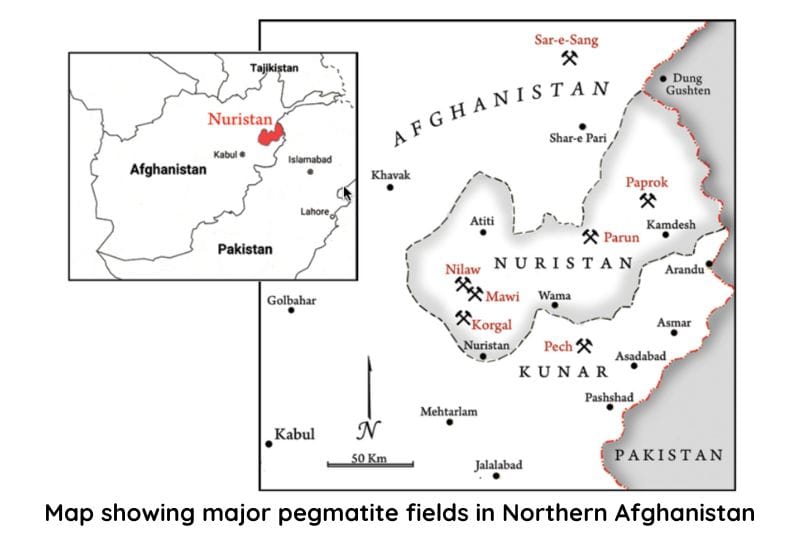
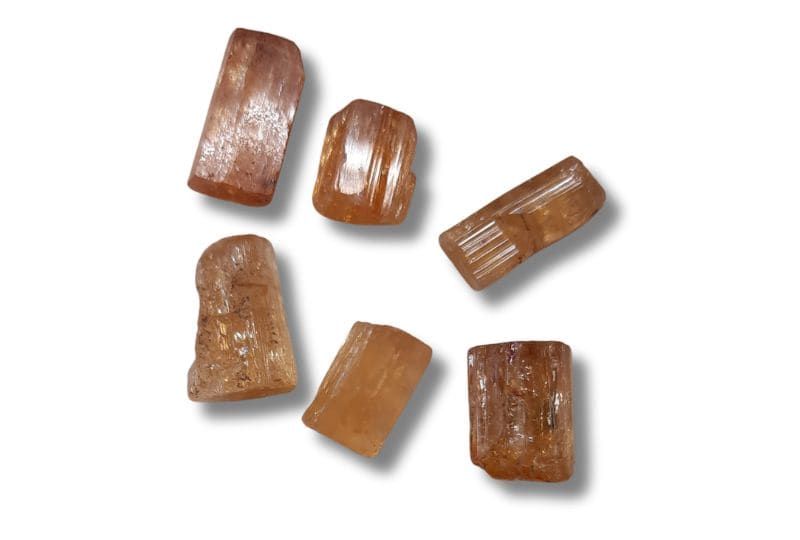
Notable finds include aquamarine, morganite, pink and green tourmaline (elbaïet), kunzite, topaz, fluorapatite, pollucite, columbite, beryllonite and spessartine. Pegmatites in this region show distinct mineralogical zoning, with the inner zones often containing lithium-containing minerals and phosphates.
Paprok is known for deep-colored tourmaline, while Pech Valley provides large crystals of kunzite and morganite. Nilaw-Kulam is known for columbite, an important source of niobium.
Sources:
- Afghanistan Geological Survey (n.d.). Minerals in Afghanistan. [online: https://nora.nerc.ac.uk/id/eprint/10924/1/RareMetals_A4.pdf]
- Bariand, P., & Poullen, J. (2017). Rare metals and minerals in Afghanistan. Mineralogical Record, 48(5), 765-784.
- Kazmi, A. H., & Snee, L. W. (2015). Pegmatites of Afghanistan: Geological setting, mineralogy, and economic potential. Arabian Journal of Geosciences, 8(9), 6251-6270.
- Weise, C. (2003). Noble Steine vom Dach der Welt: extraLapis No. 24 – Afghanistan und Pakistan. Christian Weise Verlag, Munich.
Minerals from the pegmatites of North Pakistan
The main pegmatite deposits in the Gilgit-Baltistan region are in the Hunza Valley, the Haramosh Mountains and the Shigar Valley. These pegmatites penetrate older metamorphic rocks of the Karakoram Metamorphic Complex (KMC). Geologically, these pegmatites are related to the collision between the Indian and Eurasian plates and the formation of the Himalayas. The age of these pegmatites varies between 1 and 23 million years. They are characterized by their rich mineral content and are economically important.
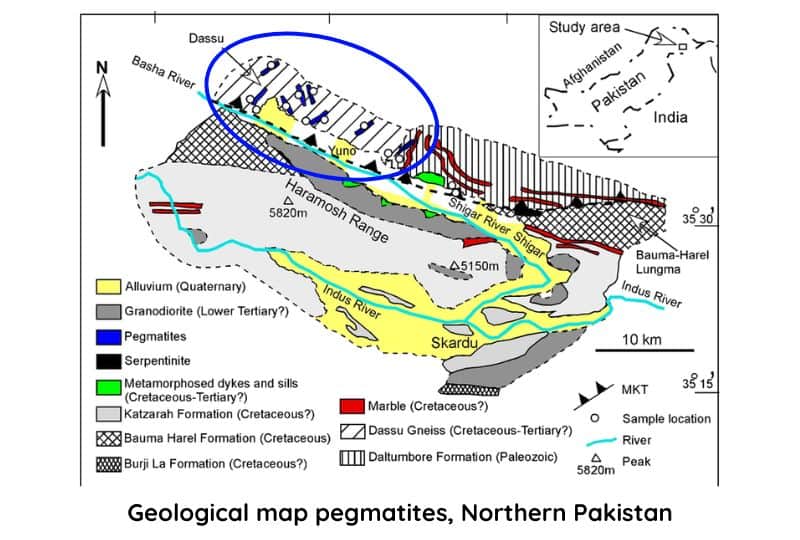
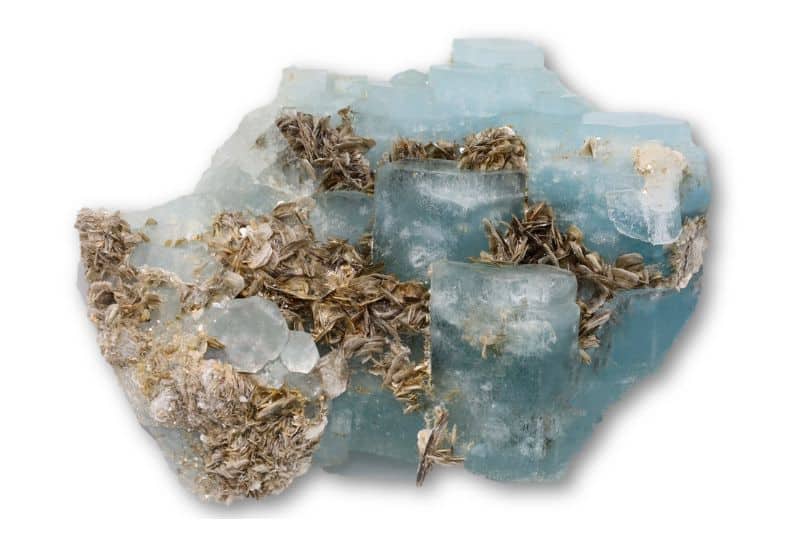
Aquamarine, morganite, goshenite, colorless to yellow topaz, green and pink fluorite, tourmaline, garnet and fluorapatite have been found in this region, usually in combination with quartz and feldspar. In addition to the pegmatites themselves, alpine fissure mineralizations are also present, in which quartz, axinite and epidote may occur.
Sources:
- Agheem, H. (2015). Petrogenetic evolution of pegmatites in the Shigar Valley, Karakoram, North Pakistan. Arabian Journal of Geosciences. [Online: https://www.researchgate.net/publication/275521468_Petrogenetic_evolution_of_pegmatites_of_the_Shigar_Valley]
- Weise, C. (2003). Noble Steine vom Dach der Welt: extraLapis No. 24 – Afghanistan und Pakistan. Christian Weise Verlag, Munich.
Rare minerals from the pegmatites of Afghanistan and Pakistan
Besides the familiar gemstones, the pegmatites of Afghanistan and Pakistan also contain an array of rare minerals, often rich in elements such as tantalum, cesium, niobium, tin, lithium and phosphorus.
An important example is columbite, one of the most common niobium-containing minerals in this region. In fact, many of the specimens from these regions designated as “tantalite” turn out to be columbite after analysis.
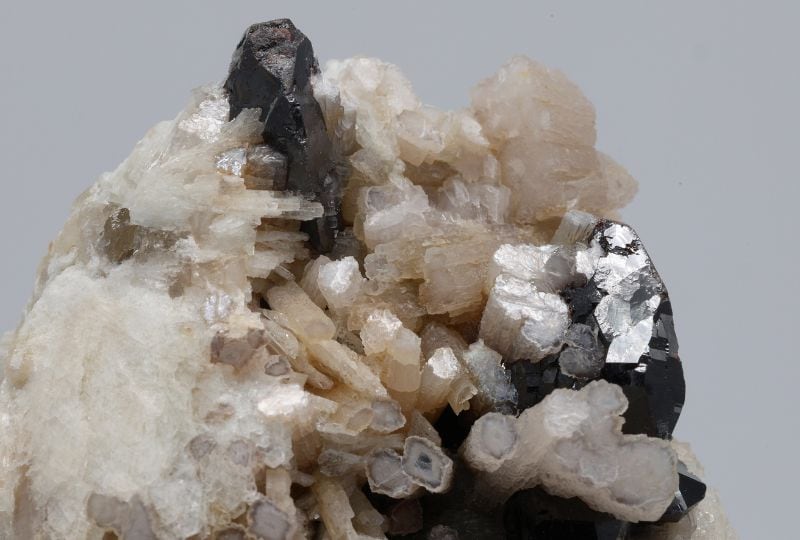
Rare phosphates also occur, such as eosphorite, an iron-manganese phosphate found in the intermediate zones of pegmatites, often in combination with other phosphates.



Responses