
Research

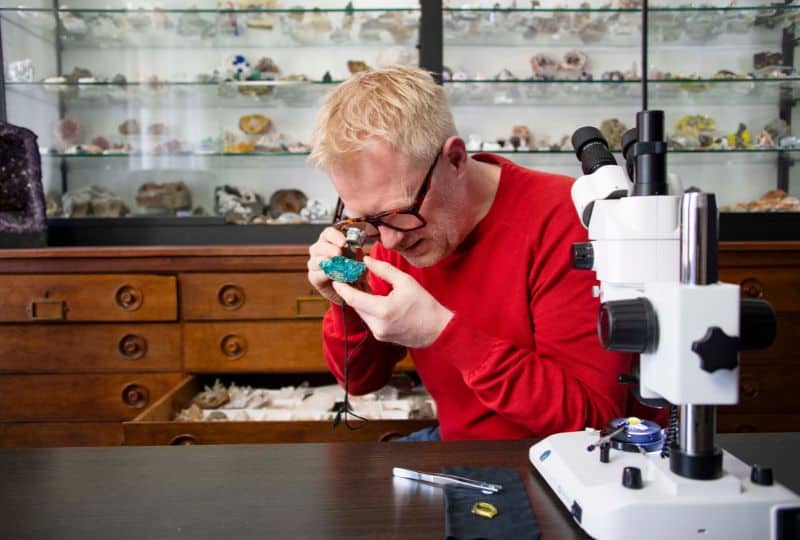
To compile the information in the book and the online Gem or Scam library, I consulted a wide range of sources. From geological handbooks to trademark registers and from scientific publications to commercial websites, I examined writing style and spelling in both scientific and commercial contexts. In doing so, I focused not only on official mineral names, but also variety names, commercial trade names and esoteric designations. An important part of my research was checking trademark registrations and finding out the origin and meaning of each name.
The result is a comprehensive collection of names with information about the true geological nature of these stones, whether it is an artificial product or if there was some kind of treatment, next to background to the naming. To achieve this, I used a structured approach in which I went through several steps for each name. In the following paragraphs, I explain how I collected, verified and organized this information.
How it began
It all started with the many questions I received during my courses and through online platforms about the most exotic names for minerals and gemstones. Curious about the origin of these names, I began my search in geologically oriented books and on reliable websites such as mindat.org. Soon I discovered that these names were hardly found in the scientific literature and on the websites I used. Determined to bring clarity to the maze of names, I began to gather as much information as possible.
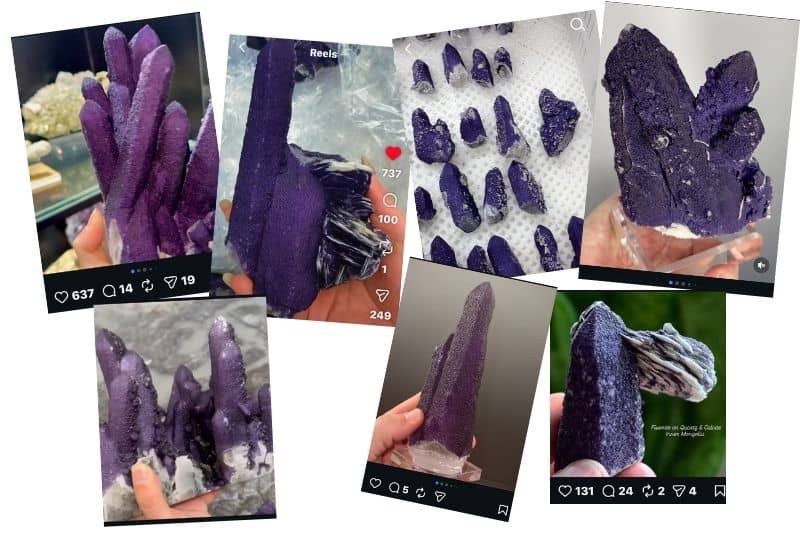
Through social media in 2018, I put out a call for input for a list of “new mineral names,” as I called them at the time. Within a few days, I had a huge number of responses and over 120 different names that did not appear in the common books. In addition, many names were brought to my attention by curious or concerned students, buyers, sellers and friends from the mineral world. During this time I was also made aware of an American booklet by Kristi Hugs: “Old Rocks, New Names”1. As it turned out, I was not the only one bothered by the proliferation of mineral names and in need of clarity in this chaos.
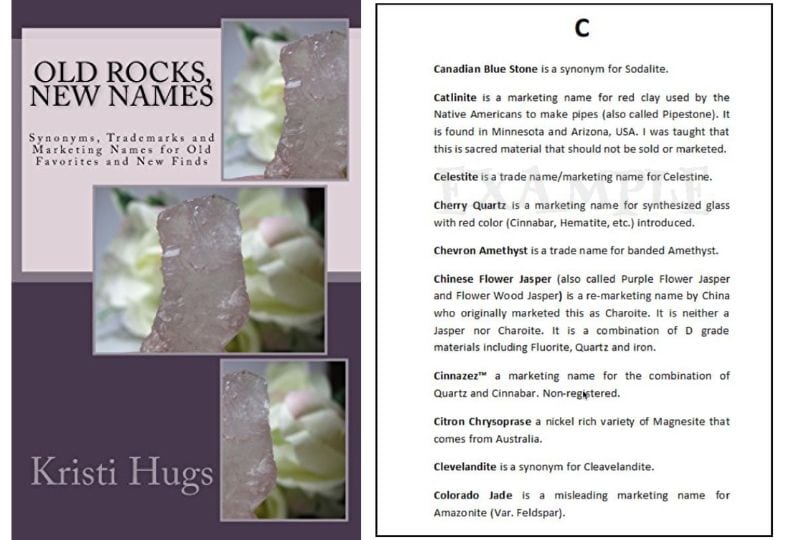
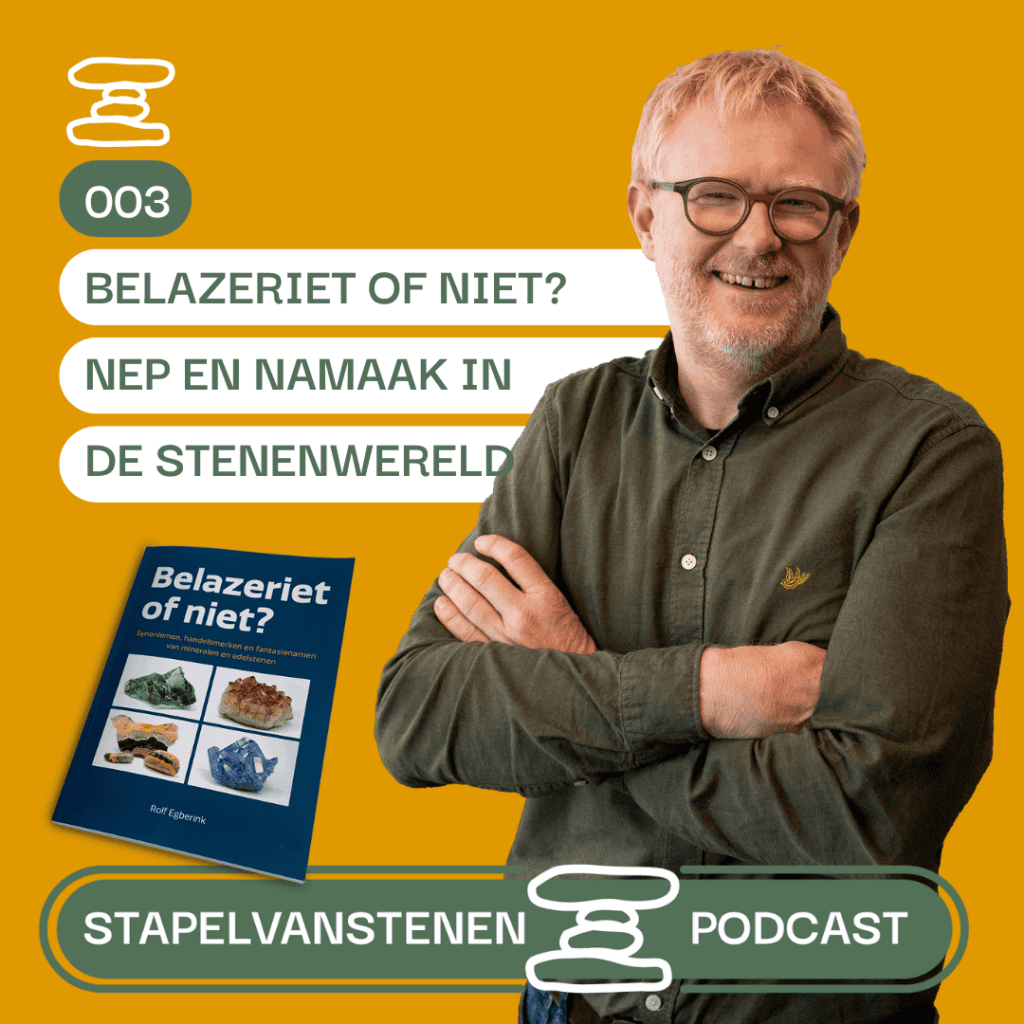
Kristi was mainly active in America on online platforms and was happy to find a like-minded person in Europe. We regularly exchanged information and eventually I took over the copyrights from her for the Dutch language area. With that, I could start working on the translation of her booklet. It soon became apparent that a lot of new information and even more names were added. What started with 158 names in her booklet, grew in four years to more than 550 names in my book that came out in 2022. Moreover, the descriptions were also greatly expanded and focused on the offerings on the Dutch and Belgian markets. Unfortunately, Kristi never got to read my book, but her work lives on in my book and this online library.
Structured approach
The final list of more than 550 commercial names, trademarks and fancy names were alphabetically listed in the book and provided descriptions of the nature and composition of these stones. The list was not exhaustive. To check correct writing and spelling, I used the IMA‘s official list of mineral names. Factual geological information on composition, genesis and locations of discovery I obtained from the Mindat.org website and from renowned mineralogical standard works.
To shed more light on the exact composition and scientific designations of unknown material, I have also had several analyses performed in a mineralogical laboratory. These results have been published regularly via social media and my website. Detailed analysis reports are referenced in the online library where relevant.
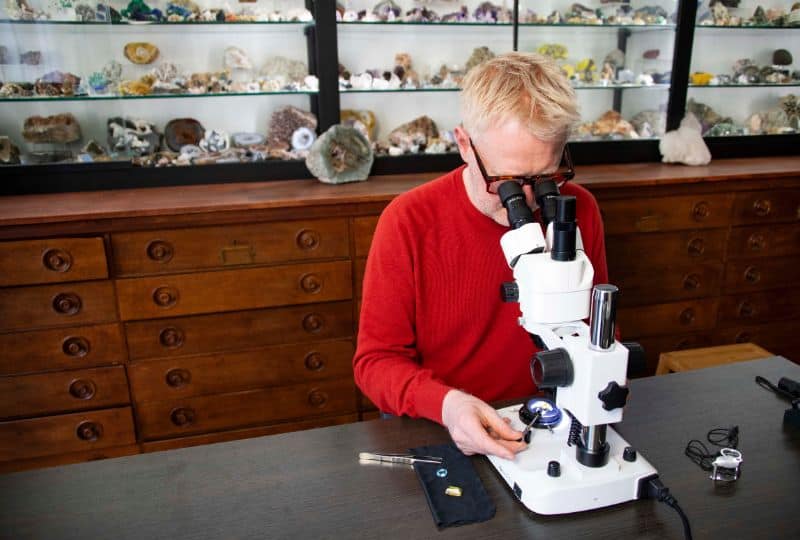
For each name, I checked trademark registrations using the TM View database, which contains information from most international intellectual property offices. Here I focused specifically on category 14: Precious metals and their alloys and goods in precious metals or coated therewith, not included in other classes; jewellery, precious stones; horological and chronometric instruments.
In 2024/2025, I converted the information from the book to an online library, updating and supplementing the data with additional photos and videos. This digital format makes it easier to update and expand the information regularly. Indeed, since the publication of my book, I have noted many new names and conducted numerous new analyses. These additions will continuously be incorporated into the online library to provide an up-to-date and reliable reference work.
The information in the Gem or Scam library has been compiled with the utmost care, but errors or omissions can never be ruled out. Should you discover inaccuracies or have suggestions for additions, I would greatly appreciate your feedback. You can send corrections or new information by email (info<at>stapelvanstenen.nl) so I can incorporate it into the library.
- Hugs, K. (2018). Old rocks, new names, United States: Kristi Hugs. ↩︎


Responses