
Analysis: Kiwi Jasper

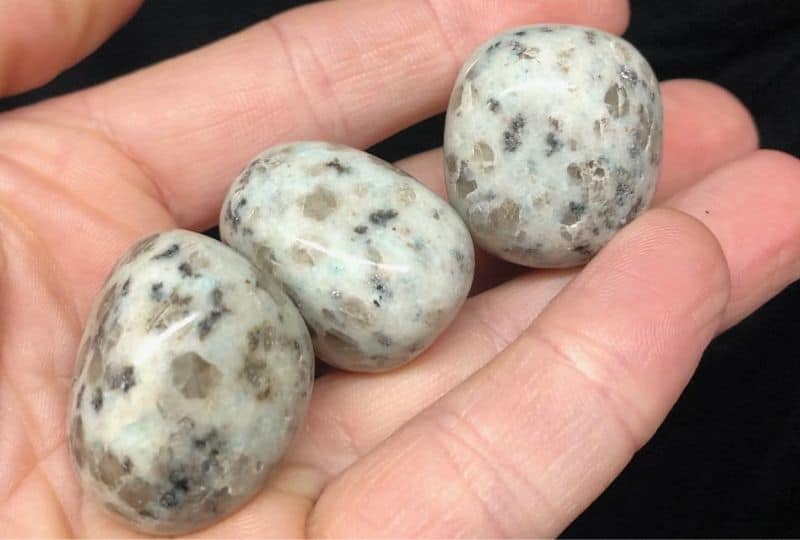
Clarity on composition of ‘Kiwi jasper’
In 2021, I had a number of tumble stones with beautiful names analyzed because I had doubts about their exact composition based on my own research. ‘Kiwi jasper’ was one of them.
The name refers to its country of origin: New Zealand, from where the stone was introduced to the European market in 2015 by a Dutch wholesaler. That “Kiwi jasper” is not jasper at all is known to many by now. But what is it? It is stated by most vendors that the stone consists of amazonite, tourmaline and rock crystal. In itself, with this composition, the name jasper is already oddly chosen, but does it indeed contain amazonite and tourmaline?
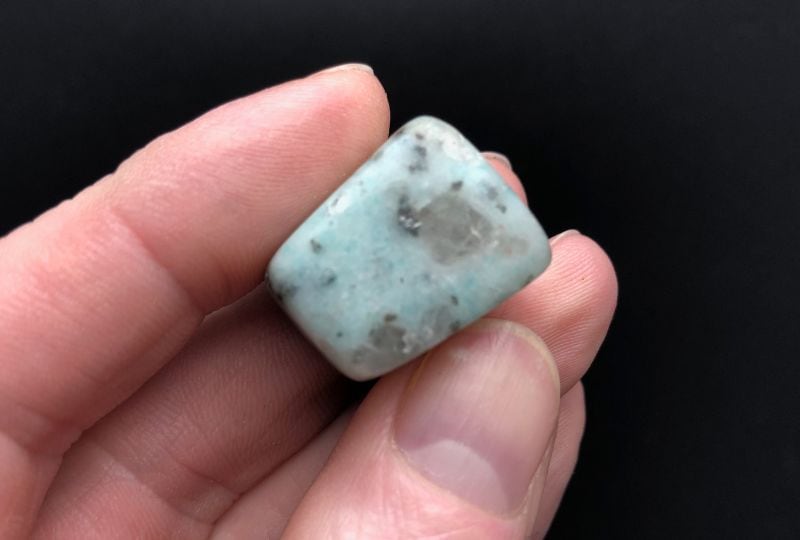
Analyzed tumblestone of “kiwi jasper,” the large gray-brown grains are quartz, but is the green amazonite and the darker grains tourmaline?
After my own investigation, I determined that it does indeed contain quartz (not the clear variety rock crystal, but more gray-brown quartz). The main mass is mostly white-gray (probably feldspar), with a slight green tinge here and there (this would have to be amazonite, a green feldspar). The darker grains referred to as tourmaline look under the microscope more like a micaceous mineral, such as muscovite or biotite. I could not come to an unambiguous conclusion myself, so in March 2021 a tumble stone of “Kiwi jasper” was analyzed by X-ray diffraction (XRD) in a laboratory in Germany. Herewith I am happy to share the results.
Laboratory analysis
The white-gray main mass with light green tinge appears to consist of 3 minerals, namely 2 feldspars: albite and orthoclase and a mineral from the smectite group (topical name for montmorillionite group; also called “clay minerals”). Additional chemical analysis could provide further specification. However, NO amazonite (variety of microcline) was observed. Orthoclase is closely related to microcline, however, and MinDat teaches us that the designation amazonite is used ‘overenthusiastically’ for greenish feldspars including orthoclase. The dark grains have indeed been analyzed as a mineral from the micaceous group: muscovite. In addition, quartz has been identified. NO tourmaline was found in this stone.
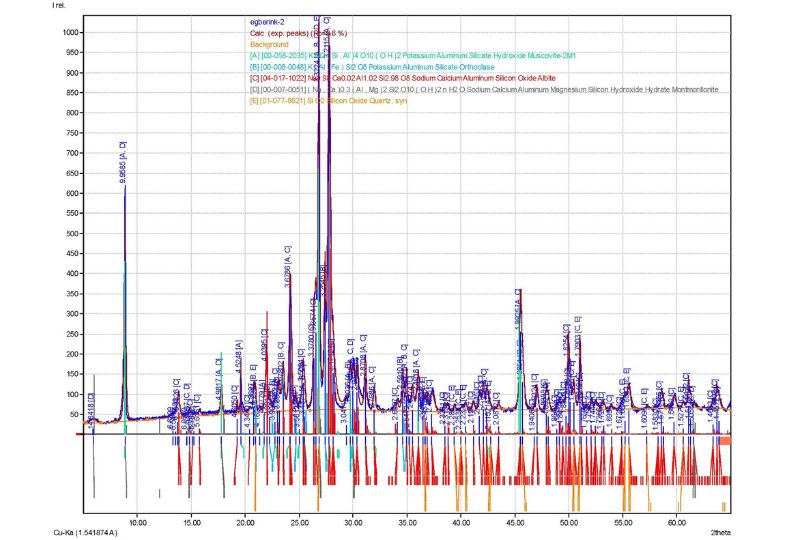
graph of X-ray diffraction analysis (XRD) of ‘kiwi jasper’ in which the 5 constituents have been identified (muscovite, orthoclase, albite, montmorrilionite (smectite group) and quartz)
Summary: ‘Kiwi jasper’ turns out to be granite
‘Kiwi jasper’ is a rock (micro granite) composed of albite, orthoclase, a clay mineral, quartz and muscovite.
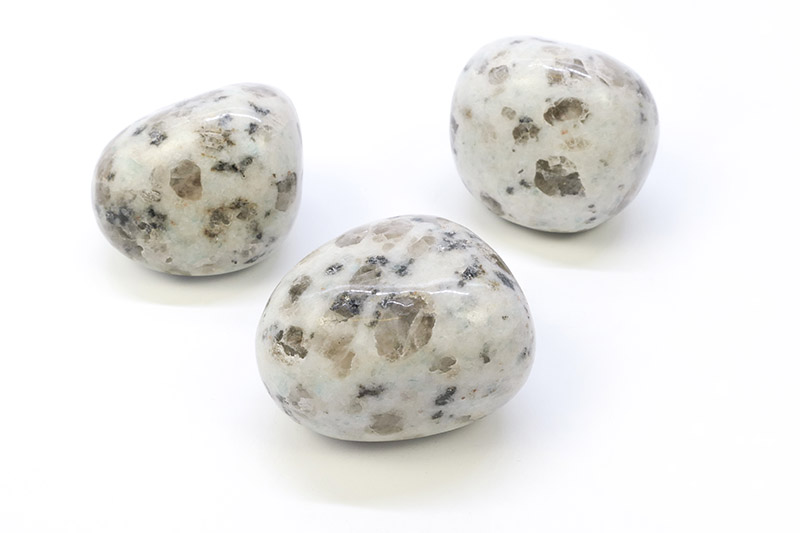
I have found that many webshops and internet pages have copied the texts describing this stone from each other or from the source (a Dutch wholesaler). Better would be to replace the name ‘Kiwi jasper’ with ‘Kiwi stone‘ and adjust the composition based on the above analysis. In any case, mentioning the properties such as hardness, specific gravity and chemical composition of jasper with this rock composed of 5 other minerals is incorrect and misleading.
I have of course also informed the wholesaler of this material and the webshop where I bought it of these results. Adjustment of the name unfortunately seems unlikely.
If you also want to learn to better recognize minerals yourself based on their shape and characteristics follow a course with me and watch my videos.
This post was published on social media and the previous Stack of Stones website on April 9, 2021. A summary is included in the May 2022 book “Belazeriet of niet? The information is also available through the online“Gem or Scam?” library as of September 2025.


Responses