
About the value of de-collecting

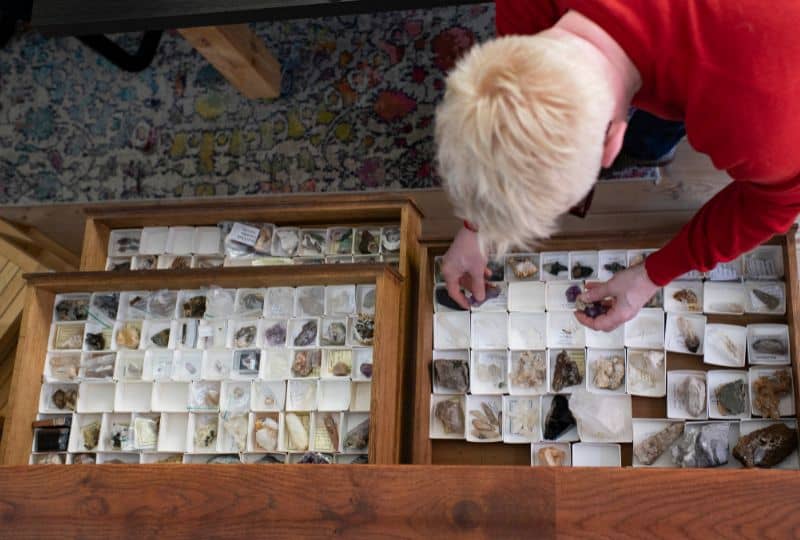
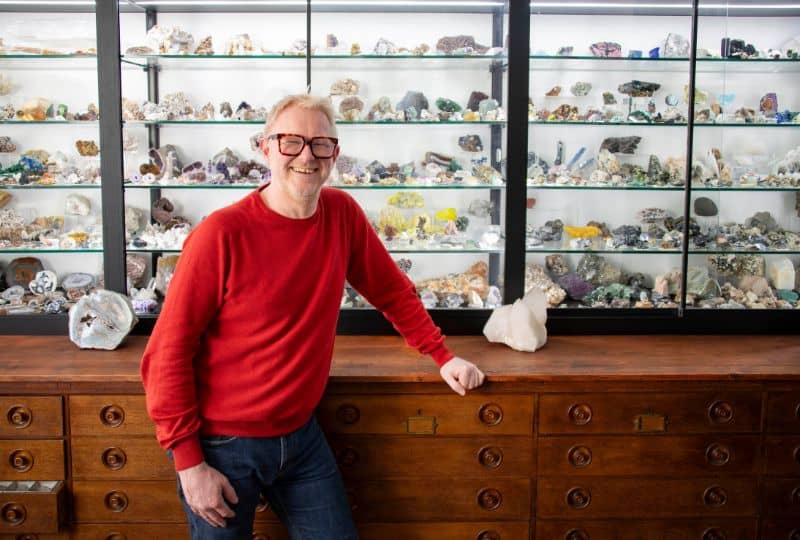
For the tenth episode of the Stack of Stones community podcast, I sat down with Ed Richard to discuss a topic that is little discussed but sooner or later becomes relevant to every enthusiast: “de-collecting” – the opposite of collecting. Or, in other words, the conscious and thoughtful winding down, transferring or clearing out of your collection. In this article you’ll find a summary of our conversation with concrete practical tips. Listen to the full episode here (Dutch).
Indeed, every collector comes to a point where he or she wonders: how to proceed with my collection? In an earlier episode of my podcast, I mentioned how fun and interesting collecting minerals and gemstones is. But, a collection can also take up quite a bit of space, and besides, there can be all sorts of reasons to start de-collecting. For example, what do you do with your collection when your interests change, you get older or start living smaller?
We talk about making choices, clearing out collections, donating, selling or repurposing pieces as well as the benefits it can bring. An episode for anyone who collects – or has ever done so.
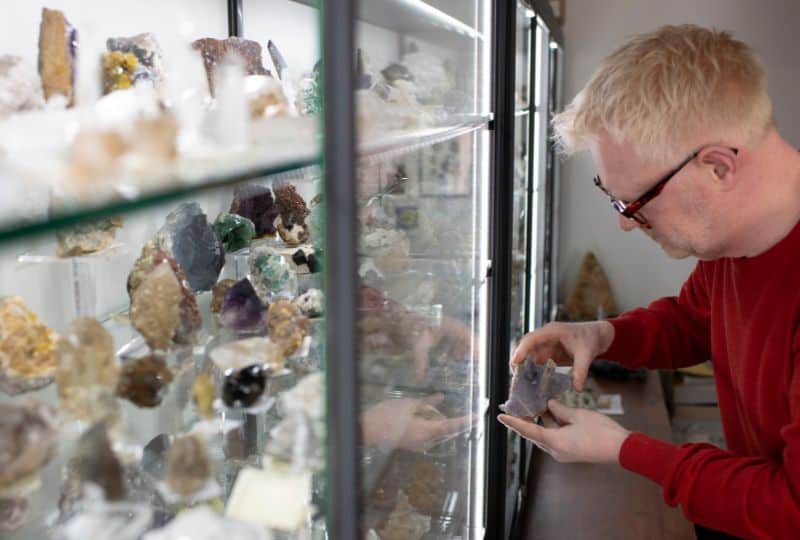
Why is de-collecting important?
Many collectors have built up a substantial collection over the years. For many a collector, in addition to a collection in a showcase, there is a whole stock stored in boxes in the attic, basement or in crates in the shed. Sometimes there even seems to be a slight degree of hoarding. Unlike carefully building up a collection, there is often a lack of strategy for winding it down. This is unfortunate, because those who do not de-collect themselves leave that to relatives – who usually do not know what to do with the collection. But there are more reasons to de-collect.
Four main reasons to de-collect
- Practical considerations: You have a lack of space due to a growing collection, or you are about to move to a smaller home. Financial circumstances may also prompt you to sell (part of) your collection.
- Shifting interests: Over time, your interests may change. Perhaps you now prefer to focus on a different topic, or delve into a specific area. For example, I myself once parted ways with most of the fossils in my collection.
- Focus on quality: By taking a critical look at your collection and discarding less relevant pieces, the core remains that you really value. The proceeds of sold pieces can also be invested in new, more suitable acquisitions.
- Keep control of your collection: By making choices now about what you want with your collection, you relieve your relatives later – practically and emotionally. You know the story behind your pieces and can transfer them with context and appreciation, or record what should happen to your collection when you are no longer around.
Practical tips for collectors
- Start on time. De-collecting is not an end phase, but an essential part of the collection process. For example, start with redundant duplicate or poorly documented pieces. A critical selection also helps early in your collecting process: which pieces do you take from a quarry, or which really deserve a place in your collection? A move is also a perfect opportunity to start de-collecting.
- Bring focus. Evaluate regularly what your goal is with your collection. Do you want to focus on a specific locality, mineral group or crystal size? A clear focus not only helps with selection, but also makes your collection more manageable for yourself and for later transfer. In the podcast episode on collecting, you’ll find more practical tips on building a collection.
- Document carefully. Make sure each piece is labeled with name, locality, and if known, origin. Where possible, record the date of purchase and price, or an estimate of the value. This increases the collector’s value and makes transfer to others much easier.
- Record your wishes. Discuss your wishes around your collection with family or loved ones. Also put them in writing – for example, in a codicil or document in a place that is easy to find. This way you keep control, also for later.
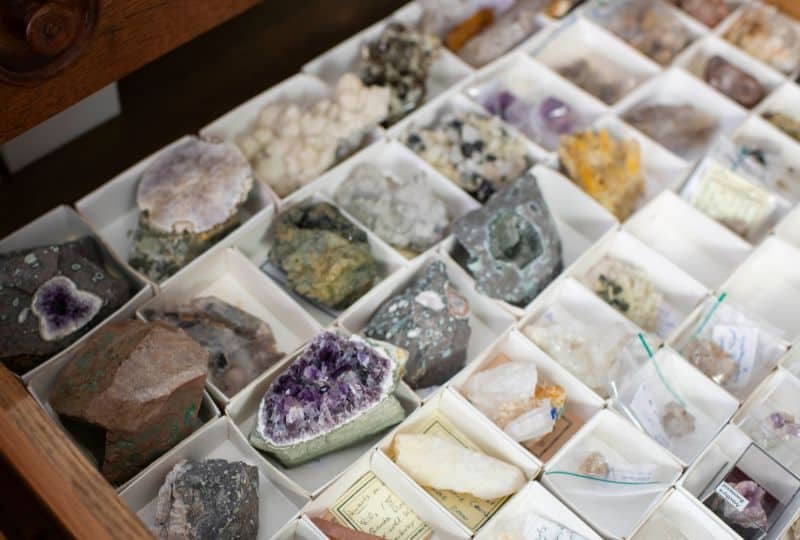
What can you do with your collection?
The moment you want to dispose of (part of) your collection, there are several possible routes. What works best depends on the size of your collection, your network, your goals and your personal preference.
For example, you can think about donating to a museum or geological society. This does require preparation: contact an institution beforehand to see if your collection fits within their collection policy, and what their approach is to donations. In practice, it is often unrealistic for a museum to accept an entire collection and keep it as a whole.
Another possibility is to transfer to a family member, acquaintance or fellow collector. Sometimes this forms a beautiful symbolic transfer of knowledge and passion, especially if you can transfer pieces personally and tell the story with them. In a sense, this also starts a new collection. Always discuss in advance whether the other person actually sees something in receiving (part of) your collection. Your passion does not automatically have to be shared by family or acquaintances. Open and honest discussion prevents a piece from ending up with someone who does not know what to do with it or feels obliged to accept it. This way, you make sure your collection ends up in a place where it is appreciated.
(Partial) sale is also an option. Some collectors sell their collection as a whole to a private individual or through auction, while others choose to divide it into partial collections – for example, by locality, type of mineral or size – which are then sold or donated in a targeted manner. The latter approach appears to be the most workable and satisfactory for many people. It maintains coherence in the pieces, makes it more manageable and allows for targeted donations or sales to interested parties.
Finally, you can also think about bartering. This can be done with other collectors, but also with a seller – sometimes even as a kind of trade-in where you give up a lesser piece in exchange for a better quality specimen.
What many people find is that actively de-collecting while you are still alive can actually be enjoyable. You keep control, you can give meaning to what goes where, and pass along the stories your collection carries to a new collector. Your own completion thus becomes the beginning of someone else’s collection.
In conclusion
De-collecting is not the end of a hobby, but a logical part of collecting. It gives peace of mind, overview and the opportunity to respectfully transfer your collection to others who can enjoy it again. As Ed summed it up beautifully, “We are only temporary owners.”
Help with de-collecting?
De-collecting is sometimes emotional, often practically challenging, and rarely something you have to do on your own. Whether you’re a collector looking to add more focus or a relative who has received a collection from a loved one – know that you are not alone. Not all the value of a collection is financial: emotional, educational and aesthetic value play at least as big a role. Therefore, take the time to determine what you want to keep, sell or perhaps donate. Stack of Stones, together with other experts or sellers, can help where necessary to organize the collection, assess its value, find an appropriate destination or set up a thoughtful sales strategy. Together they are happy to work with you to find a solution that suits you and the pieces themselves. Feel free to contact us.


Responses