Acquisition of the month: Japanese twin quartz

Japanse tweeling kwarts in hand

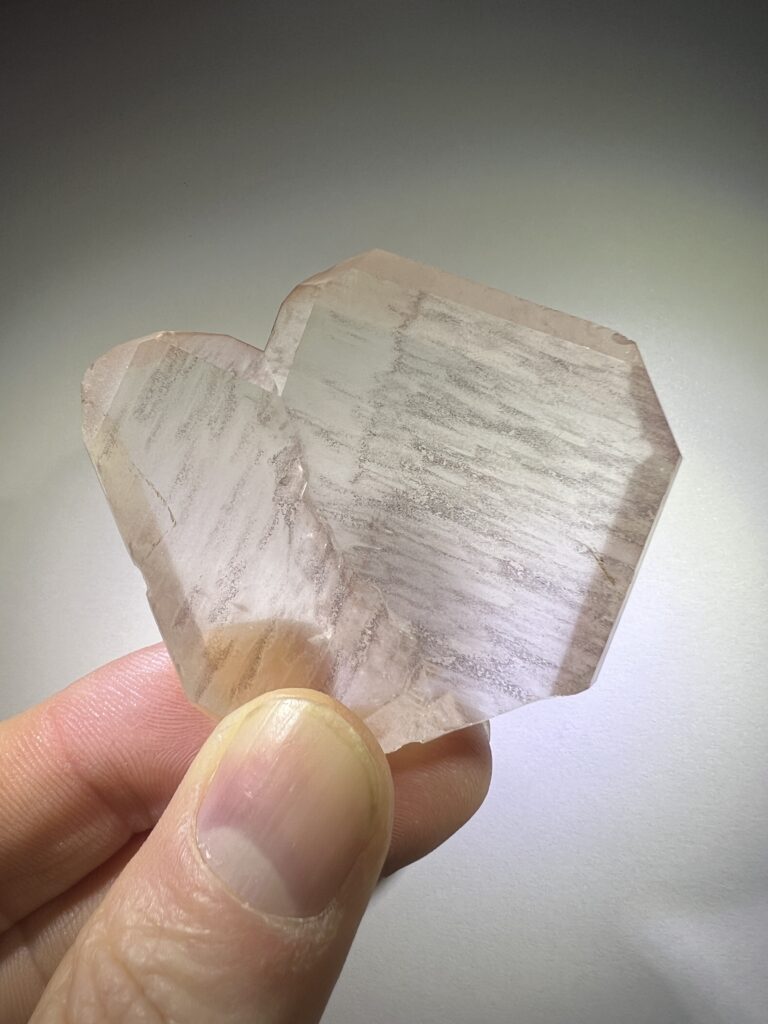
I recently added a fine specimen of a Japanese-law quartz twin to my collection from the Ambolo Quartz Mine in Madagascar. This crystallographic peculiarity is formed by two quartz crystals fusing together as contact twins at an angle of exactly 84°33′. What makes these twins so unique is that the two crystals remain individually identifiable, which is rare for quartz twins.
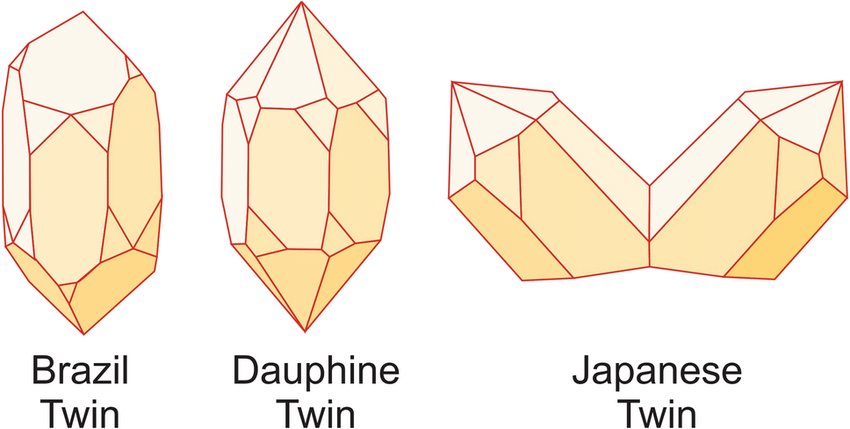
Most common forms of twin growth in quartz, in the first two examples the twins are fused into 1 crystal, but in Japanese twins the two crystals remain individually recognizable
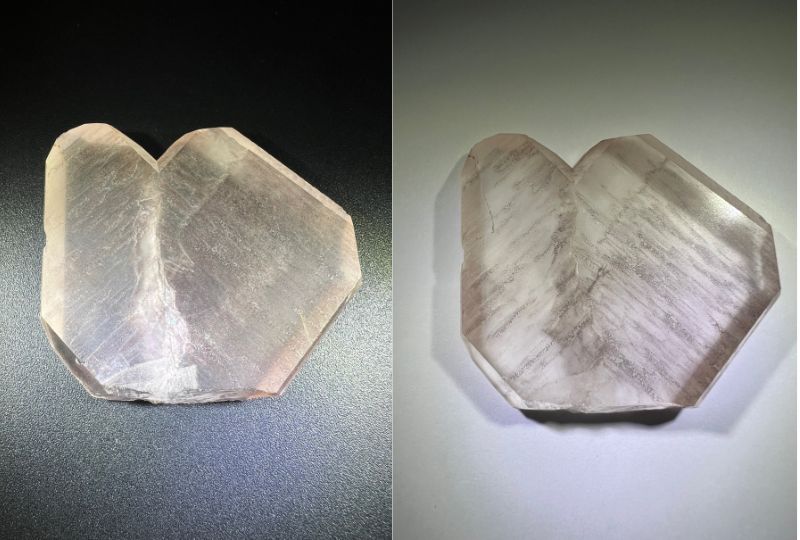
Japanese twin quartz (53 mm wide, 8 mm thick; 38 g) with hematite inclusions,
Ambolo quartz mine, Marososona, Antsirabe II District, Vakinankaratra, Madagascar.

In a Japanese twin, two of the prism faces (sides of the prism) of both crystals are parallel, usually resulting in a distinctive V-shape or, as in my specimen, a heart-shaped silhouette. Often these twins look flatter and may also appear almost square or slightly asymmetrical, but the typical V often remains clearly visible, as do the 6 faces that form the point in quartz. My specimen, with its soft pink hue due to hematite inclusions, is a beautiful example of this rare growth form.
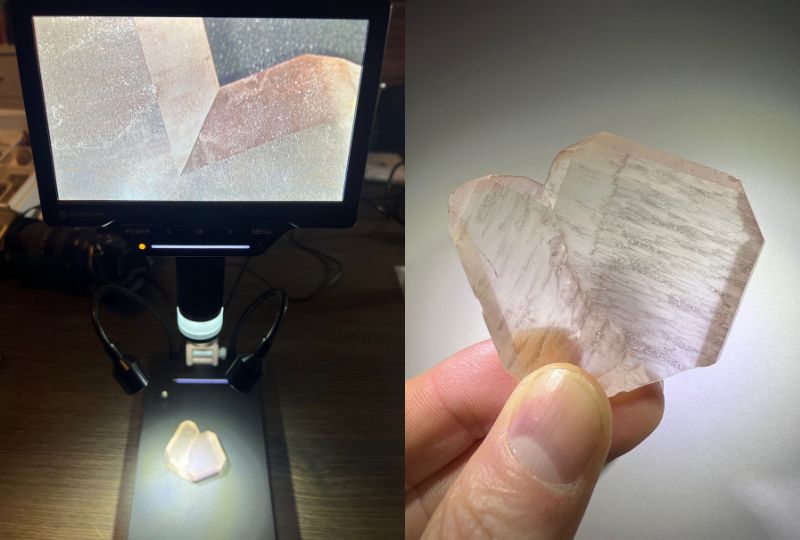
quartz Japanese twins 2

Want to know more about growth forms of quartz, such as Japanese twins? In my online mini-course on growth forms of quartz you will discover how these phenomena occur and learn to recognize them better. A must for every lover of quartz crystals!
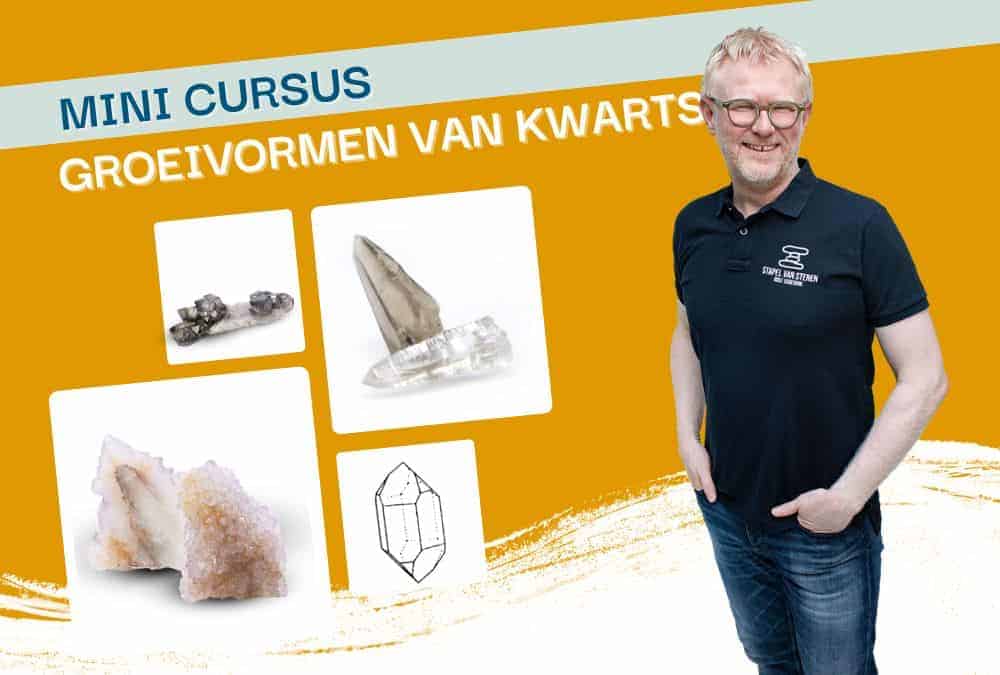
Mini-Course-Growing-Forms-of-Quartz

Schrijf je HIER in en ontvang maandelijks Steengoede post

Ontdek elke maand de wereld van mineralen en edelstenen met mijn boeiende nieuwsbrief! Ontvang updates over nieuwe activiteiten, leer fascinerende feiten en lees de nieuwste analyses.

Related Articles

Opal

Opal is a natural hydrated silica with the chemical formula SiOâ‚‚ – nHâ‚‚O and belongs to the mineraloids – substances that have much in common…

Ethical aspects of rose quartz mining

On February 10, 2025, consumer TV program Radar paid attention to the extraction and trade of rose quartz in Madagascar, including hidden camera footage of the mineral show in Rijswijk (Netherlands). This led to mixed reactions within the gem industry in the Netherlands. This article discusses the provenance, working conditions and sustainability of rose quartz, focusing on both the specific situation in Madagascar and the broader context within the global mining industry. This provides insight into the challenges and nuances of the gemstone trade. The article has been updated in response to the discussion generated by the broadcast.

Responses

Your email address will not be published. Required fields are marked *