Analysis: Azumar or Amazonite?

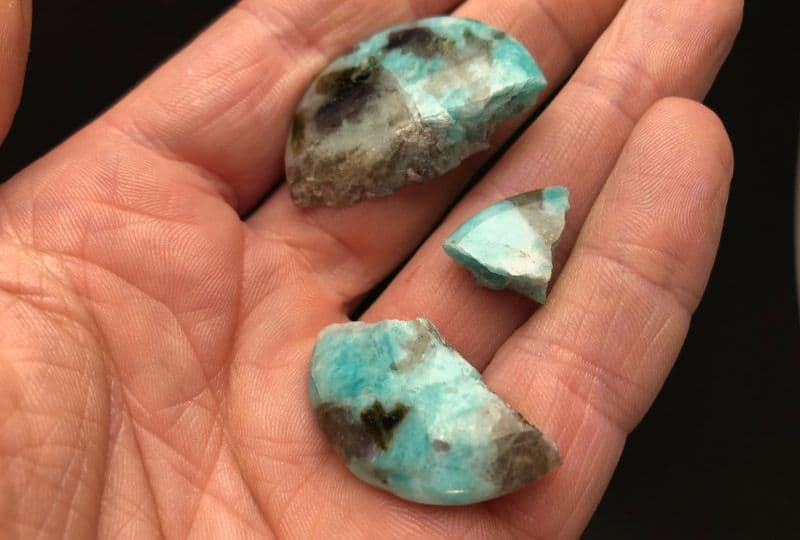
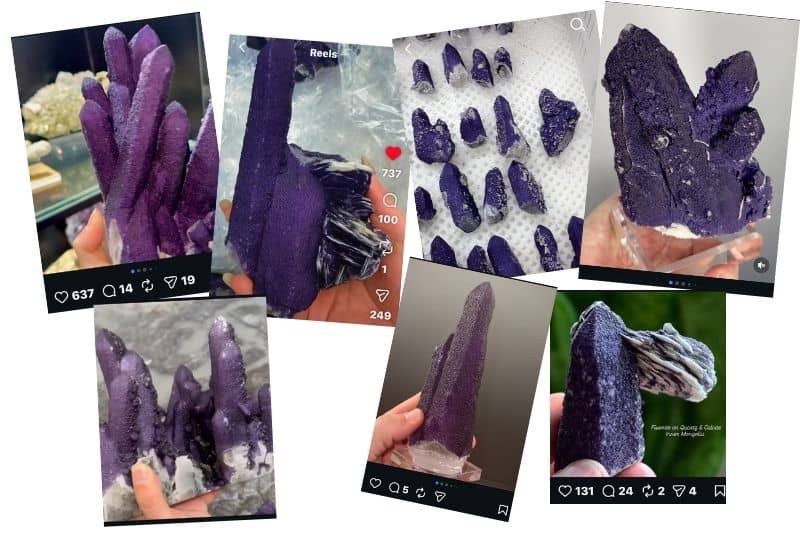
Azumar™ is an unregistered commercial name coined in 2014 by Robert Simmons(Heaven & Earth) and used for material he marketed at the major mineral show in Tucson, United States. Described by him as quartz with kaolinite and trace minerals. Kaolinite is a mineral from the kaolinite-serpentine group and the material looks like serpentine, possibly colored greenish blue by copper or chrysocolla. The fact that this material was found in Arizona, United States, makes this composition likely but there is no solid analysis anywhere.
The brand name Azumar®, by the way, is registered for many countries by a French pharmaceutical company and for several other things (alcoholic drink in Spain, resort in the Philippines, and so on) and have no link to the mineral.
Laboratory analysis
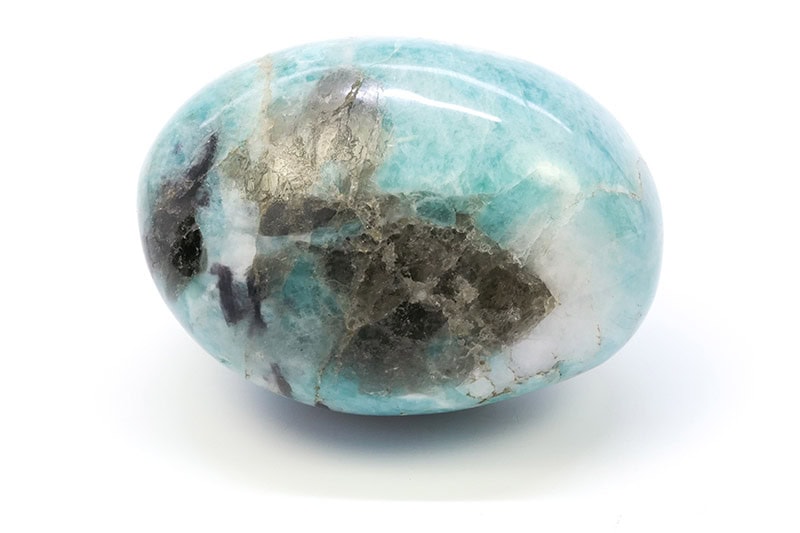
In 2021, a polished hand stone of ‘azumar’ was analyzed in a laboratory because there were doubts about its exact composition based on our own research. The stone in question is offered in Dutch and foreign web shops and stores under various names: among others, ‘azumar’ but also ‘amazonite with smoky quartz (and lepidolite)’. After my own research, it was determined that in this case it was amazonite, (smoky) quartz and a purple mica, probably lepidolite. However, it also contained a black to dark green unknown mineral and did not appear to contain any kaolinite.
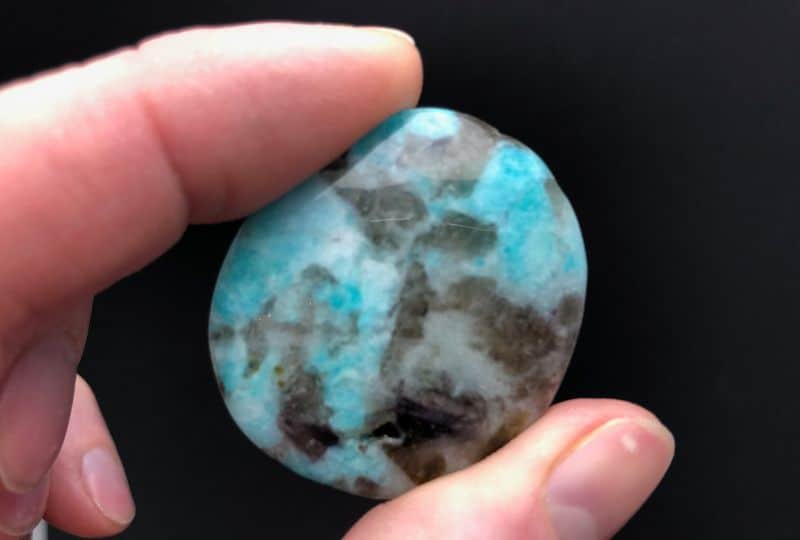
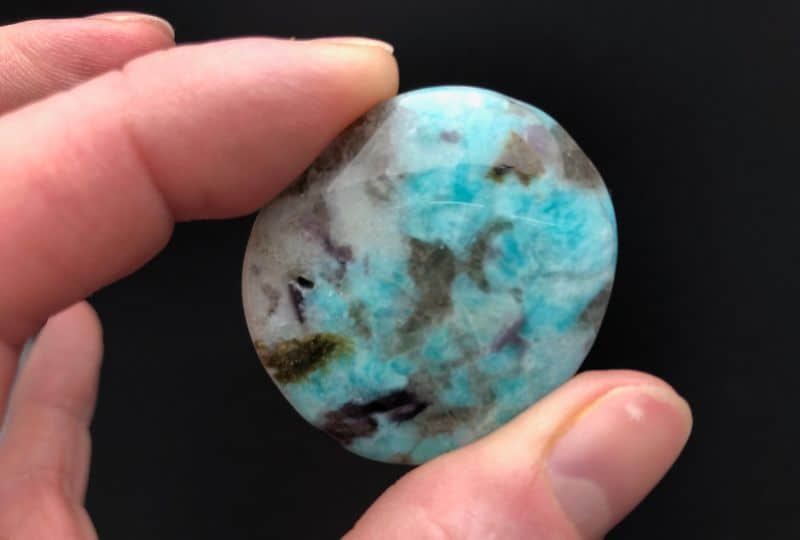
polished handstone ‘Azumar’ (front and back) that I had analyzed – green amazonite, gray-brown smoky quartz, purple mica and an unknown dark green mineral
X-ray diffraction (XRD) results show that the green main mass is indeed composed of the microcline variety amazonite containing quartz (based on color: smoky quartz). The purple mica was analyzed as muscovite; further chemical analysis is needed to determine if it is indeed the lithium-rich muscovite called lepidolite . The unknown black to dark green mineral appears to be fluoroelbaite (a mineral from the tourmaline group). No kaolinite, copper or chrysocolla was found. So in any case, this stone is not the material that Simmons described as Azumar™. After some additional internet searching, it appears that that material does look a lot like amazonite and some of the material offered online is actually amazonite, but it probably brings in more money as Azumar™.
Summary
The examined stone offered under the name “Azumar” by several Dutch wholesalers and webshops/stores is not Azumar™ as described by Robert Simmons. The results of laboratory analysis show the stone to consist of amazonite, smoky quartz, a purple muscovite (probably lepidolite) and fluoroelbaite, a variant of tourmaline.
This analysis was made possible in part by donations through GoFundMe. Thank you to Marianne Verspeek (Mijn Wenspakket) for providing the stone.
This post was published on social media and the previous Stack of Stones website on May 111, 2021. A summary is included in the May 2022 book “Belazeriet of niet? It is also be available through the online “Gem or Scam?” libraryas of September 2025.