
Analysis: Black moonstone

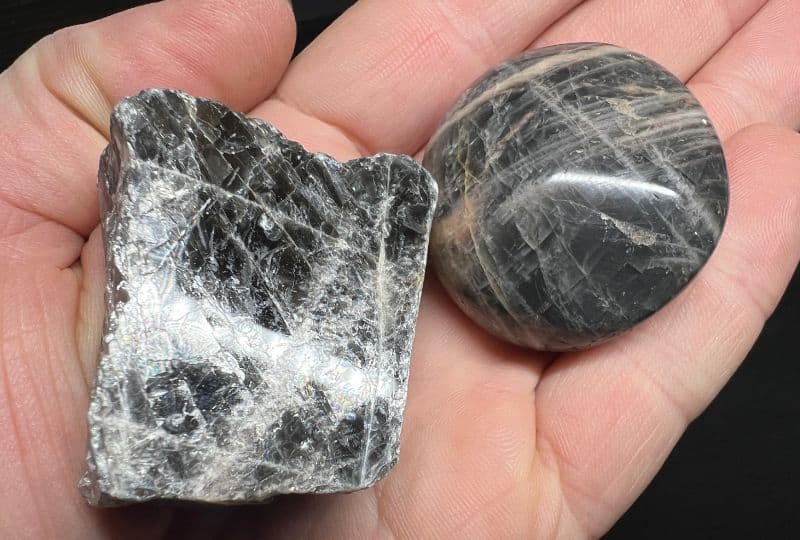
Is ‘black moonstone’ real moonstone?
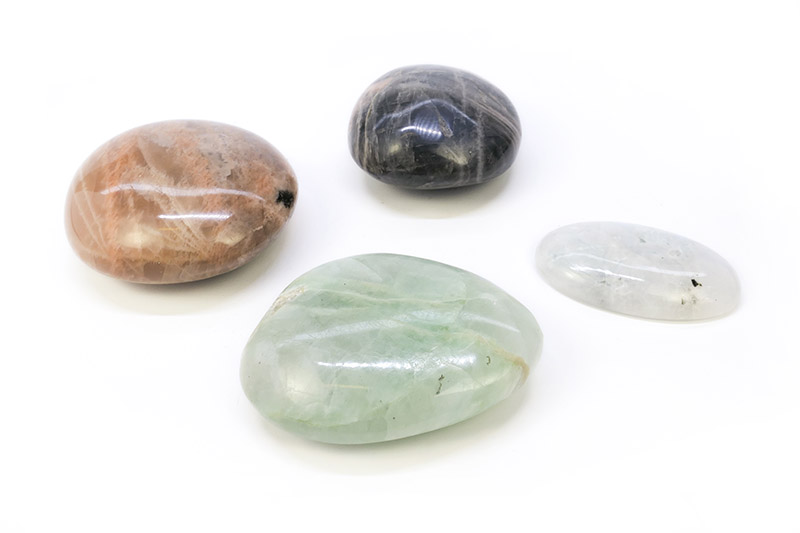
Classic ‘true’ moonstone is mineralogically a combination of orthoclase or microcline with albite (belonging to the group of alkali feldspars), usually white/transparent with a distinct blue flash. But moonstone today has become more a reference to the effect of a “flash” among different feldspars, rather than a name for a specific mineral. With the increasing popularity of moonstone, the name is also given to all sorts of feldspars that sometimes do not show any form of blue ‘flash’ at all, so in my opinion they do not really live up to the name moonstone. Thus we now know white, black, gray, pink, peach, white, beige, green and rainbow moonstone. The exact mineralogical composition of these types is often not known but is also of no interest to most enthusiasts and sellers, moonstone is booming business.
Analysis black moonstone
A rough piece of “black moonstone” from Madagascar was studied and analyzed in more detail.
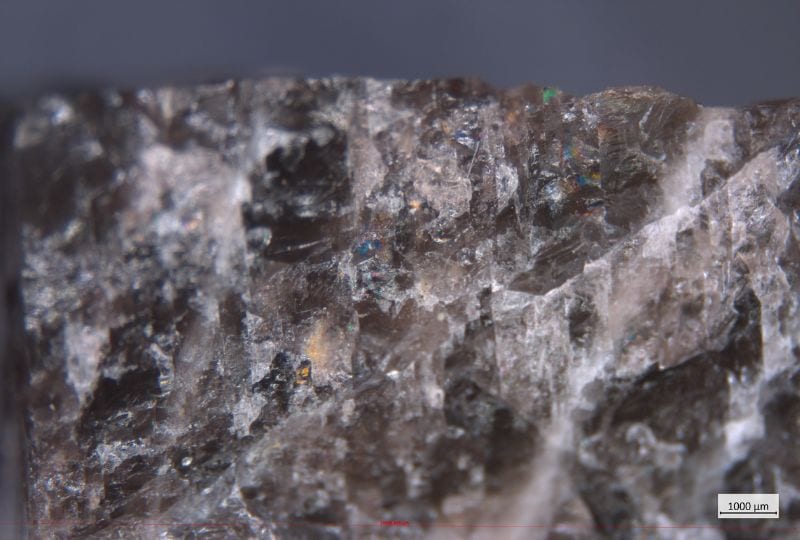
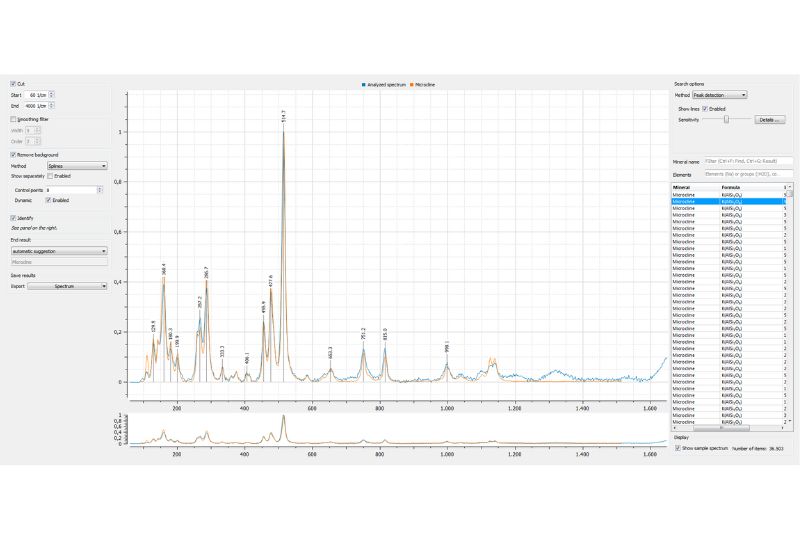
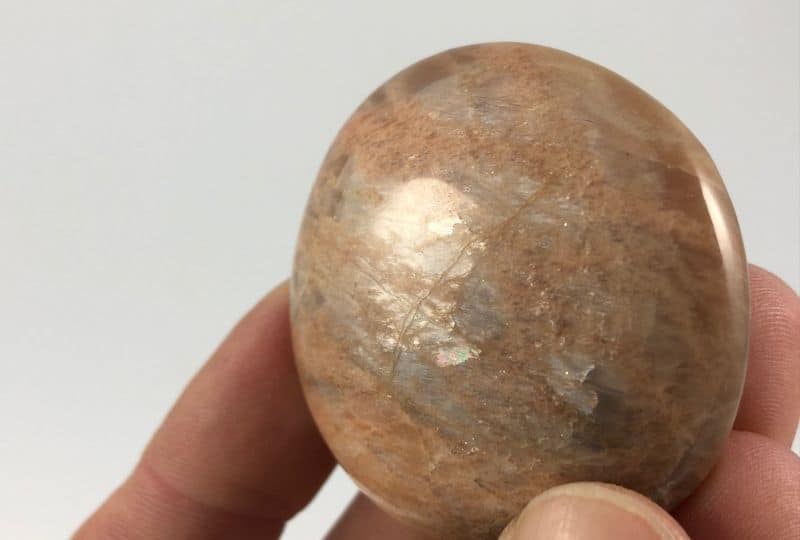
The specimen is a rough piece with very clear cleavage surfaces with glass lustre, brownish gray in color and without a clear flash. Hardness is 6 to 6½ and matching feldspar. Measured specific gravity is 2.57, matching orthoclase (2.55-2.63) or microcline (2.54-2.57). Further analysis using EDX/EDS and X-ray diffraction (XRD) show the composition of microcline, an alkali feldspar. The lack of albite thus makes it not quite the same mineralogically as “real” moonstone; in addition, both the rough sample analyzed and the polished handstone lack blue adularescence (flash).
I previously analyzed a number of other moonstones, the results of which can be found at pink moonstone, green moonstone and white moonstone. The article on rainbow moonstone also contains more background on moonstone in general.
Summary
There are various “moonstones” on the market whose external characteristics do not always make it possible to tell with certainty exactly what mineral it is and whether it is a “real” moonstone.
The ‘black moonstone’ examined is a microcline feldspar. It is purely mineralogically dissimilar to ‘true’ moonstone (orthoclase/microcline with albite), but since it also lacks the distinct blue flash, it does not seem appropriate to call this material moonstone.
Although the pure separation of the different types of moonstone may not be of interest or practicality to the general public, hopefully this information will give more clarity about the different moonstones in trade.
This analysis was made possible in part by donations through GoFundMe.
If you want to learn to better recognize minerals yourself based on their shape and properties, take a course at Stack of Stones and watch my videos.
This post was published on social media and the previous Stack of Stones website in January 2022. A summary is included in the May 2022 book “Belazeriet of niet? The information will also be available through the online “Gem or Scam library” from September 2025.


Responses