
Analysis: Green moonstone

Clarity on green color in green moonstone
In 2021, I had a tumble stone of “green moonstone with garnierite” analyzed because, based on my own research, I had doubts about its exact composition (is it moonstone?) and the origin of its green color (garnierite or dyed?).
Moonstone?
Mineralogically, moonstone is a mineral from the potassium feldspar group, a sodium-potassium-aluminum-silicate ((Na,K)AlSi3O8), with a pearlescent effect, also called “Schiller” effect. The name moonstone was originally used primarily for the orthoclase variety adularia. The milky, blue sheen beneath the surface was named ‘adularescence‘ after this mineral.
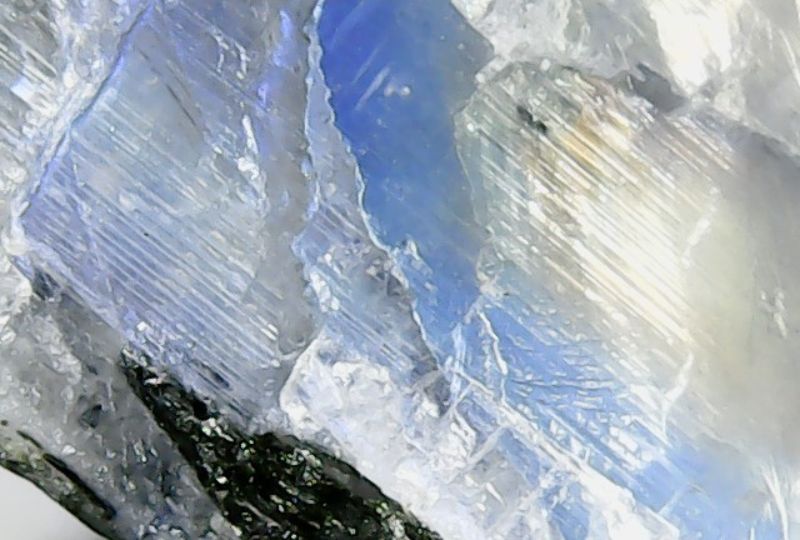
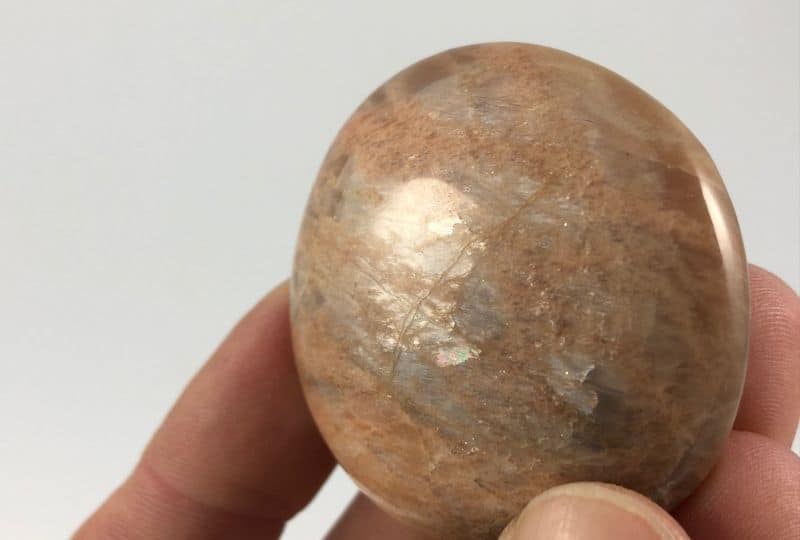
With the increasing popularity of moonstone, the name is given to more and more types of feldspar that exhibit any kind of “flash”. Thus we now know black, gray, pink, peach, white, beige, rainbow and thus green moonstone (with garnierite). In many of these ‘moonstones’ that I have studied, by the way, there is little or no bluish adularescence or flash so that, in my opinion, they do not live up to the name moonstone. What I do see is a typical silk sheen on the cleavage planes, as is known from many feldspars.
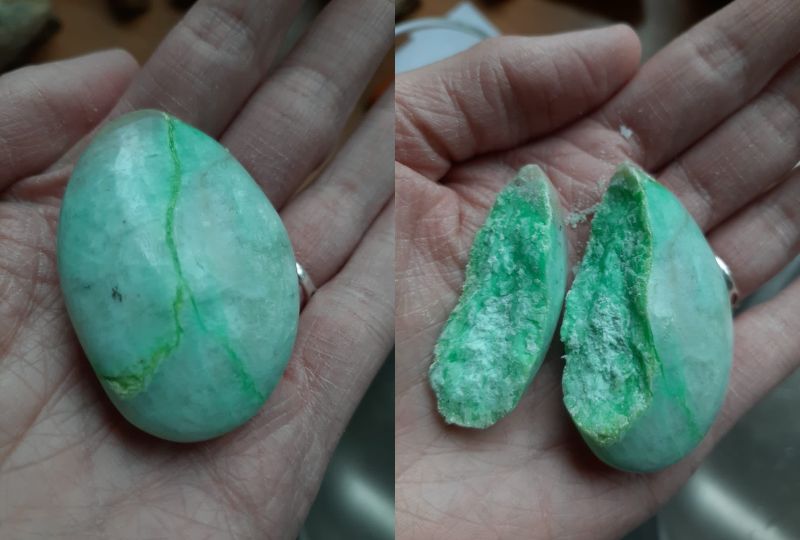
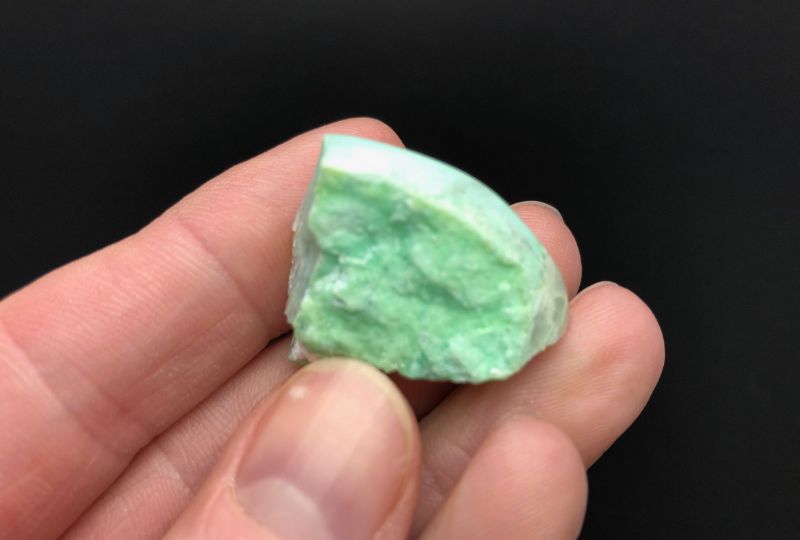
left: green moonstone with striking bright green infill in the crack (photos Marjolein Heurman, Puffins and Pies); right analyzed tumble stone of “green moonstone,” at least a feldspar but really moonstone and what causes the green color?
After my own examination of a piece of green moonstone, I determined that it was indeed a feldspar based on its hardness and cleavage. No (blue) flash was visible. The green “mineral” should be garnierite, a nickel ore. I very much doubted the authenticity of this, it looked like some kind of filler with paint/dye in the cracks and fissures, but I could not determine that for certain. Therefore, I had a fragment of the tumble stone analyzed in a laboratory. Herewith I am happy to share the results.
Laboratory analysis
X-ray diffraction (XRD) determined that the gray-greenish main mass consists of two feldspars: albite and anorthoclase; and vermiculite, a phyllosilicate mineral from the mica group. Thus, NO garnierite or any other nickel mineral was found in this specimen! Furthermore, it has been determined that the inhomogeneous color gradient of the green in the fracture is indicative of artificial (secondary) coloration!
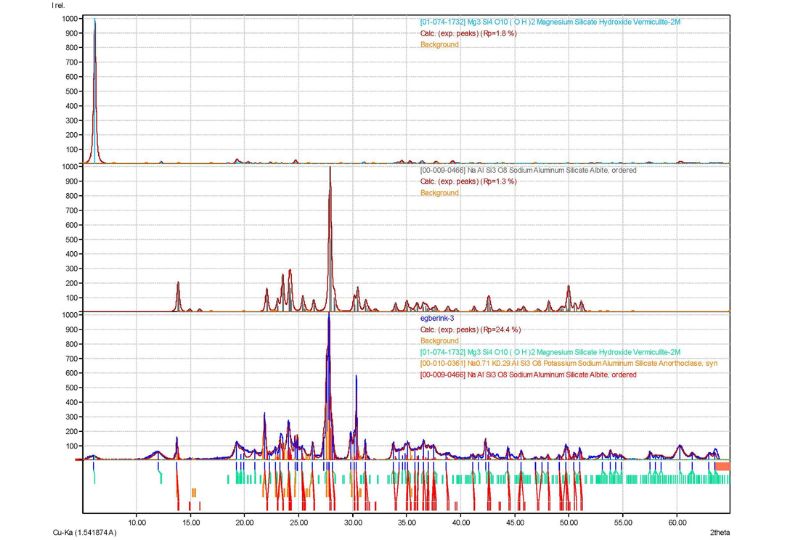
Graph of X-ray diffraction analysis (XRD) of ‘green moonstone’ in which the 3 constituents are identified (albite, anorthoclase and vermiculite)
Summary: green moonstone does not contain garnierite
The “green moonstone” examined consists of the feldspars albite and anorthoclase, as well as vermiculite, a mineral from the mica group. NO garnierite or any other nickel mineral was found. The green color in the fracture of this stone is artificially colored. The natural green color in this and other green moonstone is probably caused by a mineral from the smectite group (a clay mineral), but no evidence for this has been found (yet).
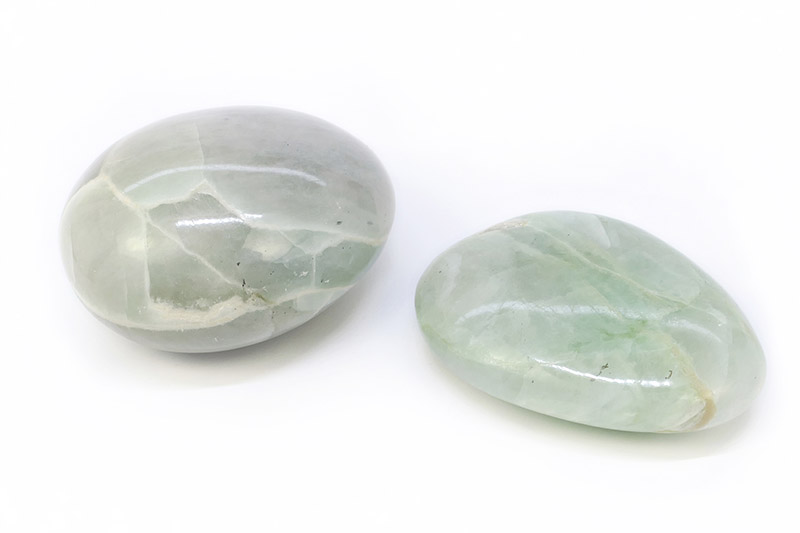
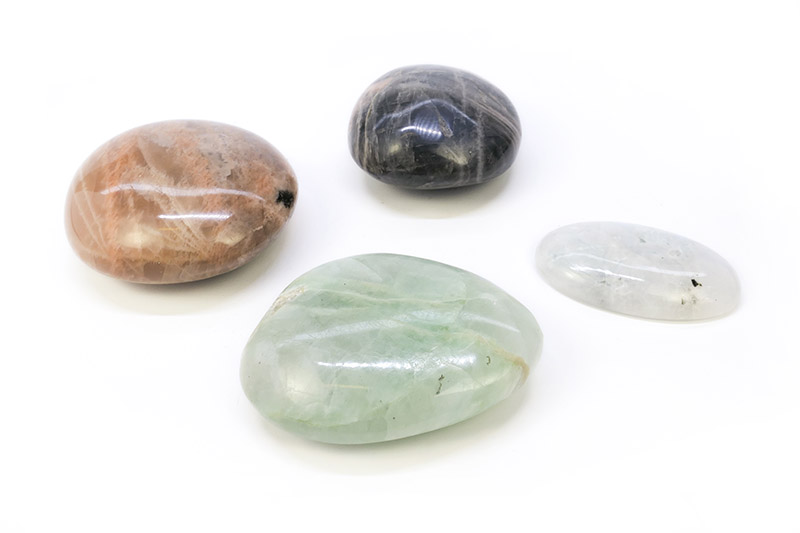
polished palm stones of green moonstone with a much lighter green tinge in the gray main mass, no evidence of an artificial green color
There is much difference in the green color in the green moonstones offered, see also the photos. Based on the analysis of this one stone, in which a suspicious bright green color was seen, it cannot be concluded that ALL green moonstones are artificially (re)dyed. Although no flash was seen in the piece analyzed, green moonstone with bluish adularescence does exist (see photo below). When there is visible flash, the name “green moonstone” seems appropriate; I would omit the addition “with garnierite” in any case, based on this analysis.
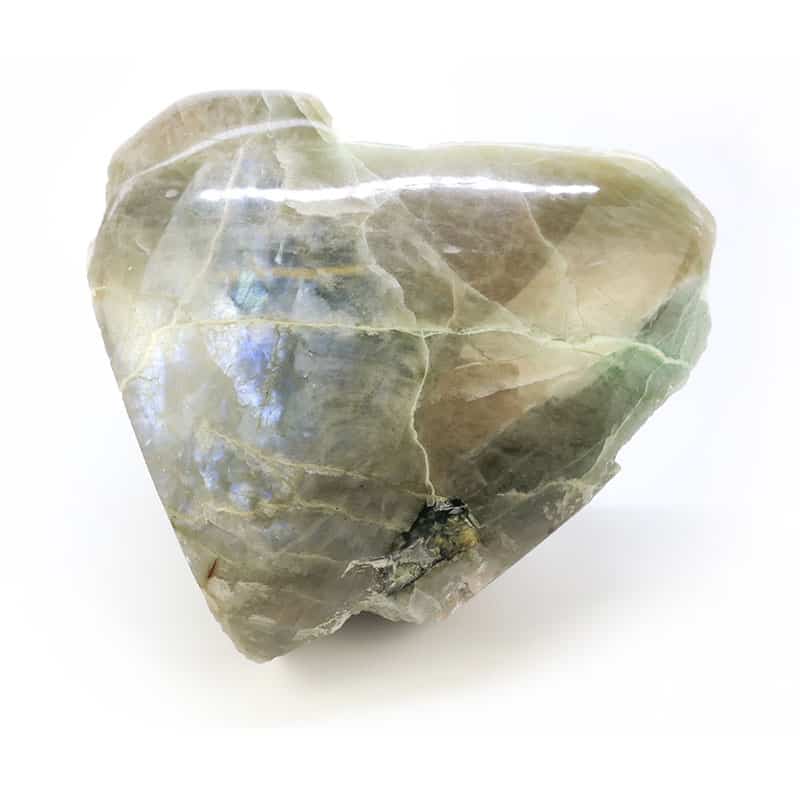
green moonstone with clear blue flash and subtle light green color in the cracks, no evidence of artificial green color
Thank you to Marjolein Heurman (Puffins and Pies) and Marianne Verspeek-Roffel (Mijn Wenspakket) for providing the stones and photos.
If you also want to learn to better recognize minerals yourself based on their shape and characteristics follow a course with me and watch my videos.
This post was published on social media and the previous Stack of Stones website on April 22, 2021. A summary is included in the May 2022 book “Belazeriet of niet? It is also available through the online “Scam or Gem” library as of September 2025.


Responses